

Key Takeaways
- Lead scoring transparency means reps can see the exact signals and attributes behind every score and why it moved.
- Opaque scores often fall flat because reps already distrust the data and have no time to reverse engineer a number.
- A trustworthy score separates fit, intent, and timing instead of collapsing them into one mystery figure.
- Transparency is becoming an AI adoption requirement, with 40% of respondents in McKinsey's November 2024 report, "Building AI trust: The key role of explainability," naming explainability a key gen-AI risk.
- Explainable, signal-based scoring can turn a "good/bad" label into a next action reps are more likely to take.
What Is Lead Scoring Transparency?
A rep opens their queue on Monday morning. The system flags the top lead as "hot," with a score of 92. No context. No reason.
They have no idea what to say when they pick up the phone. So they do what many reps do with a number they can't explain: they ignore it and work the accounts they already know.
That is the problem lead scoring transparency solves.
Lead scoring transparency is the ability to see exactly why a score is what it is. That means which signals and attributes drove it, how each one is weighted, and why the number rose or fell. It turns a score from a verdict into an explanation.
Instead of "trust me, this lead is hot," a transparent score tells the story. It says this person changed jobs last month, visited your pricing page twice this week, and matches your best closed-won accounts on three attributes.
That is different from black-box scoring, where a model or a point table spits out a number and hides the math. It is also more than plain lead scoring. Plenty of tools produce a score. Not every tool lets you see inside it.
The distinction matters because transparency is not about the number. It is about trust and action.
A score a rep can't explain is a score a rep is unlikely to use. A score a rep can see through is one they're far more likely to act on.
Why So Many Lead Scores Are a Black Box
Many scoring models are opaque by design, not by accident. Here's how they get that way.
The data or marketing team builds them, and reps get left out. The people who live with the scores every day have no visibility into how they're calculated and no way to question them. When the model and the user never meet, distrust is the default.
Teams set the point values on gut feel. Someone decided a whitepaper download is worth 10 points and a webinar is worth 15, and nobody can say why.
Teams bake those weights in and rarely revisit them. The model calcifies while buying behavior keeps changing.
Then there's the input problem. Many models only score the data that happens to sit in the CRM: form fills, email opens, event registrations.
That's a thin slice of how people actually buy. The result is a confident-looking number built on a fraction of the signal.
And reps feel it. Salesforce's 2024 "State of Sales" research found that reps spend 70% of their time on nonselling tasks. The same research found only 35% completely trust the accuracy of their organization's data.
So an opaque score lands in a tough spot: on the desk of someone who has no time to decode it and little reason to believe it.
This is where we take a clear position. AI and modern tooling should be leverage, not a black box you have to trust blindly. A score should be a hover away from its reasons.
When it isn't, you haven't given reps intelligence. You've given them one more number to argue about.
What Opaque Lead Scoring Gets Wrong
Opaque scoring creates problems that are easy to miss.
Start with time. Reps chase "hot" leads that go dark because the score never told them what the heat actually was. Meanwhile, Data Mania's "MQL to SQL Conversion Rate Benchmarks 2025" puts average MQL-to-SQL conversion in the low double digits, which suggests most MQLs never become SQLs.
When most qualified leads don't convert and no one can explain any single score, reps stop trusting the system.
That distrust turns into finger-pointing. Marketing says it delivered the leads. Sales says the leads were junk.
Both are half right, and neither can prove it. The score that started the argument can't be inspected, so lead quality becomes a matter of opinion instead of evidence.
Underneath all of it sits the data itself. A score can look precise and still rest on inputs that have gone stale. B2B contact data changes constantly as people switch roles and companies, and a model fed outdated inputs produces outdated scores.
Black-box scoring makes that drift hard to see, and you can't fix what you can't see.
Transparency doesn't just build trust. It surfaces problems in your pipeline that are otherwise hard to spot.
For a marketing leader, this matters because pipeline contribution is your number, and it's easier to defend when sales can see what's behind the scores.
Explainable scores give marketing evidence to bring into those "these leads are garbage" conversations. A score you can explain isn't just a rep tool. It can help you show how marketing influences real deals, and lead scoring transparency is what makes that evidence possible.
Fit, Intent, and Timing: What a Transparent Score Must Separate

Many scores collapse three different questions into one number. That's the core design flaw. It's why a single figure so often misleads.
Fit is not intent. Intent is not timing. These are three separate things, and a transparent score has to keep them apart.
Fit is how well an account matches your ideal customer profile: industry, size, tech stack, role. Intent is whether they're actually doing something that signals interest, like researching, engaging, or showing up in the dark funnel. Timing is whether they're ready to move now or years away.
A perfect-fit account can stay a perfect fit for three years and buy nothing. Collapse fit and intent into one score and you'll keep mistaking "looks right" for "ready to talk."
The buying journey makes this harder. Much of the real activity, the research and the internal debate, happens before a buyer ever talks to a rep and where your CRM can't see it. A static score built at MQL creation misses much of that journey.
And the journey isn't one person. Forrester's "The State of Business Buying, 2024" research found an average of 13 people involved in a B2B buying decision. It also found 89% of purchases span two or more departments, and 86% of purchases stall before they close.
A single per-contact number can't tell you where a deal will stall or who still needs convincing.
So the mental model for a transparent score is simple. Show how much of the number is fit, how much is intent, and how much is timing. When a rep can see that breakdown, the score stops being a mystery and starts being a plan.
A high-fit, low-intent account goes into a nurture track. A high-intent, high-timing account goes to a rep today. Same buyer, same score in a black box, completely different plays once you can see inside it.
This is also where marketing and sales can stop arguing. When both teams can see the same fit, intent, and timing breakdown behind a score, "lead quality" stops being a matter of opinion. It becomes a shared, inspectable definition everyone agreed to.
Transparency Is Becoming an AI Requirement
Scoring is going predictive. Models can now weigh hundreds of variables no human set by hand. That makes them more powerful and more opaque at the same time, which raises the stakes on explainability.
The trust gap is already measured. McKinsey's November 2024 report, "Building AI trust: The key role of explainability," found that 40% of respondents identify explainability as a key risk in adopting generative AI. Yet only 17% are actively working to mitigate it.
That gap is the whole story. Leaders know opacity is a problem, and few are fixing it. As McKinsey's QuantumBlack team argues in the same report, explainability is the precondition for trusting and adopting any AI decision system.
The lesson transfers directly to lead scoring. Black-box AI erodes trust where you need it most: at the moment a rep decides whether to act on the machine's recommendation. If the model can't show its reasoning, adoption can stall.
The market is moving in this direction. In its March 30, 2026, press release, "Gartner Predicts By 2028, Explainable AI Will Drive LLM Observability Investments to 50% for Secure GenAI Deployment," Gartner forecast that LLM observability investments will reach 50% of generative-AI deployments by 2028, up from 15% at the time of the forecast.
That figure is about GenAI observability broadly, not CRM scoring. But the direction is clear. Explainability is becoming table stakes for AI systems people are asked to trust.
Predictive scoring is no exception. The more the model decides on its own, the more the score has to explain itself. That is what makes lead scoring transparency a deciding factor in whether reps adopt AI scoring at all.
How to Build a Transparent Lead Scoring Model (Step by Step)
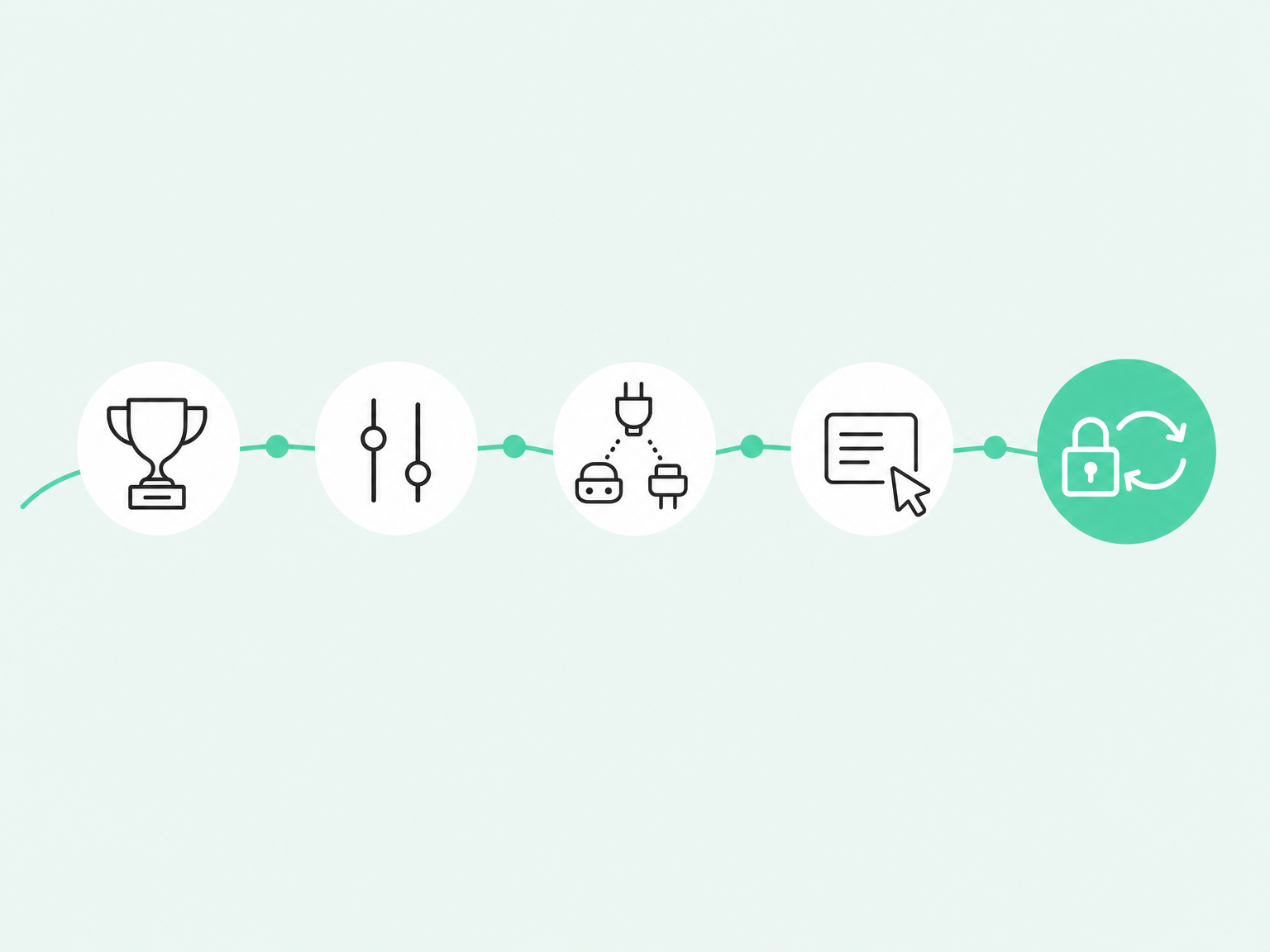
Transparency isn't a setting you flip on. It's how you build the model from the start. Here's a sequence to follow.
Start With Your Closed-Won Signals
Don't start with a blank point table and a hunch. Start with the deals you've already won. Pull your closed-won accounts from the last 12-18 months. Look at what those buyers actually did in the 30, 60, and 90 days before they signed.
Those behaviors are your scoring criteria, grounded in evidence instead of opinion. When teams rebuild scoring this way, behavioral signals can end up carrying more weight than firmographic ones. Scores can then surface accounts doing what their best customers did before buying, not just accounts that look the part.
Score Fit and Behavior Separately, and Show the Weights
Keep fit and behavior on separate axes, then make the weighting visible. A rep should be able to see that a lead scored high on behavior but only moderate on fit, or the reverse. Those two situations call for different plays.
The weighting itself should be adjustable and out in the open, not buried in a formula only the admin can read. If you can't see how much each signal counts, it's hard to trust the total.
Bring In Signals Beyond the CRM
Your CRM sees a sliver of the buying journey. Score on more of it. Product usage, community activity, social engagement, job changes, and dark-funnel research can tell you more about real intent than another form fill does.
This is where breadth matters. Common Room pulls from a wide range of signal sources so the score reflects how people actually buy. When those signals roll up to the same person and account, a rep sees one story instead of scattered, disconnected records.
Make Every Score Explain Itself
This is the step many models skip, and it's the one that defines transparency. Every score should carry its reasons with it. With Common Room's AI Scoring, you weigh the signals that matter with simple sliders, and you can hover a score to see the behaviors and attributes behind it.
A rep doesn't have to file a ticket to ask why a lead is hot. They hover, they see the "why," and they open the conversation with context instead of a guess.
Keep Scores Live and Govern Who Can Change Them
A score built once and left alone drifts out of date, because buying behavior and contact data both move. Keep scores updating on live signals and express them in ranges a rep can read at a glance: Not a fit, Fair, Good, or Excellent.
Then govern the model. Decide who can edit weights and criteria so the logic stays consistent and defensible. That keeps it from drifting every time someone has a new theory. Transparency and governance are two sides of the same coin: everyone can see the model, and only the right people can change it.
What Transparent Lead Scoring Can Look Like in Practice
Put it together and the Monday-morning queue can look different.
Picture a rep opening a lead. The score reads "Excellent." They hover, and instead of a bare number they see the story. This contact changed roles six weeks ago. Their team visited the pricing page three times this week. The account matches four attributes shared by recent closed-won deals, and the score jumped 20 points after a spike in product usage.
The rep now knows who this is, why they're ranked high, and what changed. That context goes straight into the outreach.
Scores don't just sit in a profile, either. They become filters. A jump into the "Excellent" range can trigger an alert to the owning rep, drop the account into a segment, orstart an automated playyour team has set up. The highest-intent buyers get worked while the signal is fresh.
Scoring across all available signals, instead of standard criteria alone, can support efforts to surface the accounts most likely to buy. It helps reps work from evidence instead of guesswork.
None of it depends on faith. That's the point of transparency: the rep trusts the score because they can see straight through it.
For marketing leaders, this is where the funnel comes together. The signals you generate through campaigns, content, and community don't stall out as an MQL count nobody trusts. They flow into a score sales can read, act on, and trace back to your work. That's the alignment demand-gen teams keep asking for, and it starts with making the score easy to inspect and defend.
Frequently Asked Questions
What Is Lead Scoring Transparency?
It's the ability to trace any score back to the specific signals, attributes, and weights that produced it, including why it changed. In practice, it's the difference between a score you're told to trust and a score you can verify yourself.
Why Are So Many Lead Scores a Black Box?
One team often builds them, sets gut-feel point values, and leaves them to run on stale CRM data. Opacity gets baked in from the start, so the people who use the scores have a hard time trusting them.
Can You Trust AI Lead Scoring?
You can trust it when it explains itself, and you shouldn't when it doesn't. McKinsey's November 2024 report, "Building AI trust: The key role of explainability," found 40% of respondents name explainability a key gen-AI risk, so the safe rule is simple: no explanation, no trust.
What Is the Difference Between Fit and Intent in Lead Scoring?
Fit is how well an account matches your ideal profile, while intent is whether that account is actually showing buying behavior right now. A high-fit account with zero intent is a future prospect, not a present one, and a transparent score keeps the two clearly apart.
How Do You Make a Lead Scoring Model Explainable?
Build it from real closed-won signals. Score fit and behavior on separate visible weights, pull signals from beyond the CRM, and let every score reveal the behaviors behind it. The test is whether a rep can hover a score and understand it without asking anyone.
Lead scoring transparency can help you trade the black box for scores your reps will actually use. Ready to see it in action? Request a demo.