
Know exactly which opportunities to work first
Configure, explain, and act on lead scores that give transparency into engagement context and a clear priority level, so your reps start each day knowing who is ready to buy, why their score rose or fell, and where to put their time most effectively.
Teams running their outreach on Common Room

























































Context
Score every buyer on the full picture of buying activity
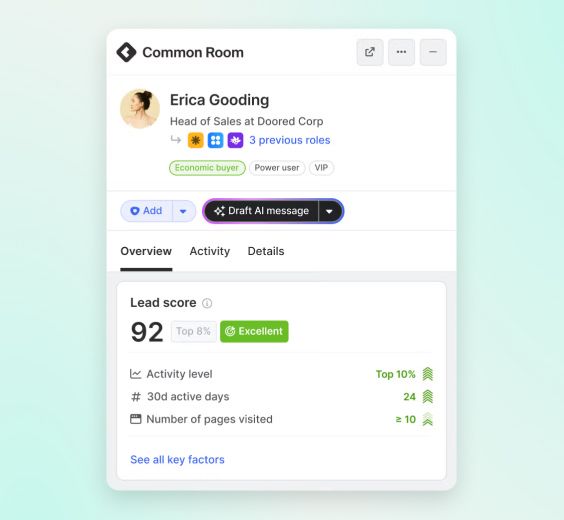
Scoring combines hundreds of buying signals into one person-level score, spanning first-party product usage, website engagement, job changes, and dark-funnel activity. Those person scores roll up to the account. Your ranks reflect who is actually moving across channels, so sales and marketing prioritize the same ready buyers from one shared view.
Prioritization
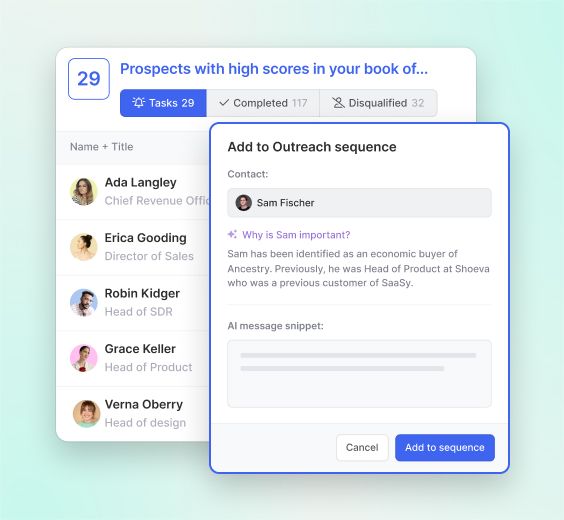
Scores ranked to add up to pipeline
Weight the buying signals that matter for your motion with simple sliders, without spreadsheet gymnastics or a data science queue. Person and account ranks stay aligned to how you win. The highest-scored prospects route into the plays and alerts your team already runs, so effort follows pipeline.
Clarity
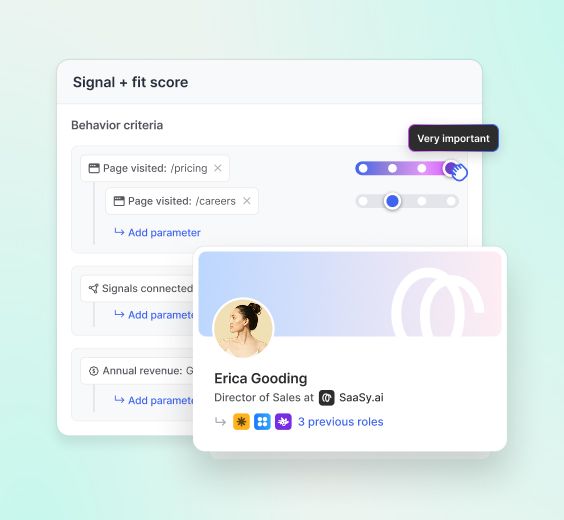
See the story behind the score
Hover any score to see the behaviors and attributes behind it. With clarity, engagement starts from real context instead of from a vague number. Sellers personalize with the reason the buyer is ready today, and leaders trust the model because every point maps to something observable.
Real results from real teams
What teams say after switching

Learn how Common Room’s buyer intelligence informs our full revenue OS.
Common questions
AI Scoring ranks people and accounts using complete buyer intelligence. Like lead scoring but more accurate, it combines buying activity, fit, and engagement into transparent scores go-to-market teams use to decide who deserves attention now.
The model ties buying activity to real people and accounts through Common Room's buyer intelligence foundation. It applies configurable weights and produces person-level scores that aggregate to the account. Teams inspect the reasons behind each score and use ranks to prioritize outreach, alerts, and automated plays.
Common Room ranks buyers on buying activity across product, web visits, job changes, and dark-funnel channels. It does not stop at form fills and email opens inside one marketing automation platform (MAP). Scores stay explainable at the person level and roll up to accounts, so reps see both priority and the story behind it.
Common Room scores people first, shows the contributors behind each rank, and aggregates those person scores to the account. Many account-based marketing (ABM) tools return an account number without the people or behaviors behind it. Common Room keeps prioritization specific enough to act on.
Yes. RevOps and revenue architects adjust which buying signals matter most with simple weight controls, without custom data science work. Ranks stay aligned to the company's ideal customer profile and go-to-market motion as priorities change.
Yes. The model produces person-level ranks and aggregates those scores across the account record. Teams can prioritize a ready champion inside an account and still see which accounts are heating up overall.
Teams focus rep time on the highest-ranked people and accounts, trigger alerts, and feed prioritized prospects into outbound and pipeline plays. Ranks stay useful because each score carries the context sellers need to engage with a relevant message.
Customers who stack-rank prospects in Common Room report clearer pipeline focus for sales and marketing. Person360™ identity work that feeds scoring cuts duplicate records by up to 79%. Gartner’s B2B buying research covers how buyers research before sales talks.
Find your best buyers.
We think you'd like these
Blog post
This Is Revenue OS
Sep 16th, 2026·8min readLinda Lian, co-founder of Common Room on why revenue teams need more than another AI-powered point solution: a revenue OS that knows the buyer, acts on that intelligence, and learns from every outcome.Blog post
Don't Let Your Intent Data Tool Create Noise
Sep 11th, 2026·10min readA great buying signals tool doesn’t just flood Slack with intent alerts—it unifies first-party, public, community, and product signals into clear, prioritized next steps. Learn how to evaluate...Blog post
How To Turn a Connected CRM Into Pipeline
Sep 9th, 2026·13min readSalesforce may sit at the center of your GTM stack, but without the right integrations and ongoing data hygiene, it can’t surface the buyer signals that drive revenue. This guide breaks down how to...