
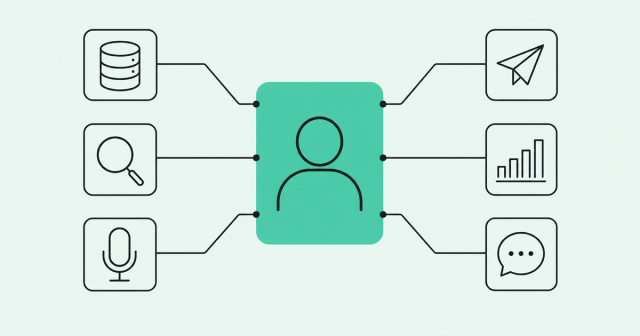
Your go-to-market (GTM) stack has a tool for every job. Your CRM logs deals, your intent tool flags accounts, your sequencer sends emails, and your call recorder transcribes meetings. Ask all four who's ready to buy this week, and you'll get four different answers.
That's the real reason teams search for the best go-to-market platform. They don't want another tool. They want one system that knows the buyer and helps every rep act on what it knows.
This guide explains what a GTM platform is, which capabilities matter, and how to compare your options. We'll also show where Common Room by Zoom fits, and where another category might suit you better.
What Is a Go-to-Market Platform?
The best go-to-market platform unifies buyer signals, identity, and enrichment into one trusted view of each buyer, then turns that view into governed action. A GTM platform is software that helps revenue teams find, prioritize, engage, and convert buyers across the full lifecycle.
Judge platforms by their context layer before their feature list. A unified buyer intelligence layer decides whether every score, sequence, and AI agent works from the same facts.
GTM Platform vs. Point Tools
A point tool solves one job well. Your CRM knows deal stages, your intent provider knows which accounts are researching, and your call recorder knows what a buyer said on Tuesday.
The trouble is that each tool only knows its own slice of the buyer. Reps end up stitching the story together by hand, which is the Frankenstack problem in a nutshell.
Sellers feel it. The Gartner seller technology overload study puts a number on it: 70% of sellers say they're overwhelmed by the number of technologies they use. That 2024 survey covered 1,026 B2B sellers.
Vendors have noticed too, and the GTM market is consolidating through acquisitions that bundle more jobs into one place.
Fewer logins help, but they don't fix the core problem. What matters is shared context: one continuously updated view of each buyer that every tool reads from and writes back to. Here's the difference in practice:
- Point tool: It knows one slice of the buyer and keeps that slice in its own database.
- GTM platform: It shares one buyer record across signals, scoring, outreach, and reporting.
Why the Right GTM Platform Matters Now
Buyers have changed how they shop, and most stacks haven't caught up. Three shifts make a shared view of the buyer more urgent.
First, buyers do most of their homework alone. The Gartner rep-free buying survey of 646 B2B buyers found 67% prefer a rep-free buying experience. That's a stated preference, and buyers still value reps when it counts.
In fact, Gartner's May 2026 buyer validation survey found 69% of buyers prefer to check AI-generated insights with a sales rep. So reps still matter, but they need to show up with context.
Second, buyers still reach out late. The 6sense Buyer Experience Report found buyers first contact sellers about 61% of the way through their buying journey. 6sense sells intent and account-based marketing (ABM) software, so treat its research as a vendor's view.
Much of that research happens in what GTM teams call the dark funnel: channels your CRM never sees, like reviews, communities, and social posts. A go-to-market intelligence platform reads those signals, so you can spot interest before a buyer raises a hand.
Third, sellers have little time to act. The Salesforce State of Sales 2026 survey of 4,050 sales professionals found the average seller spends about 40% of their time selling. Add AI agents to a messy stack, and you get faster noise instead of more selling time.
That's why B2B market intelligence now sits at the base of the GTM tech stack. Without it, every downstream tool guesses.
Core Capabilities of a GTM Platform
A GTM platform earns the name when six capabilities share one view of the buyer. Here's what each one does, in plain terms.
Signal Capture
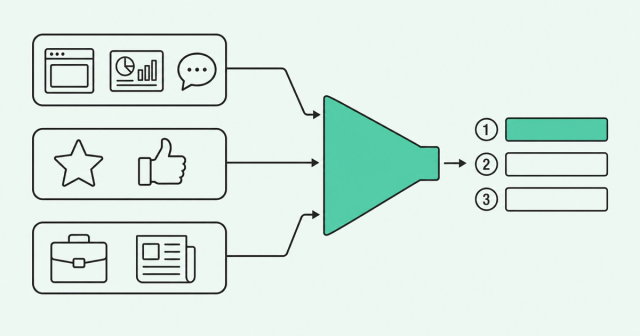
A buying signal is any action that hints someone might buy. Signals come in three types:
- First-party signals: These come from your own channels, like website visits, product usage, and community activity.
- Second-party signals: These come from platforms that share engagement data, like G2 review activity or social engagement.
- Third-party signals: These come from outside sources, like job changes and company news.
Most market intelligence tools see one or two of these types. The goal of always-on buying signal capture is to pull all three into one place and rank them. That way reps see the handful that matter today, not a longer queue.
Identity Resolution
Identity resolution means matching scattered activity to a real person. An anonymous website visit, a Slack community post, and a LinkedIn comment might all come from the same vice president of engineering.
Many tools stop at the account level. They tell you a company is researching, and that's it. With person-level identity resolution, you see who at that company is researching, what they care about, and how they connect to the deal.
That detail matters because buyers rarely decide alone. The Gartner buying group survey found B2B buying groups include five to 16 people across as many as four functions.
Enrichment and Data Quality
Enrichment fills in missing details on a record, like company size, tech stack, or job title. Waterfall enrichment checks several data providers in order and keeps going until it finds a match.
Deduplication merges copies of the same person or account, so your CRM tells one story. In Common Room, DataAgent keeps records accurate and deduplicated over time. incident.io used it to cut account duplicates by 70%.
Ask any market intelligence software vendor how it handles duplicates. Bad records quietly break routing, scoring, and reporting long before anyone notices.
Scoring and Prioritization
Scoring ranks people and accounts by how likely they are to buy. The catch is simple: Reps ignore scores they can't explain.
Explainable AI lead scoring shows the reasons behind each number, like three champions from one account visiting your pricing page this week. A marketing intelligence platform that can't show its work will lose rep trust by week two.
When reps trust the ranking, they work it. Anyscale used Common Room to stack-rank prospects and doubled pipeline quarter over quarter.
AI Agents
An AI agent is software that takes steps on its own, like researching an account or drafting an email. Agents are only as good as the context you give them, and AI without context is just noise.
Gartner expects AI agents to outnumber sellers 10 to 1 by 2028. Yet the Gartner AI agent prediction also says fewer than 40% of sellers will say agents improved their productivity. Gartner warns that without the right data foundation, sales leaders risk agent sprawl.
That's the idea behind AI agents built on buyer context. RoomieAI agents prioritize accounts overnight and write personalized 1:1 outbound grounded in buyer intelligence, with human-led review staying in the loop.
When you assess an AI-powered market intelligence platform, ask one question first. What data do its agents read before they act?
Governed Activation
Activation means putting insight where reps already work: the CRM, Slack, email, and the browser. Governance means RevOps sets the rules for how that happens.
In Common Room, the Revenue Control Plane lets revenue architects define scoring models, build plays, and set how AI agents act across the team. We built it so RevOps can deploy new plays in hours without engineering resources.
If you've ever heard "Reps do it differently," governance is the fix. It gives a GTM platform three things RevOps needs:
- Consistent plays: Every rep runs the same play from the same data.
- Agent guardrails: RevOps decides what agents can do alone and what needs human review.
- Measurable workflows: Each play ties back to the pipeline it creates.
How to Choose the Best Go-to-Market Platform: 7 Evaluation Criteria
Most buyer's guides compare database size. That tells you how many records a vendor holds, but it won't tell you whether your team can act on them. Use these seven criteria instead.
| Criterion | What good looks like | Question to ask vendors |
|---|---|---|
Context completeness | Signals, CRM data, product usage, and conversations feed one buyer record | "Which sources feed your buyer record, and how often do they update?" |
Person-level identity | Activity resolves to named people, along with their accounts | "Can you show me the people behind this account's intent?" |
Data trust | Enrichment and deduplication run continuously | "How do you measure and fix duplicate records?" |
Explainable prioritization | Every score shows its reasons | "Why is this account ranked first today?" |
AI agent grounding | Agents read your unified buyer data before they act | "What data does your agent read before it writes an email?" |
Activation where reps work | Insights land in the CRM, Slack, email, and browser | "Where will my reps see this without opening a new tab?" |
Governance and time to value | RevOps controls plays and agent rules, and new plays launch fast | "Who can change a scoring model, and how long does it take?" |
Then run each finalist through a real test. Pick 20 accounts your team knows well and check whether the platform's view matches reality.
If a platform can't explain why a known champion went quiet, it won't explain it for accounts you don't know yet.
Comparing Leading GTM Platforms by Category
The best go-to-market platform for your team depends on which layer you're missing, so compare by category first. The table below describes what each category does well and where it usually needs support.
We've included ourselves and kept every row descriptive, with no pricing.
| Category | Example vendors | Core strength | Best fit | Watch-outs |
|---|---|---|---|---|
CRM suites | HubSpot, Salesforce | System of record for contacts, deals, and pipeline | Teams that need one source of truth for deal data | Knows what reps log, so buyer activity outside the CRM can go unseen |
Data and prospecting | Apollo, ZoomInfo | Contact and company databases for building lists | Outbound teams that need contact data fast | Records can age quickly, so check refresh rates and person-level accuracy |
Intent and ABM | 6sense | Account-level intent and account-based marketing programs | Marketing teams running account-based plays | Intent often lands at the account level, so you still need to find the person |
Sales engagement | Outreach, Salesloft | Sequencing and multichannel outreach | SDR teams running structured cadences | Results depend on the list and timing you feed it |
Conversation intelligence | Gong | Call recording, transcription, and deal insights | Teams coaching reps and inspecting deals | Starts after a conversation begins, so early buyer research stays out of view |
Buyer intelligence and Revenue OS | Common Room by Zoom | Person-level buyer intelligence paired with native calling, sequencing, coaching, and forecasting | RevOps teams that want one context layer from anonymous research to renewal | Delivers most when you connect first-party sources like CRM and product data |
Most teams keep a CRM no matter what they choose. The bigger question is which layer gives every other tool its view of the buyer.
Where Common Room by Zoom Fits
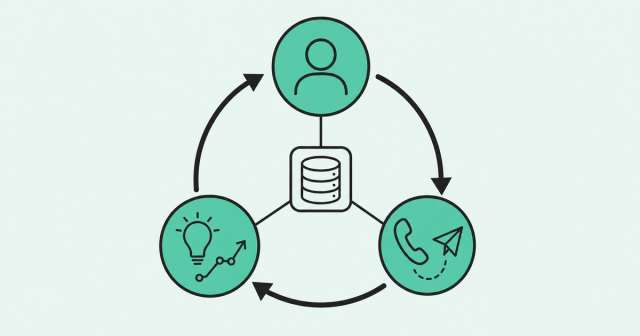
In July 2026, Zoom acquired Common Room, and together we're building Revenue OS. Common Room owns the buyer intelligence, and Zoom owns the action layer built to use it.
Revenue OS works in three parts:
- Know: Person360 and Context360 resolve identities and unify signals, enrichment, and CRM data into one person-level view of each buyer.
- Act: Zoom's action layer delivers native calling, sequencing, live coaching, and forecasting through tools like Auto Dialer, Engage, and Forecast.
- Learn: We designed it so every closed deal, coached call, and buyer signal writes back to the shared context layer, sharpening prioritization and forecasting over time.
You can read more about how Revenue OS works on our blog. The results show up in pipeline. CelerData used Common Room to unify its signals and grew signal-sourced pipeline 75% year over year.
We're a strong fit when your problem is scattered buyer data across many sources. If you only need a contact list for one outbound campaign, a data provider may cover it.
All-in-One vs. Best-of-Breed: How to Build a GTM Tech Stack Without Bloat
All-in-one means one vendor covers most GTM jobs. Best-of-breed means you pick a specialist tool for each job and connect them.
Each approach has real tradeoffs:
- All-in-one strength: You get fewer handoffs between systems and one place to set rules.
- All-in-one risk: Some modules may trail the specialist tools in depth.
- Best-of-breed strength: Each team gets the tool that fits its job best.
- Best-of-breed risk: Every new tool can create another silo of buyer data to reconcile.
The deciding factor is the shared context layer. Salesforce's 2026 State of Sales research found 51% of sales leaders using AI say disconnected systems are slowing their AI initiatives.
Use this sequence to build a GTM tech stack that stays lean:
- Audit by job: List every tool and the buyer question it answers. Flag any two tools that answer the same question.
- Pick the context layer first: Choose the system that resolves identity and holds the buyer record. Every other tool should read from it.
- Match your motion: A product-led growth (PLG) team needs product usage signals. An outbound enterprise team needs buying-group mapping and governance.
- Add tools for clear gaps only: Each new tool must write back to the shared buyer record.
How to Measure ROI From Your GTM Platform
Even the best GTM platform has to prove its value. Return on investment (ROI) shows whether the platform changes outcomes or just adds dashboards. Set a baseline for these six metrics before launch, then review them each quarter.
- Signal-sourced pipeline: Track pipeline that started from a buying signal instead of a cold list.
- Speed to lead: Measure the time between a high-intent signal and a rep's first touch.
- Meetings booked: Count meetings from signal-driven plays against your old baseline.
- ICP match rate: Check what share of worked accounts fit your ideal customer profile (ICP).
- Data duplicate rate: Monitor duplicate people and accounts in your CRM.
- Rep selling time: Ask reps how much of their week goes to selling versus research and admin.
Give each metric an owner. RevOps usually owns data quality and speed to lead, while sales and marketing leaders own pipeline and meetings.
Frequently Asked Questions About GTM Platforms
Here are quick answers to the questions RevOps and GTM leaders ask most when they compare platforms.
What Is a Go-to-Market Strategy in Business?
A go-to-market strategy is your plan for bringing a product to buyers: who you sell to, what problem you solve, and how you reach them. A GTM platform is the system your team uses to run that plan every day.
What Is the Best All-in-One Software for Go-to-Market Teams?
There's no universal winner, because the right fit depends on your motion and team size. Look for the suite whose modules share one person-level buyer record, so a signal in one place updates scores, sequences, and forecasts everywhere.
Should I Choose a Best-of-Breed GTM Tool or an All-in-One Platform?
Best-of-breed works when your specialist tools all read from and write back to one context layer. If they don't, a platform with that layer built in saves your team the stitching.
How Many Tools Should a GTM Tech Stack Include?
There's no magic number. The right count is the smallest set that covers knowing, acting, and learning, with every tool feeding the same buyer record.
How Quickly Can I See ROI From a GTM Platform?
We built the Revenue Control Plane so RevOps can deploy new plays in hours without engineering resources. Leading metrics like speed to lead tend to move first. Pipeline and revenue follow your sales cycle, so judge those over at least one full cycle.
How Does a GTM Platform Differ From a GTM Agency?
A GTM agency is a team you hire to plan or run campaigns, while a GTM platform is software your own team uses daily. Many companies use both, with the agency working from the platform's buyer data.
Choosing a GTM Platform That Knows Your Buyer
The best go-to-market platform wins on how well it knows your buyer and how reliably your team can act on that knowledge. Feature counts come second.
Start with the context layer, test it against accounts you know, and measure what changes. Then let the platform learn from every deal, call, and signal.
[Request a demo](https://www.commonroom.io/deRequest a demo](https://www.commonroom.io/demo/)