

Updated: October 23, 2026
Reach the right buyers, not just more accounts. That was the original promise of account-based marketing.
Based on what we hear in the field, that promise hasn't been kept, and it's forcing a rethink of ABM strategy from the ground up.
Legacy ABM tools have become entrenched across GTM, and they've exacerbated sales and marketing misalignment in the process.
MQLs that don't SQL. Sales quotas that go unmet. And lots of fingerpointing over missed SLAs and revenue targets.
But the tide is turning.
More and more teams are moving away from vague, anonymous, account-only intent in favor of precise, person-first, and truly actionable intent that serves both marketing and sales use cases.
We call it person-level ABM.
This is why the ABM status quo is changing, and how our customers are charting a new path forward for account-based pipegen.
Failed Patterns and Fundamental Flaws
Rewind the clock to when ABM platforms first gained serious traction.
The pitch was compelling: Stop wasting resources on unqualified accounts and concentrate your resources on high-value target accounts.
Marketing and sales would finally speak the same language, reps could apply the Pareto Principle to their territories, and pipeline generation would become wonderfully predictable.
But nearly every GTM leader we speak to about their ABM program describes the same failed pattern:
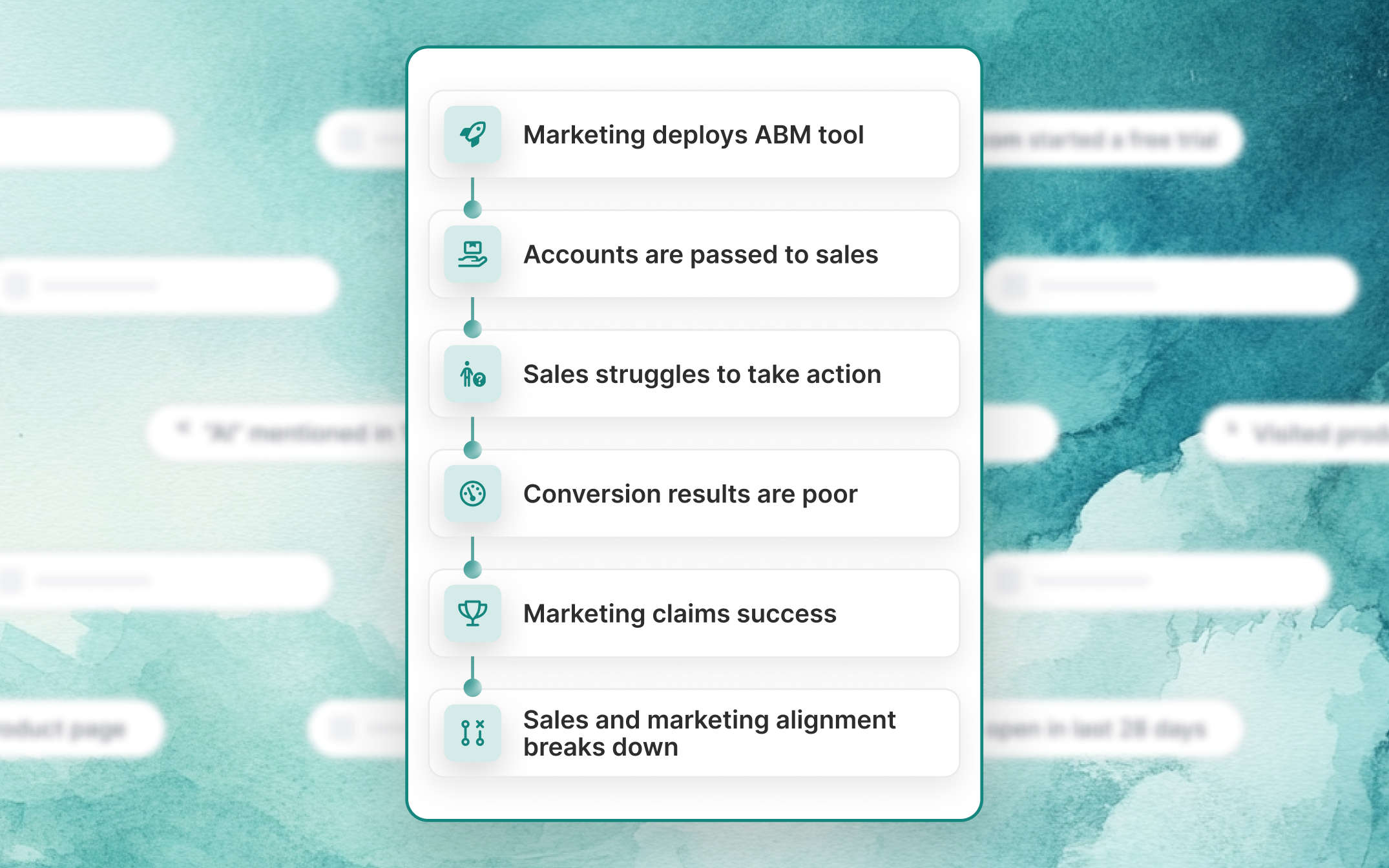
Marketing deploys a traditional ABM tool that uses bidstream data and account-level web visits to identify intent and target accounts. When intent is identified, it bumps up a black-box account score.
Marketing begins to blanket anyone who remotely matches an ideal persona at a high-scoring account with paid ads and passes the account to sales.
But the intent is anonymous beyond the account level, with zero context about who's behind it or why.
Sales struggles to take action. Reps don't know who to contact or what to say. They resort to untargeted, generic outreach, or they ignore the intent score altogether.
Pipeline suffers and the vicious cycle begins.
It shows up in what we hear across hundreds of GTM calls. Email response rates hover near 1%, call connect rates near 2.5%, and reps lose more than 70% of their time to research and admin.
Marketing points to its 6QAs and blames sales for poor execution. Sales points to its missed pipe targets and blames marketing for passing over accounts they can't really work, let alone convert.
Meanwhile, the company is on the hook for a six-figure, multi-year contract for a glorified demand-side platform.
The fundamental flaw with legacy ABM tools is three-fold:
- Ambiguous intent: Bidstream data reveals research and consumption events, but not the full spectrum of buying signals happening across channels.
- Anonymous data: Offsite and onsite intent data stops at the account level, meaning sales is left to guess who they should get in touch with.
- Black-box scoring: Accounts are prioritized based on opaque scoring algorithms that sales teams simply don't trust.
The result is a glut of unactionable "intent" and a growing divide across GTM.
Old ABM Strategy vs. New ABM Strategy
Our customers are building a new way to ABM, one that's not restricted by legacy limitations.
| Traditional ABM | Person-level ABM |
|---|---|
Marketing-first, sales-second | Pipeline-first |
Inferred intent signals | Real buyer actions |
Account-level visibility | Person- and account-level visibility |
Black-box scoring | Transparent, contextual scoring |
AI as an afterthought | AI-native |
This is how:
Offsite Intent
Old Way
Use offsite research and consumption events to identify accounts showing intent.
New Way
Unify account-level research and consumption events happening off your website with every first-, second-, and third-party buying signal, plus a proprietary, constantly refreshed database of more than 200 million B2B contacts and accounts, to identify high-intent, high-fit contacts at every organization.
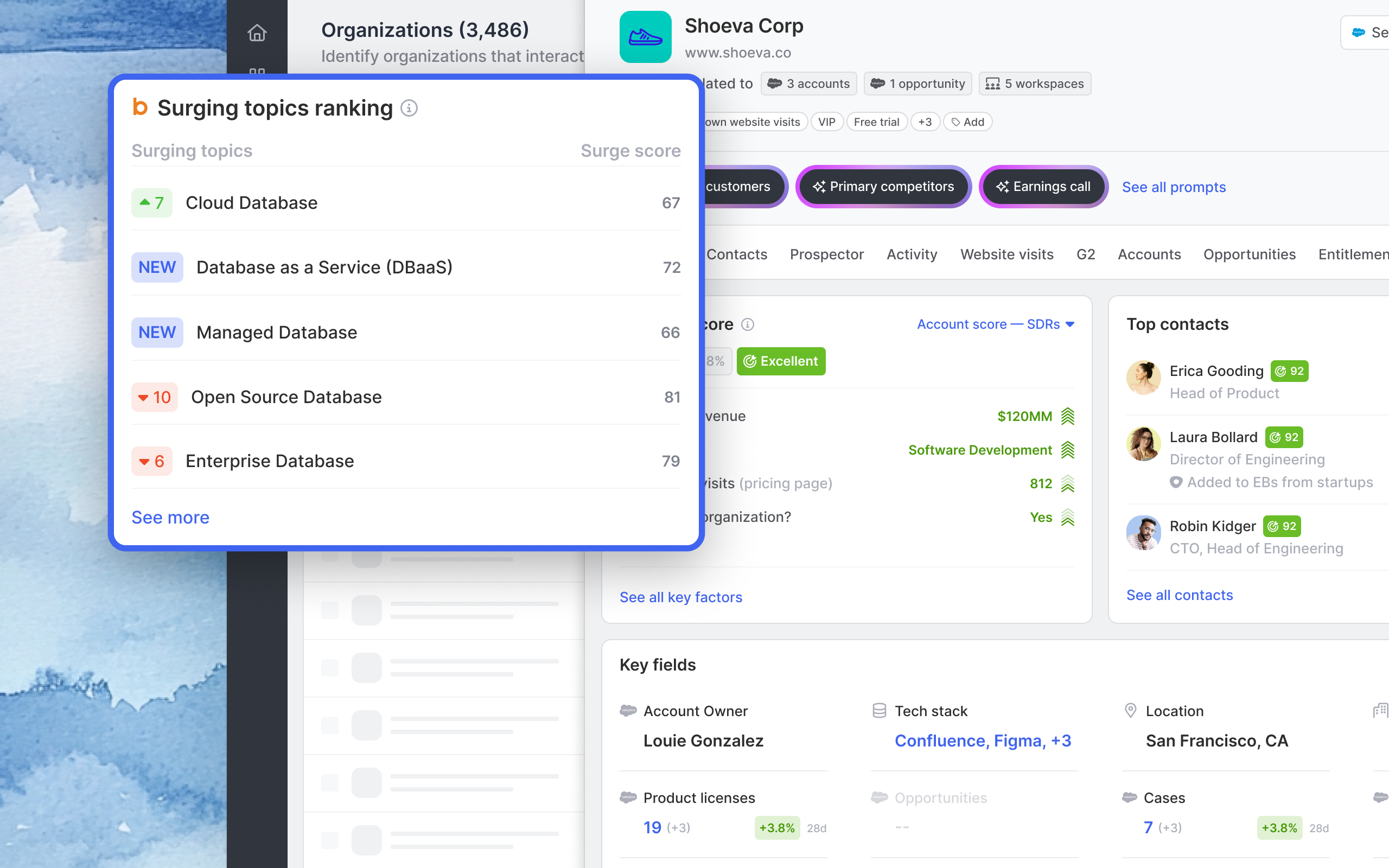
Common Room's embedded integration with Bombora gives you access to intent data from more than 4,000 business publishers, analysts, vendors, and content syndication providers, right alongside our comprehensive, person-level signal capture.
This enables marketing to surface account-level intent for ABM targeting and sales to identify the right contacts for outreach.
Onsite Intent
Old Way
Identify accounts visiting high-intent pages on your website.
New Way
Identify the buying committee members visiting high-intent pages on your website, down to the person.
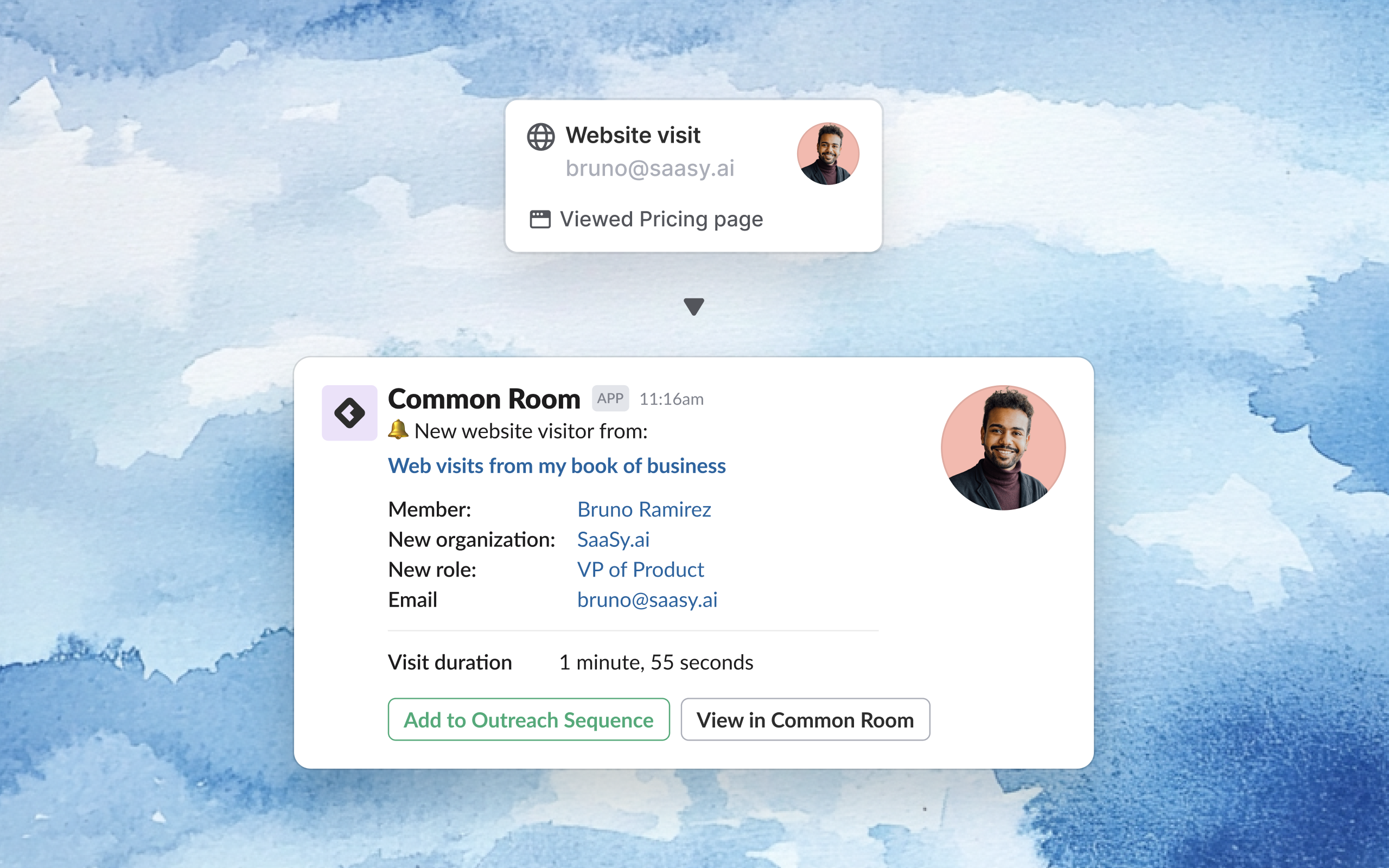
Common Room's out-of-the-box integration with Vector gives you up to 50% person-level visibility across US-based web traffic and the ability to action on it instantly.
This gives marketing and sales teams person-level visibility across web visits. They can segment, score, and sync contacts with CRMs, marketing automation platforms, and sales execution platforms without ever switching screens.
Internal Intent
Old Way
Miss out on key account context locked up in your data warehouse, CRM, and Gong calls or spend hours trying to manually compile it for each account.
New Way
Prioritize accounts using custom data objects tailored to your internal data sources and data model, as well as conversational insights pulled from Gong call recordings, automatically and at scale.

Common Room's customer journey graph, along with our integration with Gong, allows marketing and sales teams to unify any internal data and signals with external buying signals and automatically extract actionable insights via AI agents.
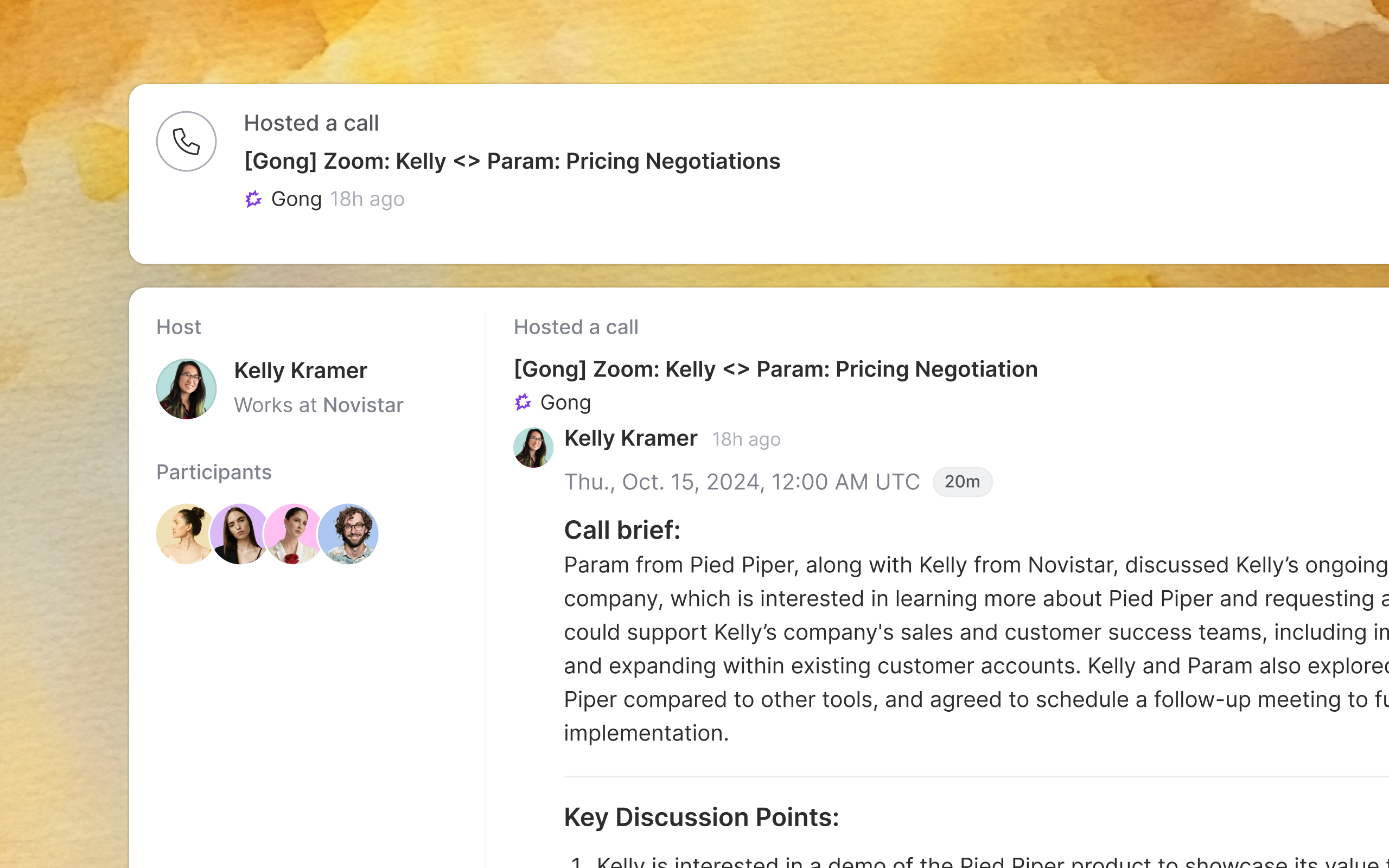
Granular insights in Snowflake and Salesforce, plus key persona and competitor mentions in Gong, are all available to score and prioritize accounts.
Ecosystem Intent
Old Way
Stay blind to intent signals across digital channels or purchase multiple point solutions and try to stitch them together with legacy intent data.
New Way
Capture every person-level intent signal across channels in one platform and automatically tie contacts to accounts via out-of-the-box identity resolution and waterfall enrichment.
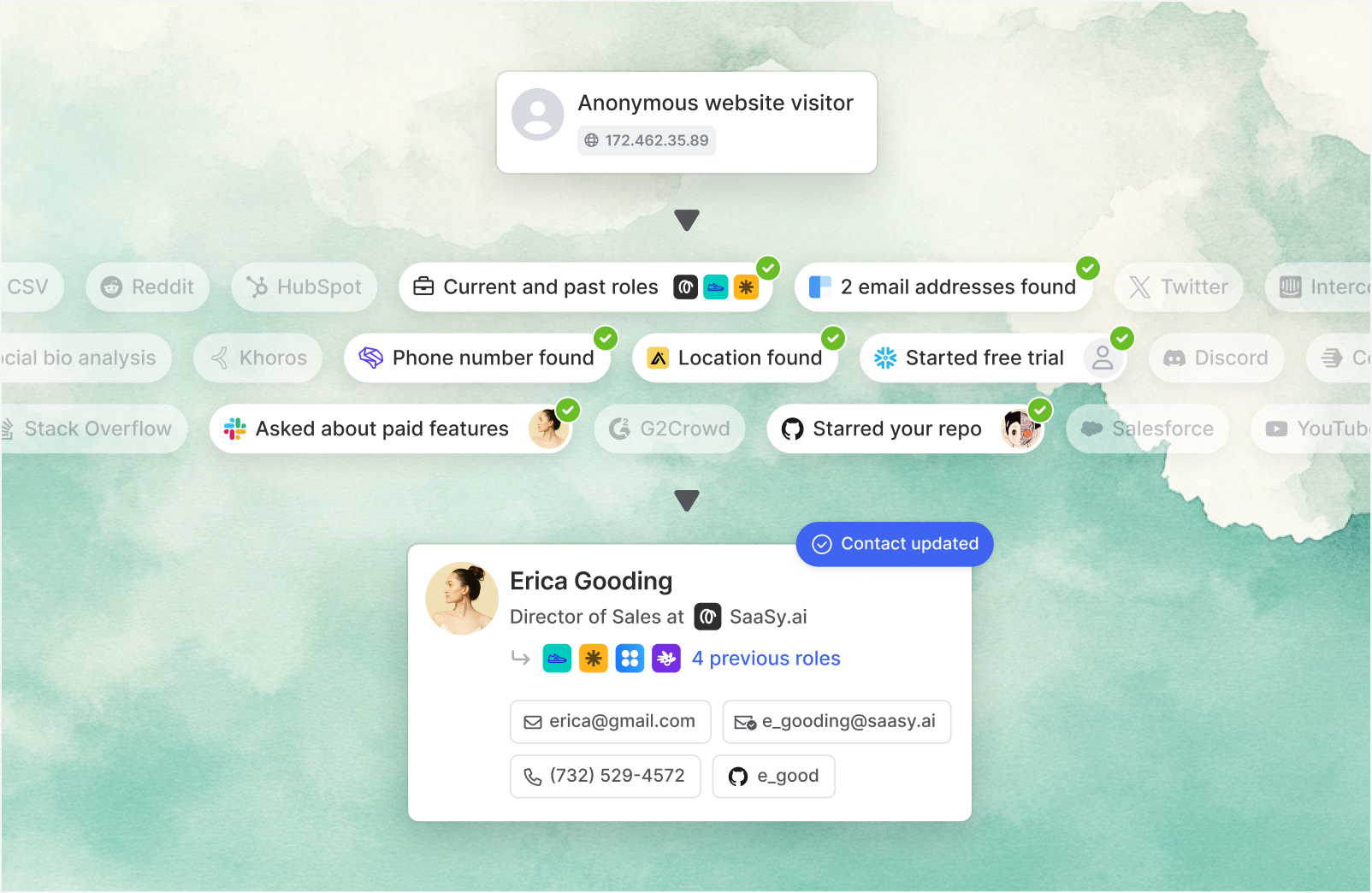
Common Room's 50-plus native integrations with popular digital channels, data warehouses, CRMs, SEPs, and more give marketing and sales teams complete visibility into the buyer universe across every channel, including owned data sources.
From product usage to social engagements, open-source activity, and community interactions, Common Room surfaces every buying signal at the person and account level and makes it ready to act on.
Custom Account Intent
Old Way
Try to track down relevant data using a third-party LLM and stitch it together with ABM intent data to assist with account prioritization and personalization.
New Way
Let an AI agent proactively find, synthesize, and summarize any custom account insight you want from owned data sources and the public web based on your unique business needs and GTM motion.
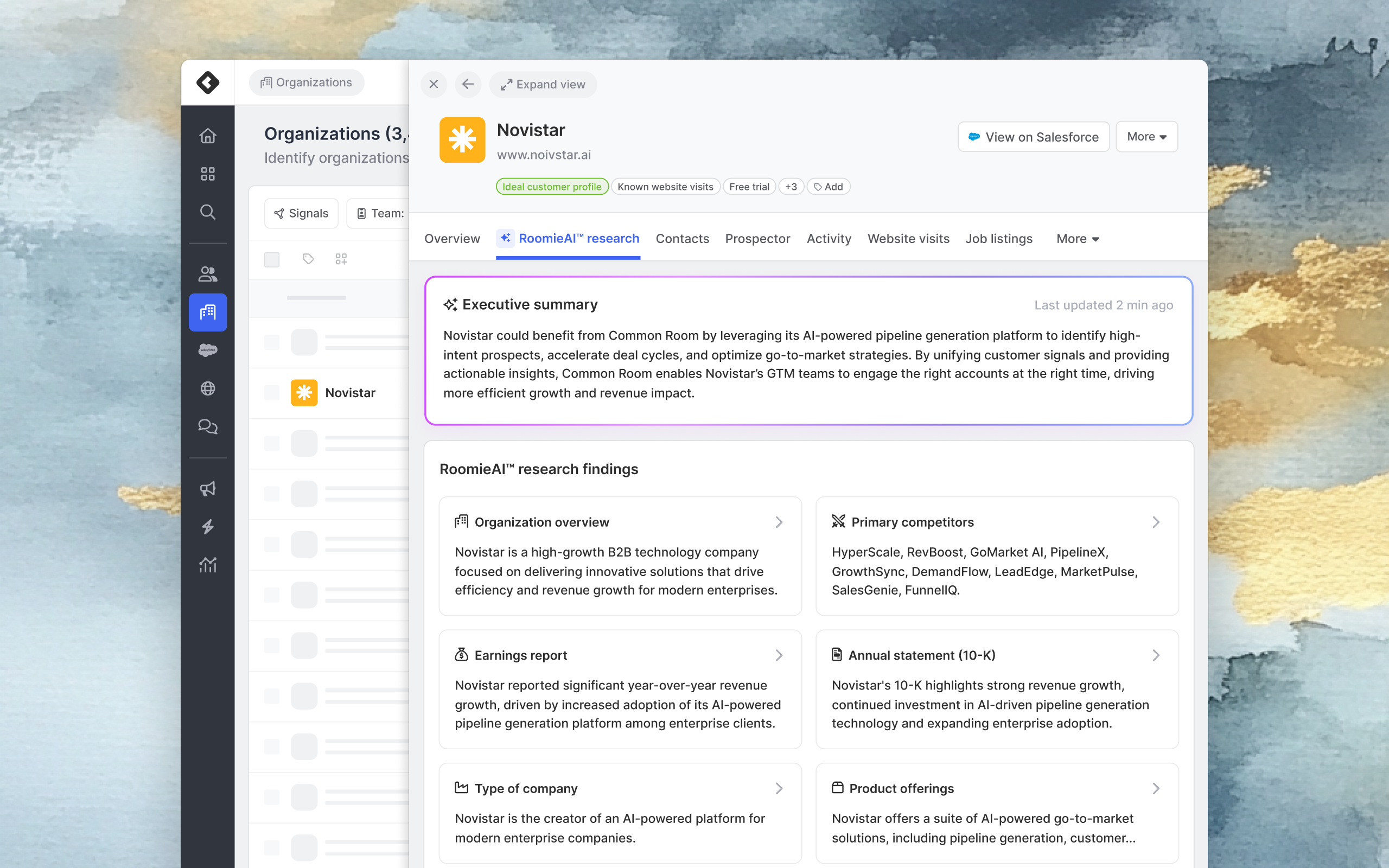
Common Room's suite of AI agents, RoomieAI™, allows marketing and sales to automatically surface custom account intelligence from both internal data sources and the open internet.
This empowers them to fully automate account research and generate personalized messaging for nurture or prospecting campaigns in real time based on any data point or signal.
Contextual Scoring
Old Way
Trust black-box algorithms to tell you which accounts to prioritize with limited explanation of why or how it should inform outreach.
New Way
Score both leads and accounts using every data point and signal captured in Common Room based on your custom weighting and see exactly how each action and attribute influenced the score.

Common Room's contextual, signal-based scoring delivers fully customizable, constantly refreshed, and completely transparent lead and account scores to marketing and sales teams using any combination of machine learning-enriched fit and behavioral data you want.
Person-Level ABM in Action
Workvivo by Zoom is an ideal case study in what person-level ABM looks like.
The marketing team works closely with sales to deliver cross-channel, person-level visibility in Common Room.
"Common Room is a living, breathing dashboard with real-time insights about real individuals and real engagement signals rather than static visuals of an account," said Global ABM Manager Joe Broome.
The GTM org uses a combination of HubSpot engagement data, web visits, LinkedIn interactions, job changes, job listings, and other signals to target accounts, identify prospects at the person level, and inform lead and account scoring.
Prospects and accounts are automatically tagged based on preset fit and behavioral criteria using automated workflows, such as companies that mention certain competitive technologies in their job postings.
If the team only has account-level visibility, it uses Common Room's Prospector feature to find and enrich high-fit contacts.
Contacts and accounts are automatically scored, segmented, and surfaced in a prioritized view via AI and automated workflows so sales reps can work the best accounts first with full context.
Meanwhile, the marketing team is able to improve its nurture campaigns based on the same intelligence.
"Common Room is also helping us improve our nurture emails as well," Joe said. "It's a free flowing of information between marketing and sales. Common Room is very much that connector."
And both teams can use RoomieAI Capture to further assist with prioritization and personalization, like focusing on accounts based on their current tech stacks.
The result is a high-functioning, highly targeted pipegen engine powered by every available data point and signal at both the person and account level.
"We're speaking to real buyers earlier in the buying cycle and engaging them with messaging that's personalized based on all the data and signals in Common Room," Joe said.
A Better ABM Strategy
Every signal, onsite and off. At the account and person level. Deanonymized and fully enriched. Made actionable for marketing and sales via AI and automation.
It's not the future. It's what modern GTM teams are doing now, today.
Person-level ABM delivers on the promise legacy tools have failed to live up to: reaching the right buyers, not just more accounts.
As growth and efficiency expectations continue to rise, GTM orgs must be able to rapidly narrow down their TAMs and engage the right people at the right accounts with better prioritization and personalization than their competitors.
We'll keep building the platform that makes a person-level ABM strategy work.
ABM Strategy FAQs
What Is a Modern ABM Strategy?
A modern ABM strategy prioritizes accounts using person-level buying signals, not anonymous, account-level intent. It unifies first-, second-, and third-party signals across every channel, so marketing and sales see who's in-market and why. The goal is to reach the right buyers, not just more accounts.
How Is a New ABM Strategy Different From Traditional ABM?
Traditional ABM stops at the account level, leaving sales to guess who to contact and why. A new ABM strategy deanonymizes intent down to the person, ties each contact to an account automatically, and shows how every signal shaped the score. That transparency is what legacy black-box scoring never delivered.
How Does an ABM Strategy Align Sales and Marketing?
Misalignment happens when marketing passes anonymous account scores that sales can't act on. A shared, person-level view gives both teams the same signals, context, and scoring criteria. Marketing targets the right accounts, sales knows exactly who to engage, and the finger-pointing stops.
Fix Broken ABM With Common Room
Request a demo or get in touch to see how Common Room's GTM AI shows you who to target, when to engage, and how to convert.