
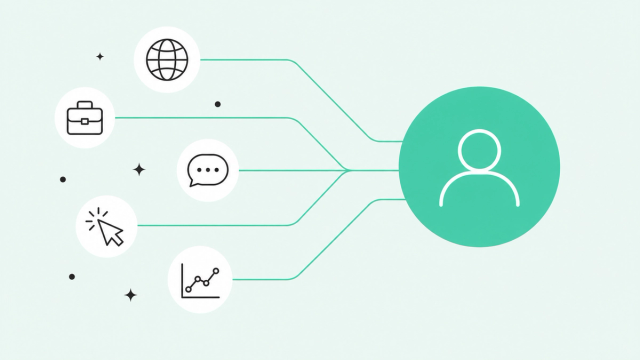
B2B lead intelligence software helps go-to-market teams find the right buyers before those buyers ever raise a hand. That matters because your prospects now decide largely without you. According to Gartner, any single sales rep sees only about 5% of a buyer's total purchase time.
The rest is quiet research you never see. The old fallback isn't helping, either. Woodpecker's platform data shows the average cold-email reply rate fell from 5.1% in 2024 to 3.43% in 2026.
So the problem was never a shortage of leads. It's knowing which buyers are in-market, and why, at the level of a real person. This guide covers what lead intelligence software is, how it works, and how to choose one.
Key Takeaways
- B2B lead intelligence software aggregates and enriches data and signals about potential buyers so you know who to engage, when, and why.
- The category has shifted from static contact databases to real-time buying signals plus identity resolution.
- Data goes stale fast, so freshness and continuous enrichment matter more than raw record counts.
- Evaluate tools on data quality, signal coverage, identity resolution, integrations, and AI-readiness.
- The right fit depends on your motion, budget, and region, so match the tool to how your team actually sells.
What Is B2B Lead Intelligence Software?
B2B lead intelligence software is a platform that aggregates and enriches data and signals about potential buyers. It tells go-to-market teams who to engage, when, and why, going well beyond a name and an email address.
In practice, several data types work together. These include verified contact data, firmographics and technographics, buyer intent data, behavioral signals, lead scoring, and data enrichment that fills gaps in your records. Instead of a flat list of contacts, you get a picture of accounts and people, plus the context that explains their interest.
It's worth separating this from your CRM. Your CRM is the system of record, storing the deals, contacts, and history your team already owns. Lead intelligence is the layer that feeds it with fresh external and behavioral data, so those records stay accurate and prioritized.
One holds what you know. The other tells you what changed and what to do next.
How B2B Lead Intelligence Software Works
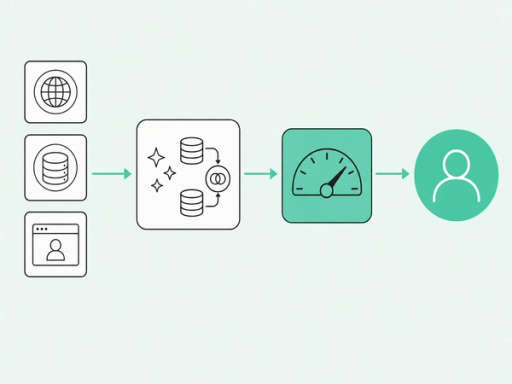
Under the hood, most platforms follow a similar pipeline. They start by aggregating data from three broad places.
The first is public sources like news, hiring, and company websites. The second is proprietary databases of contacts and firmographics. The third is your first-party systems, including CRM, product usage, website activity, and community.
Next comes the cleanup. The platform verifies records, enriches missing fields, and resolves duplicates, so you stop working from three half-complete versions of the same person.
Then it scores leads and accounts against your ideal customer profile. From there, it pushes the result into the CRM and sales engagement tools where reps actually work.
The step most tools skip, or do poorly, is identity resolution: Connecting anonymous and known activity to a real person and account. Without it, you get a website visit from "someone at Acme" and a Gmail signup that never ties back to a company.
With it, scattered activity becomes a person you can recognize and act on. This is what person360 handles, combining identity resolution with waterfall enrichment, stitching anonymous and known activity into one enriched profile. That resolution is what makes signals trustworthy rather than noisy.
The 4 Layers of Lead Intelligence: Contact Data, Intent, Signals, and Identity
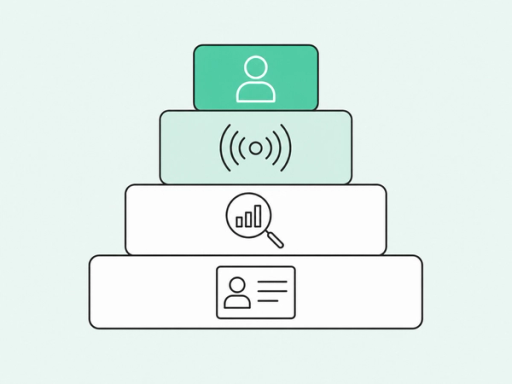
Most listicles rank tools without explaining how the underlying data fits together. It helps to think in four layers, from the most basic to the most valuable.
Contact intelligence answers "who do I reach?" This is verified emails and phone numbers, titles, reporting lines, and org charts. It's table stakes, and it's also the layer that decays fastest as people change roles.
Intent and predictive data answers "who's researching?" These are topic surges and account-level signals that a company is exploring a problem you solve.
Intent data is now a formal, analyst-evaluated category, with Forrester publishing a dedicated Wave on intent data providers. It's useful directionally, but it usually stops at the account level.
Signal infrastructure answers "what changed?" This is the widest layer, covering job changes, funding rounds, hiring surges, website visits, product usage, community activity, and social engagement.
Signals split into two useful buckets. Demand-capture signals tell you to act now, like a pricing-page visit or a demo request. Predictive signals point to future pipeline, like a champion changing jobs.
Identity resolution answers "who is this, really?" It's the layer that connects anonymous and known activity into one person-level view.
Without it, the first three layers stay fragmented. With it, a spike in activity becomes a named buyer at a known account with a clear reason to reach out. That's the difference between data and intelligence.
Why Lead Intelligence Matters More Than Ever
Buyers self-educate, and the numbers make the case plainly. Gartner finds a rep gets around 5% of a buyer's purchase time.
Forrester's 2024 research puts an average of 13 people in a B2B buying decision, with 89% of purchases involving two or more departments. It also finds that 86% of purchases stall somewhere along the way. Reach one contact with generic outreach, and you're addressing a fraction of the committee that decides.
Then there's the data itself. According to MarketingSherpa research cited by HubSpot, B2B data decays about 2.1% per month, an annualized rate of 22.5%. In plain terms, roughly a fifth of your records go stale every year.
That drift is expensive. Gartner estimated in 2020 that poor data quality costs organizations at least $12.9 million a year on average.
AI hasn't fixed this. It has raised the volume of output without raising its relevance, and it will happily generate confident outreach from wrong or partial data.
AI without context is just noise. An AI agent is only as good as the buyer intelligence feeding it. That's why the teams pulling ahead have better intelligence, not just better models.
The takeaway is simple: You don't need more leads. You need person-level, real-time intelligence that tells you which ones to work first.
What to Look for in B2B Lead Intelligence Software: 7 Criteria
Use these seven criteria to compare platforms against how your team actually sells.
- Data accuracy and coverage: ask how the vendor verifies records and how often it refreshes them, because coverage means little if the data is stale.
- Signal breadth: look for both predictive and demand-capture signals across many sources, not intent data alone.
- Identity resolution: confirm the tool can resolve anonymous and known activity to a person, not just flag account-level activity.
- Integrations: make sure it fits your existing stack, including your CRM, sales engagement platform, Slack, and data warehouse, with no rip-and-replace.
- AI-readiness: check whether the data is structured for trustworthy AI and LLM use, so agents reason over clean, unified context.
- Workflow activation: prioritize tools that turn insight into action where reps already work, rather than adding another dashboard to check.
- Pricing and contract flexibility: watch for credit overages, steep renewal increases, and lock-in that outlasts the value you get.
Score each tool against these, weighted for your motion. An enterprise outbound team will value identity resolution and signal breadth. A high-volume commercial team may weigh data coverage and pricing more heavily.
The Best B2B Lead Intelligence Software in 2026
There isn't one "best" tool, and any honest guide will tell you the same. The right choice depends on your motion, team size, region, and budget. What follows is a neutral look at the main categories buyers evaluate, with a fair best-for and a watch-out for each.
Broad enterprise contact databases, such as ZoomInfo, offer deep company and contact coverage at scale. Best for teams that want the widest firmographic and contact directory in one place. Watch-out: breadth comes at a premium price, and any static database still decays over time.
All-in-one prospecting and outreach tools, such as Apollo, combine a contact database with sequencing and email in one affordable package. Best for SMB and commercial teams that want prospecting and outreach together. Watch-out: teams that need the deepest firmographics or advanced intent signals may still add a specialist tool.
Predictive and ABM platforms, such as 6sense, focus on account-level intent and predictive scoring for coordinated account engagement. Best for enterprise marketing teams running account-based programs. Watch-out: strength is account-level, so person-level resolution and activation may need other tools.
EMEA and compliance-focused data providers, such as Cognism, emphasize verified international coverage and privacy-conscious data sourcing. Best for teams selling into Europe with strict compliance needs. Watch-out: coverage and value can vary by region and segment.
HubSpot-native enrichment and visitor identification, such as Breeze Intelligence (formerly Clearbit), enrich records and identify web traffic inside the HubSpot ecosystem. Best for HubSpot-centric teams that want enrichment built in. Watch-out: value is strongest inside that ecosystem, and standalone signal breadth is narrower.
Signal-first buyer intelligence, such as Common Room, unifies first-party data and real-world signals across dozens of sources. It then resolves them to person-level identity for AI-ready activation.
Best for teams that want to know who's in-market and why, not just who exists in a database. Watch-out: it complements your contact stack and workflows, so it rewards teams ready to run signal-driven plays.
| Tool / Category | Best For | Watch-Out |
|---|---|---|
Broad contact database (ZoomInfo) | Widest contact and firmographic coverage | Premium price; static records decay |
All-in-one prospecting (Apollo) | SMB and commercial prospecting plus outreach | May still need a specialist tool for depth |
Predictive / ABM (6sense) | Account-based enterprise programs | Account-level, not person-level resolution |
EMEA / compliance data (Cognism) | International coverage and privacy compliance | Coverage varies by region and segment |
HubSpot-native enrichment (Breeze Intelligence) | HubSpot-centric enrichment and visitor ID | Strongest inside that ecosystem |
Signal-first buyer intelligence (Common Room) | Person-level, in-market signal activation | Complements your contact stack and workflows |
How Common Room Approaches Buyer Intelligence
Common Room by Zoom is a buyer intelligence platform. It unifies first-party data and real-world signals across dozens of sources into a continuously updated, person-level view of every buyer.
It pulls from job changes, website visits, product usage, community activity, social engagement, and G2 reviews. Then it organizes everything around the people and accounts that matter to you.
Two engines do the heavy lifting. The first, person360, combines identity resolution with AI-powered waterfall enrichment, stitching anonymous and known activity into complete, enriched profiles.
The second, context360, unifies that enrichment, identity, and signal data into a person-level view designed for LLM consumption and trusted AI outputs. As a result, agents reason over clean context instead of guesswork.
From there, roomieAI surfaces the highest-priority signals and next-best actions, and dataAgent keeps CRM records accurate and deduplicated. It embeds in the tools you already use, including Salesforce, HubSpot, Slack, LinkedIn, GitHub, and Segment. Teams at Atlassian, Anthropic, Autodesk, Notion, Okta, and Snowflake use it to find net-new pipeline and improve conversion.
Following Zoom's acquisition in July 2026, that person-level buyer intelligence became the KNOW layer of Revenue OS. Zoom's native calling, sequencing, coaching, and forecasting turn that intelligence into coordinated action. A continuous learning loop writes every closed deal, coached call, and buyer signal back to the shared context layer. That way, targeting, coaching, and forecasting sharpen over time.
Frequently Asked Questions
What Is the Difference Between a CRM and Lead Intelligence Software?
A CRM is your system of record, storing the deals, contacts, and history your team owns. Lead intelligence is the layer that feeds it, bringing in fresh external and behavioral data so those records stay accurate, enriched, and prioritized.
How Much Does B2B Lead Intelligence Software Cost?
Pricing varies widely by data volume, seats, signal coverage, and contract length, so the real cost driver is scope, not sticker price. Read the fine print on credit overages and renewal increases, and weigh total cost against the pipeline the intelligence actually helps you convert.
What Is the Difference Between Buyer Intent Data and Buying Signals?
Intent data typically infers interest at the account level, showing that a company is researching a topic. Buying signals are specific, observable actions tied to a person or account, like a pricing-page visit, a job change, or a product-usage spike. That specificity makes them easier to act on.
Can AI Replace Lead Intelligence Software?
No, because AI without context is just noise. AI agents are only as good as the buyer intelligence feeding them. So lead intelligence matters more with AI, not less: it supplies the accurate, resolved data that makes AI outputs trustworthy.
How Do I Choose the Right B2B Lead Intelligence Software?
Start with your motion, budget, and region, then score tools on data quality, signal coverage, identity resolution, integrations, AI-readiness, workflow activation, and pricing flexibility. The best fit turns signals into prioritized action inside the workflows your team already uses.
See Common Room Work on Your Own Signals
More data hasn't made your pipeline clearer, and more leads haven't made it better. Person-level buyer intelligence tells you which buyers are in-market and why, so your team acts on the right ones first. Request a demo to see it against your own signals.