
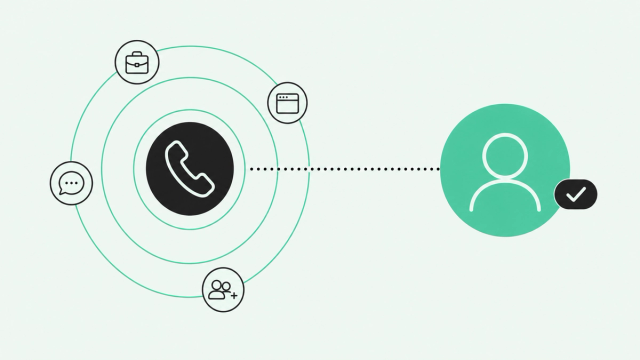
Your sales development reps (SDRs) are dialing more than ever. Most calls still ring out, land in voicemail, or end with a polite "not interested." Cold calling feels broken because most call lists give reps no real reason to call anyone today.
More dials won't close that gap. A better reason to call will.
This guide walks through a cold calling approach built for people who are new to the phone. You'll learn how to pick who to call, what to say, how to handle pushback, and how to measure what works. SDR leaders will also get a way to make good calls repeatable across the whole team.
What Is the Best Approach to Cold Calling?
The best approach to cold calling is signal-based. Call the right person at the right moment, open with a specific reason, ask a question, and end with a clear next step.
Cold calling means phoning a prospect who hasn't talked with you before and didn't ask you to call. A buying signal is an action that shows someone might be ready to buy, like starting a new job or hiring for a new team. Signal-based cold calling uses those actions to decide who to call, when to call, and what to say.
The opposite is volume-first dialing: working a big, static list from top to bottom with the same pitch. It feels productive because the dial count climbs. Buyers notice, and Gartner's 2025 B2B buyer survey found that "73% of B2B buyers actively avoid suppliers who send irrelevant outreach."
Gartner published that survey in June 2025, and the message is clear. The art of cold calling comes down to relevance, and every cold calling technique in this guide builds on that idea.
Does Cold Calling Still Work?
Yes, cold calling still works. The catch is that results vary a lot from rep to rep, and the gap is bigger than most leaders expect.
Connect rate is the share of dials that reach a live person. Gong's analysis of 300M+ calls from 2024 found the average rep connects with 5.4% of prospects, while top-quartile reps connect with 13.3%. Top reps also set meetings at a 16.7% rate, compared with 4.6% for the average rep.
Cognism's 2025 cold calling report puts the average cold calling success rate at 2.3%. We'll come back to that report when we cover timing and follow-up.
So what separates the top quartile? Top reps don't simply dial more. They spend their dials on better contacts: people with a real reason to talk and a direct dial.
A direct dial is a number that rings the person instead of a front desk. That makes the performance gap a list-quality problem first, since effort on the wrong list just produces more voicemails.
The same logic applies to cold calling in marketing. When marketing and sales agree on which signals matter, cold call marketing stops feeling random to the buyer and starts feeling timely.
Step 1: Build a Signal-Based Call List
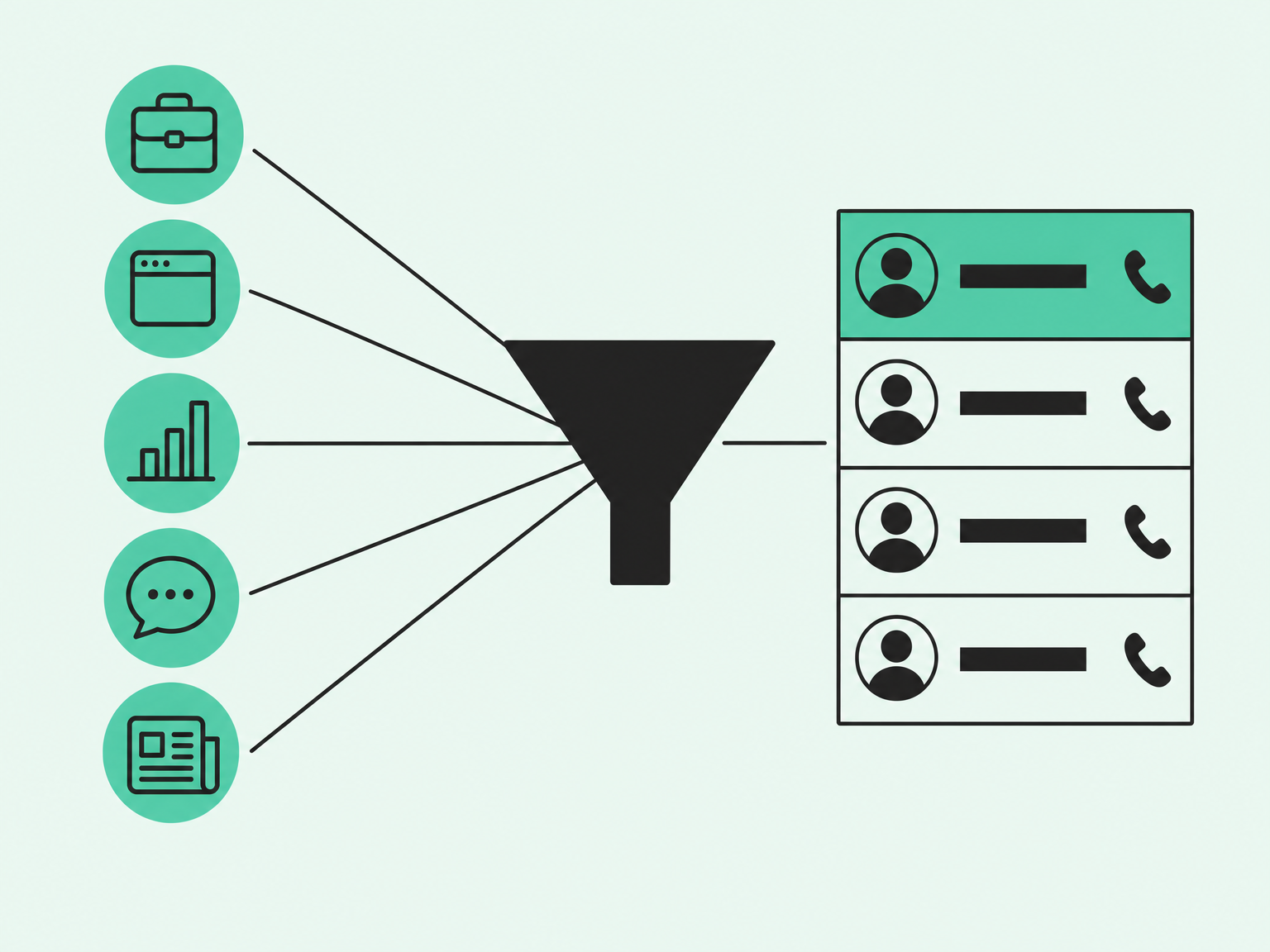
Your call list is your strategy. If the list is wrong, no script can save the call.
An intent-based outbound prospecting stack turns buying signals into a list worth dialing. The next two sections cover which signals to look for and how to rank them.
Signals Worth Calling On
Not every signal deserves a phone call. These five usually do:
- Job changes: A new leader often reviews tools, teams, and budgets in the first few months. It's a natural, public reason to say hello.
- High-intent website visits: Repeat visits to pricing or comparison pages suggest active research. Use them to decide who to call first.
- Product usage spikes: A jump in free-trial or product activity at one account shows growing interest. Call the person driving that activity.
- Community or social activity: Questions in your community or comments on your team's posts can reveal interest buried in the dark funnel.
- Hiring and news events: A funding round, an expansion, or a job posting for a relevant role gives you a timely reason to call.
These signals live in different places, which is why reps rarely see them together. Common Room's unified buying signals bring job changes, website visits, product usage, and community activity into one view. Reps stop tab-hopping to figure out why someone matters.
Job changes are the easiest place to start. In Common Room's own outbound, job-change plays drove twice the reply rate and twice the booked meeting rate of traditional cold outbound. Here's how our team uses them to turn job changes into pipeline.
Rank the Queue So Every Rep Calls the Right People First
A signal alone isn't enough. A job change at a company that could never buy from you is just trivia.
Ideal customer profile (ICP) fit describes how closely an account matches the companies you sell to best. Stack ICP fit with intent signals, then rank the list so the best-fit, most active people sit at the top.
Next, connect each account to a specific person with a direct dial. Calling a main line and asking for "whoever handles sales tools" is how afternoons disappear.
For SDR leaders, this is where consistency comes from. When every rep works the same ranked queue, results stop depending on which rep has the best instincts for list-building.
Even outsourced cold calling companies depend on this step, because dialing speed can't fix a bad queue. A sales dialer built on data is only as good as the list behind it.
Step 2: Prepare in 5 Minutes, Not 50
Prep should take about five minutes per call. You need enough context to sound relevant, and you can save the full account plan for the meeting.
Use this checklist before each dial.
| Checklist item | Question to answer | Example |
|---|---|---|
Who they are | What's their role, and what do they likely own? | New VP of sales who owns pipeline and team ramp |
The signal | Why are you calling today? | Started the role five weeks ago |
The likely problem | What challenge often comes with that signal? | Inherited a team with uneven results |
One question | What will you ask to start the conversation? | "What's on your list for the first 90 days?" |
The next step | What will you ask for at the end? | A 20-minute call next Tuesday |
Pro tip: Don't mention website tracking on the call. Use web visits to decide who to call first, then build your reason from public research like job changes, job postings, or company news.
Saying "I saw you on our pricing page" makes most people feel watched. A public reason feels like homework, and buyers respect homework.
Step 3: Open With the Reason You're Calling
The first 10-30 seconds decide whether the call continues. Your goal is simple: Earn the next 30 seconds.
Skip "Did I catch you at a bad time?" It hands the prospect an easy exit, and most people take it.
Instead, say who you are, name the reason you're calling now, and ask for a short window. A pattern interrupt is an opener that breaks the prospect's autopilot, and an honest, specific reason does that better than any gimmick.
Here are two example openers you can adapt.
Example opener for a job change:
"Hi Jordan, it's Alex with [your company]. I saw you stepped into the VP of sales role at Northwind last month, so congrats. New sales leaders often inherit uneven rep results. Can I take 30 seconds to explain why I called, and you tell me if it's relevant?"
Example opener for a hiring signal:
"Hi Priya, this is Alex from [your company]. I noticed Contoso is hiring six new SDRs this quarter. Teams growing that fast often struggle to ramp new reps quickly. Can I have 30 seconds, and then you decide if we keep talking?"
Both openers lead with something true and specific about the prospect. Neither one mentions a product, and both give the prospect control over what happens next.
Step 4: Use a Simple Cold Call Script
A cold call script works best as a talk track, a short set of talking points you adapt to each person. Keep it to three parts so you can remember it without reading.
| Script part | Goal | Example line | Rough length |
|---|---|---|---|
Intro | Say who you are | "Hi Jordan, it's Alex with [your company]." | Five seconds |
Reason for the call | Name the signal and the likely problem | "You started as VP of sales last month, and new leaders often inherit uneven rep results." | 15 seconds |
Question or call to action | Start a conversation or ask for a next step | "How are you deciding where to focus the team first?" | 10 seconds |
Here's a full example script built on a job-change signal.
Rep: "Hi Jordan, it's Alex with [your company]. Congrats on the new VP of sales role at Northwind."
Jordan: "Thanks. What's this about?"
Rep: "I'll be quick. New sales leaders often find that results vary a lot from rep to rep in the first few months. Is that something you're seeing?"
Jordan: "Honestly, yes. Two reps carry most of the number."
Rep: "That's common. What have you tried so far to close the gap?"
Jordan: "We're rewriting the playbook, but it's slow."
Rep: "Makes sense. We help sales teams give every rep the same prioritized list of who to call and why. Would 20 minutes next Tuesday at 10 a.m. be worth it to see if it fits?"
Jordan: "Sure, Tuesday works."
Rep: "Great. I'll send the invite while we're on the phone. Anything specific you'd like me to cover?"
Notice that the rep asks two questions before saying anything about what they sell. Practice the beats of the script until they feel natural, then let the words change with each call.
Step 5: Turn the Pitch Into a Conversation
A cold call works when the prospect talks more than you do. Your job is to ask good questions and listen closely to the answers.
Open-ended questions can't be answered with a simple yes or no. They usually start with "how," "what," or "why," and they invite the prospect to explain their situation.
Once the prospect shares a problem, dig into three areas:
- Time: Ask how long the problem has been around and what changed recently.
- Impact: Ask what the problem costs the team in missed meetings, lost deals, or extra hours.
- Priority: Ask where the problem ranks against everything else on their plate this quarter.
Hold your product until you've confirmed a real problem. Pitching early turns a promising conversation back into a cold call.
Your voice carries the whole call, since the prospect can't see you. Speak slowly, stand up to keep your energy steady, and smile, because people can hear it.
Step 6: Handle Objections Without Sounding Pushy
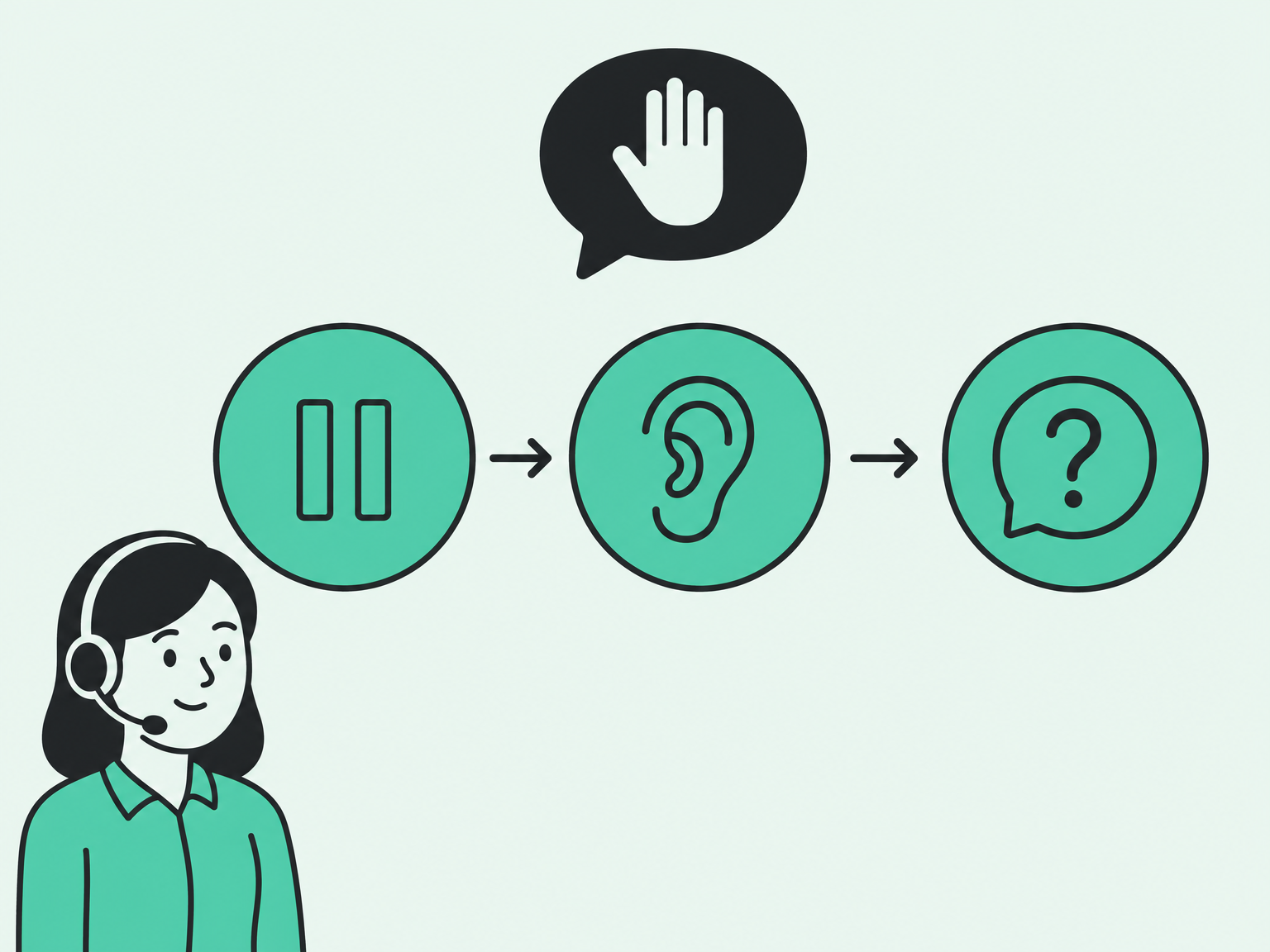
An objection is a reason the prospect gives for ending the call. Early in a call, most objections are reflexes rather than final answers.
Use a simple three-part method: pause, acknowledge, and ask a question. The pause shows you're listening, and the question keeps the conversation going without an argument.
| Objection | What it often means | How to respond |
|---|---|---|
"Send me an email." | "I want to get off the phone." | "Happy to. So I send something useful, what's your biggest priority this quarter?" |
"Not interested." | "I don't see why this matters to me yet." | "Fair enough. Is that because it's already handled, or because it's not a priority right now?" |
"We already use X." | "Switching sounds like work." | "Makes sense. What would you change about how it's working today?" |
"Call me in six months." | "The timing is off, or I'm being polite." | "Will do. What's likely to change between now and then?" |
"I'm busy." | "This isn't a good moment." | "Understood. Can I call back tomorrow at 2 p.m., or is later in the week better?" |
If they still say no after one question, thank them and move on. Respecting a no keeps the door open for the next signal.
Step 7: Close With One Clear Next Step
Every call should end with one specific next step. "Let's stay in touch" doesn't count.
Ask for a specific time, like "Does Thursday at 11 a.m. work for 20 minutes?" A specific time is easier to accept than an open-ended "When are you free?"
Then lock it in before you hang up:
- Confirm the details: Repeat the day, the time, and who else should join.
- Send the invite live: Send the calendar invite during the call or right after it.
- Agree on a light next step: If they aren't ready, offer one useful resource and set a follow-up date.
When to Call and How Often to Follow Up
The best time to cold call is soon after a signal appears. A fresh signal matters more than the perfect hour on the calendar.
At Common Room, we try to follow up on high-intent website visits with a call and an email within 15 minutes whenever we can. Our website-visit plays that book meetings show how that works in practice.
Persistence matters too. Cognism's cold calling report from 2025 found that "By the third call, 93% of conversations occur."
The same Cognism report names 10-11 a.m. as the best time of day to call, followed by 2-3 p.m. Treat these as directional benchmarks, since your buyers may keep different hours.
When you reach voicemail, keep these guidelines in mind:
- Keep it short: Leave messages under 30 seconds.
- Lead with the reason: Name the signal in your first sentence so they know why you called.
- Point to one next step: Say you'll send an email with the same subject so they can reply there.
Pair calls with email and LinkedIn messages that repeat the same reason. A short email right after a voicemail gives the prospect an easy way to respond without calling back.
Cold Calling Rules to Know Before You Dial
Cold calling guidelines differ by country and state. This section covers US federal basics and isn't legal advice.
The Telemarketing Sales Rule (TSR) is the Federal Trade Commission (FTC) rule for telemarketing calls. The National Do Not Call Registry is a federal list of numbers that people have asked telemarketers not to call.
The FTC's Telemarketing Sales Rule guidance says the ban on calling numbers on the Registry doesn't apply to business-to-business calls. The FTC last updated that guidance page in September 2025.
There's an exception to the business-to-business exemption. The TSR still covers calls meant to sell nondurable office or cleaning supplies.
The TSR also bars telemarketing calls to a person's home outside 8 a.m.-9 p.m. local time at the location called. That matters when a business buyer's number is also their home line.
The Telephone Consumer Protection Act (TCPA) is a separate federal law, and it applies more broadly. It covers areas like calls to mobile numbers and calls placed with autodialers, even when you're calling a business buyer.
Many states also have their own calling rules, and some are stricter than federal law. Before you scale a calling program, ask your legal team to review your lists, dialing tools, and calling windows.
How to Measure Cold Calling Success
Measure cold calling by the meetings and pipeline it creates. Dial count shows effort, while the metrics below show whether that effort is working.
| Metric | What it measures | What to watch for |
|---|---|---|
Connect rate | Share of dials that reach a live person | Low rates often point to bad numbers or poor timing |
Conversation rate | Share of connects that last past the opener | Low rates point to a weak opener |
Meeting-set rate | Share of conversations that end with a booked meeting | Low rates point to weak discovery or closing |
Meetings held | Booked meetings that actually happen | No-shows point to weak qualification or slow invites |
Pipeline created | Dollar value of opportunities that start from calls | Flat pipeline points to calls with the wrong buyers |
Signal-to-call time | Time between a signal appearing and the first call | Long gaps mean intent goes stale |
SDR leaders should compare these metrics by signal type, not just by rep. If job-change calls set more meetings than hiring-signal calls, shift more of the queue toward job changes before you change the coaching.
Reps should also score each call right after it ends. Three questions cover most of it: Did I open with the reason, ask before I pitched, and ask for a clear next step?
Tracking all of this by hand breaks down quickly. A signal-aware auto dialer logs every call to your CRM and keeps the buyer's signals in view while the rep dials.
It also offers local presence, which shows a caller ID that matches the prospect's area code. Voicemail drop lets reps leave a prerecorded message in one click and move to the next person in the queue.
Signals also make personalization practical without hours of research. Common Room customer Grammarly shows how this plays out. Grammarly's signal-driven outbound results include a 50% increase in reply rates and a 35% decrease in lead-to-opportunity time.
Clear metrics help with cold calling motivation, too. Reps stay motivated when they can see which calls turn into meetings and why.
Frequently Asked Questions
New callers tend to ask the same handful of questions. Here are short answers to the most common ones.
What Are the 5 Stages of Cold Calling?
The five stages of cold calling are research, the opener, discovery questions, objection handling, and closing with a next step. A signal-based call list makes each stage easier because you start with a real reason to talk.
What Are the Biggest Mistakes in Cold Calling?
The biggest mistakes are calling without a reason, pitching the product too early, and ending without a clear next step. Most of these start with a weak list, since reps with no real reason to call fall back on a generic pitch.
What Is the 80/20 Rule in Cold Calling?
The 80/20 rule in cold calling is a rule of thumb that roughly 80% of your results come from about 20% of your calls. Those calls usually have the strongest signal and ICP fit, so rank your queue to reach them first.
How Long Should a Cold Call Be?
A first cold call usually needs just a few minutes to share your reason, ask a question or two, and book a meeting. Save deep discovery for the meeting itself.
When Should I Mention My Product?
Mention your product only after the prospect confirms a problem you can help solve. Until then, keep the focus on their situation and your questions.
How Do I Get More Confident on Cold Calls?
Practice your opener out loud, role-play objections with a teammate, and start each calling session with your best-fit, highest-signal contacts. Early wins make the next dial feel a lot less scary.
Make Every Cold Call a Little Less Cold
The best cold calling approach is simple to describe and hard to fake. Build a signal-based list, prep in five minutes, open with your reason, turn the pitch into a conversation, and ask for one next step.
Common Room by Zoom pairs buying signals and person-level context with Zoom's native dialing, so reps call with the reason already in view. Each call outcome feeds back into that context, so the next queue gets sharper.
Request a demo to see how signal-based cold calling works for your team.