
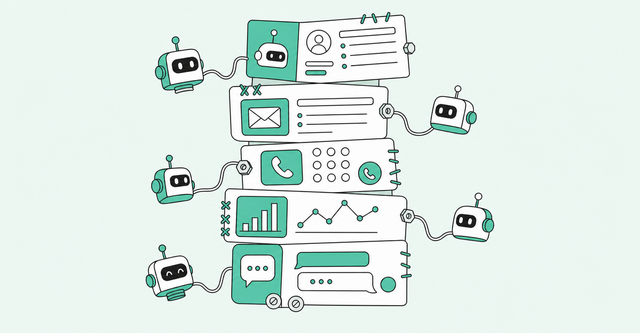
Every sales team already has AI in its workflow. The question most IT and RevOps leaders haven't fully reckoned with yet is whether it's actually working for you, or just making your team faster in the wrong direction.
That's exactly the problem we built to solve. Together with Zoom, we've launched an AI-powered revenue operating system that combines buyer intelligence, conversation intelligence, and revenue forecasting into a single platform, replacing the fragmented tech stacks of yesterday with one shared context layer. Early customers like Barracuda Networks have already seen a 15% increase in deals closed and 5% faster deal velocity.
When this kind of consolidation doesn't exist (or isn't comprehensive, and powered by a context layer), teams run into a compounding, specific problem: The Frankenstack. Our CEO Linda Lian explained the core problem in a recent interview with UC Today:
"Historically when you think about Revtec, it's been a proliferation of point solutions. You have a vendor or multiple vendors for just the identity piece, data and enrichment. You got a vendor for intent. Then you've got a tool that does your email sequencing. You've got another tool that does your dialing. Then you've got another tool that does your sales coaching and conversation intelligence. And then you've got another tool that is supposed to take all of this and give you an accurate forecast. And the reality is what we call this Frankenstack of revenue tooling is really not primed for the AI era at all."
That's not a hypothetical. It's the default state of many revenue orgs today, and the problem compounds when you add AI into the mix. As Lian puts it: "Suddenly, you've got an AI agent or co-pilot within each of these fragmented tools with none of them having full context of the buyer journey or who those buyers are."
The result? A dozen partial intelligences, none aware of what the others have already seen or decided. And for the rep on the ground, it creates what Lian calls the "swivel chair effect," when A sales rep has to log into 12 different tools just to figure out who they should go reach out to on any given day.
The Specific Risk: Rules That Live in One System, Enforced by None
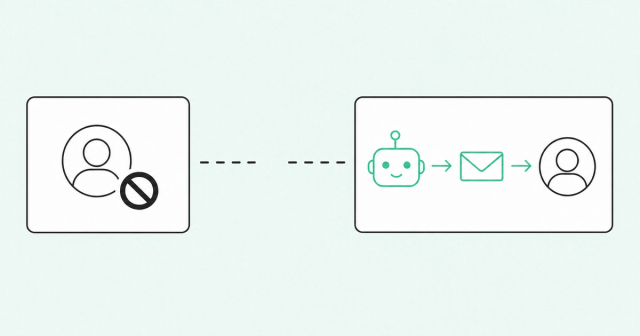
Here's the scenario Lian uses to make the stakes concrete:
"If someone is on a do not contact list and that sort of logic is stored in one of your business systems, like a CRM, you don't want a rep to be able to just go and reach out to them because they're using an AI co-pilot to go do that. These rules around how we engage our customers are so critically important. It's the foundation of customer trust."
A do-not-contact flag sitting in Salesforce does nothing if the AI agent drafting outreach is reading from a sequencing tool that's never queried the CRM. A suppression list set by legal does nothing if an AI co-pilot can be prompted to "find three more contacts at this account" and acts on whatever it finds, without checking who's opted out, who's under a specific jurisdiction's consent rules, or who a rep was explicitly told not to contact after a complaint.
This is just what happens with a fragmented stack, because with a separate AI running inside every tool, there's no single source of truth to base decisions on. Each tool reasons over its own partial view, and compliance logic that should be universal becomes something that only shows part of the picture. Even on the off chance that two or three of the tools happen to use the same source of truth (like if they're all pulling from the same up-to-date spreadsheet, for instance), there's no guarantee that they'll get it right, or that the spreadsheet they're pulling from has the most current information at any given time. The best way around this single source of truth problem is simple: ground every AI tool in the same, continually updating, informed context layer, so that what every tool considers true is, well, actually true.
What Governed Execution Actually Looks Like
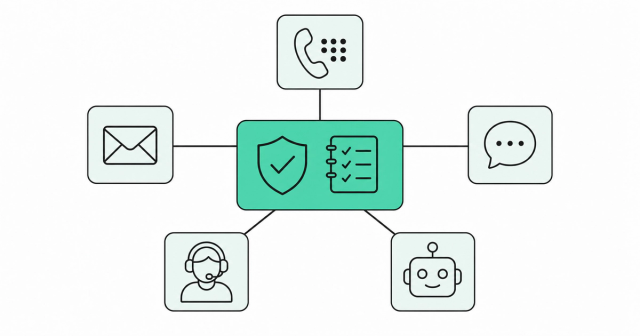
This kind of configurable truth layer is where revenue architects, not individual reps, define how AI-driven execution is allowed to run. What Zoom and Common Room are building toward is what Lian calls a "learning loop," a system where "every outcome has the potential to become context for the next decision."Concretely, governed execution means:
- Defined ownership over how AI-driven plays may be configured and run, so execution reflects intentional decisions made by the right people, rather than whatever a rep or tool defaults to on its own. The context layer gives clear direction to the AI.
- Centralized workflow control, so the business rules your team defines (like do-not-contact flags, consent requirements, or named accounts under legal hold) can be configured in one place and referenced consistently across plays, rather than re-entered separately in every tool. When rules are configured in one place, tools can reference them consistently.
- Fully managed integrations, so the connections between your CRM's system of record and the tools actually executing outreach aren't ad hoc workarounds that break when someone leaves or a vendor changes its API. A change made once is reflected across the entire sales motion.
- Full visibility into what's running, so when a compliance question comes up, like "did we contact this account, and under what rule?", there's one place to look, not twelve. Your reps stay focused on pipeline, not paused while someone digs through tool after tool trying to reconstruct what happened.
This is the architecture Zoom's Revenue OS is built around: a shared context layer that unifies buyer intelligence (Common Room), conversation intelligence (Zoom Revenue Accelerator), and execution tools (dialer, email sequencing, SMS) with centralized rules enforcement. The goal, as Lian describes it, is to "unite that rich context of the entire buyer life cycle" so that whether a human or an agent is taking action, it's informed by the full picture and constrained by consistent rules.
The Trust Problem Is the Adoption Problem
Lian's framing is worth sitting with: these rules are "the foundations of customer trust." That's not a compliance footnote. Buyers notice the difference between outreach that respects their preferences and outreach that doesn't. Organizations that establish consistent, rules-based engagement practices may be better positioned to build the kind of trust that supports long-term AI adoption. Executive buy-in for AI in sales grows when reps and leaders can see what's running, why, and on whose authority.
Get Governance Built In, Not Added On Afterward
Before adding another point solution with its own embedded AI agent, the questions worth asking are simple: Where does our suppression and consent logic actually live, and does every tool touching this account respect it? If an AI agent took an action today, who set the rule that allowed it, and can we trace it back? How many separate systems would need to be updated if a single compliance rule changed tomorrow?
If the honest answer involves a dozen tools and no single source of truth, that's the Frankenstack showing up as a trust and compliance liability, and an efficiency one. The two aren't separate problems. They're the same problem, showing up in different places.
A fragmented stack doesn't just slow reps down. It creates the conditions where compliance failures happen in the first place. When a do-not-contact flag lives in the CRM but the AI drafting outreach is reading from a sequencing tool that's never queried it, you don't just have a compliance gap, you have a rep wasting time on a contact they were never supposed to reach.
The same is true in reverse. Every time a rep has to log into 12 different tools to reconstruct what happened with an account because a compliance question came up, that's pipeline time lost. Governance that lives in one system but isn't enforced across the others doesn't protect the business, from a compliance standpoint or from a revenue perspective. Fragmentation like this adds friction without adding safety.
Compliance and efficiency go hand in hand because both depend on the same underlying condition: a single source of truth that every tool actually references. When rules are set once and respected everywhere, reps move faster and within guardrails. When that shared context layer doesn't exist, you get the worst of both worlds: slower execution and higher risk.
That's the case for governed execution: not compliance or efficiency, but a system where doing things right and doing things fast are the same motion, and reps may be better positioned to move quickly and operate within guardrails.
Our revenue OS replaces that sprawl with a single shared context layer, where the rules get set once, by the people responsible for them, and referenced consistently across plays and surfaces, including Auto Dialer and Engage.
See how we bring governance and execution into one platform, or talk to our team about how to bring your revenue stack together.Note: Compliance, privacy, and legal requirements vary by organization, jurisdiction, and use case. Consult your legal and compliance team to evaluate how any platform or tooling change affects your specific obligations.