

More tools were never the fix.
But you added them anyway: enrichment, intent, orchestration, content AI. Another dashboard that promised clarity, but pipeline still feels harder to create than the tool count suggests.
That's a sign the stack was never the problem.
Validity's 2025 CRM research found that 76% of users say less than half of their organization's CRM data is accurate and complete. Thirty-seven percent say poor data quality is costing them revenue. LeanData's 2026 State of Martech and Revenue Operations found the same pattern on the AI side: 82% of leaders agree clean data and reliable routing have to come before scaling AI. Only about one in three have systems that can do it. Just 11% have built AI for lead routing.
The problem isn't effort. It's the absence of a system that turns buyer truth into a shared decision, and a decision into action.
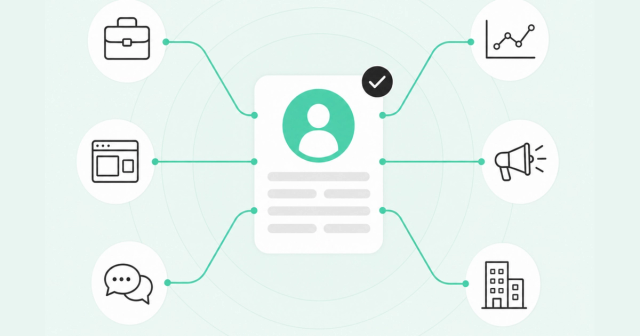
We call that system a revenue operating system. It's not a single app rebranded as "the OS." It sits alongside your CRM and answers three questions every day: Who matters right now? Why do they matter? What should we do next, and where does that work happen?
This is the first in a three-part series on what we're building together with Zoom: Know, Act, Learn.
Three layers, one system. This piece is about Know, because you can't act on a buyer you don't actually know, and you can't learn from an outcome you never understood in the first place.
The System of Record Was Never the System of Decision
| Layer | Job | What it optimizes for |
|---|---|---|
CRM | System of record | Storing accounts, contacts, deals, and activity |
Analytics / BI | System of explanation | Reporting what happened and where pipeline slipped |
RevOps tooling / automation | System of execution | Running workflows, routing, and process steps |
Revenue operating system | System of decisions and coordinated action | What matters now, who owns it, and the next best step |
A CRM remains essential. You still need a durable place for opportunity history and forecast structure. Analytics still matter for diagnosis. RevOps tools still execute. What most stacks lack is the decision layer built on complete buyer intelligence: person-level identity, multi-source signals, shared definitions of readiness, and plays where reps already work.
One clarification, since the term gets overloaded: some vendors use "revenue operating system" for billing and monetization. That's a real category. This series is about the GTM growth OS that marketing, sales, and RevOps run to create and convert pipeline.
Why Teams Are Searching for This Now
GTM teams stitch together eight to 10 or more tools across enrichment, intent, orchestration, and execution. Each tool solves a slice. Few of them agree on who the buyer is or what "ready" means.
Data silos still block digital transformation for most IT leaders. That's why integration work never feels finished.
CRM trust is thin. The same Validity research shows 45% of users say their CRM data isn't ready for AI. When the system of record is partial, every downstream model inherits the mess.
AI ambition is racing ahead of readiness. LeanData's 2026 survey found leaders want AI-assisted GTM, but only 11% have built AI for lead routing and assignment. That's the lowest adoption among agent types measured, while content creation sits near 46%. Teams can generate more than ever and still not decide anything faster.
The result shows up the same way everywhere:
- Campaigns stay broad instead of account-tied.
- Sales doesn't consistently use marketing's signals.
- More leads don't mean better pipeline.
- Product and dark-funnel engagement never become sales-ready motion.
AI increased the volume of data, signals, activity, and content. It didn't increase clarity, prioritization, or conversion. That's the signal-to-action gap, and it's structural. You don't close it by adding a widget. You close it by building a system that knows the buyer first.
Know Comes First: Complete Buyer Intelligence
Accounts don't buy. People do.
Know means person-level intelligence across CRM, product usage, website activity, community, social engagement, job changes, and every other first- and third-party signal you have, resolved to one profile per person and account. Not a quarterly cleanup project. Continuous. Title changes, personal email signups, and multi-channel journeys don't wait for your next data hygiene sprint, and neither should your intelligence layer.
This is the identity layer Common Room owns outright: Person360 and Context360, built on waterfall enrichment and identity merging that reduces duplicate records by up to 79% in product use. Duplicate identity is the silent tax on every play you run. Without this layer, you're not operating a revenue system. You're operating a marketing automation system of guesses.
Knowing who someone is isn't enough on its own. You need shared definitions of what matters. That's Buying Committee mapping, showing coverage gaps and who to engage first, and AI Scoring that gives reps a transparent, explainable priority instead of a black box they learn to ignore. Job changes, pricing-page depth, product surges, community questions, dark-funnel research: these tell different stories, and a Know layer worth trusting combines them into one. Marketing and sales have to agree on what "ready" means. No amount of AI glue fixes that if MQLs and AE priorities live on different planets.
What Comes Next: Act and Learn
Knowing the buyer only matters if it turns into the right move at the right moment, and if every outcome makes the next one smarter.
That's Act: finding the right person, reaching them through the right channel, and increasingly letting an agent do the work through tools like Dial, Engage, and Ads. And it's Learn: did they respond, did the deal move, did we win, with every answer becoming context for the next decision through Coach and Forecast.
We'll get into both in the next two installments. For now, the point is this: none of it works without Know. RevOps is the function that builds this. A revenue operating system is what that function runs so marketing, sales, and ops share one motion instead of three spreadsheets.
How You'll Know It's Working
Vanity metrics, like agent prompts run and content drafts generated, will flatter you. Pipeline metrics will tell the truth.
Leading indicators
- Percent of priority records with trusted identity and current enrichment
- Duplicate rate trending down
- Signal-to-first-touch SLA on high-intent events
Pipeline indicators
- Conversion by play versus baseline sequences
- Meetings and opportunities sourced from signal-driven outreach
- Cycle time on prioritized accounts versus the rest of the book
Organizational indicators
- Fewer tools in the critical path for list building and research
- Marketing influence on pipeline that sales recognizes
- Rep adoption of embedded workflows without enablement theater
Weaviate's RevOps team centralized open-source, product, social, and CRM signals into one command center with scoring and HubSpot sync. The result was threefold pipeline generation, not more dashboards. That's the bar: clarity that changes how reps spend the day.
What's Next
CRM stores the record. Analytics explain the past. The Know layer is what makes today legible enough to act on, and Common Room's buyer intelligence is what makes that layer real, paired with Zoom's reach into where sales conversations already happen.
We have to prove this works before we ask you to trust it. That's what the next two parts of this series are about. If you want to see buyer intelligence, scoring, and the plays it powers working as one system, request a demo.