


You're a rep. You had a deal in commitment, and it slipped. Now it's the weekly sales forecast call, and your manager wants to know why your number went down.
You have an answer, because reps always have an answer. The last call went fine. Budget was the only open item, and budget got pushed. It's a timing issue. You didn't lose it. It was pushed. Next quarter.
Reasonable story. Wrong story. The real answer sat in a transcript from two calls earlier, where the buyer had what you thought was a small pricing objection.
But nobody rereads transcripts before a sales forecast. You're working from what you remember, and what you remember skips the part that mattered.
That's one rep and one deal. The bigger problem is that it's happening across the whole team at once: different reps, different deals, different weeks, all in silos.
Deals push. Commits adjust. Every adjustment comes with a reasonable story built on recency bias instead of evidence.
Nobody connects them until the QBR, when someone lines the quarters up side by side and notices three deals stalled on the same objection. By then the quarter is already spoken for.
So why wait until the QBR to pattern match?
In Part 1 of this series, I made the case that you can't act on a buyer you don't know. In Part 2, our SDR Manager, Clare McDonagh-Poh, showed what it looks like to act on that signal instead of just sending volume at it.
This is the last piece, and it's the one most teams skip, because it looks like teams already answer the question. Every forecast call asks what's changed. The problem isn't the question.
The answer comes from a rep's memory instead of the deal itself, and the pattern only shows up once a quarter, after it's already cost you.
That's learn. Did they respond? Did the deal move? Did we win? The answer has to come from evidence, not recall, or the loop back to know and act never closes.
How a Forecast Actually Gets Built
Most sales forecasts get built the same way. Reps self-report where a deal stands. Managers negotiate the commit up or down based on gut feel and quota pressure.
By the time the number reaches the CRO, it's already stale, filtered through however many people touched it on the way up.
Gartner puts a figure on it: only 45% of sales leaders and sellers have high confidence in their organization's forecasting accuracy, according to its 2020 State of Sales Operations Survey. That gap traces back to the same root cause we named in Part 1: CRM data nobody trusts enough to build a sales forecast on. In the same Gartner survey, only 47% of respondents believe their organization has high-quality data.
That matters more now than it used to. Gartner predicts more than 40% of agentic AI projects will be canceled by the end of 2027, due to escalating costs, unclear business value, or inadequate risk controls. It's a dynamic that hits CRM and forecast deployments just as hard.
Fractional RevOps leader Jacki Leahy put words to why: AI does not pause to double-check. It executes on the data it has, so wrong records become wrong actions at machine speed.
A sales forecast built on stale self-reporting was always a guess. Handing that same guess to an agent doesn't make it less wrong, it just makes the wrong answer arrive faster.
Forecast is built to answer three questions, in order: are we going to hit the number, if not why, and what do we do about it. Most tools stop at the first one.
A rollup tells you whether you're on plan. It doesn't tell you why, and it definitely doesn't tell you what to do next.
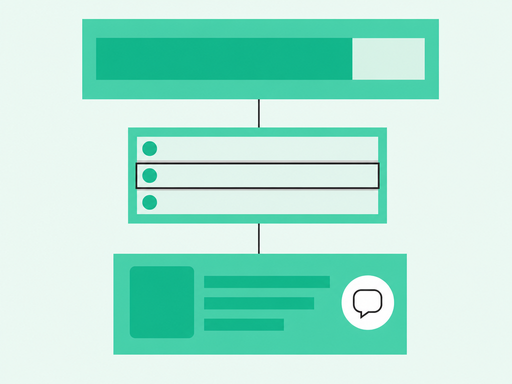
Here's what that looks like on the deal from the opening. A leader starts at the gap between pipeline and goal, sees the team is short, and drills into the rollup by rep.
One name stands out. They drill again, into that rep's deals, and land on the exact opportunity that slipped.
From there, they don't have to ping the rep and wait. They can see the call transcripts, the sentiment, and the moment price came up and the conversation cooled, right there, before anyone gets paged.
Your forecast said commit. Your buyer said otherwise. Now the answer to "what changed" comes from the deal, not from someone's memory of it.
The sales forecast grades itself, too. Accuracy tracks what each person called against what actually closed, so "high confidence" stops being a phrase and starts being a track record. Pacing shows whether "we'll make it" has real coverage behind it or just optimism with a deadline attached.
None of this requires RevOps to build a new report every quarter. RevOps configures boards, metrics, and cadence once, no engineering ticket required.
And when a leader edits a commitment or a deal field from inside that view, it writes back to the CRM. The forecast and the system of record stop disagreeing about whose number is right.
When leaders aren't spending Tuesday reconciling three systems into one spreadsheet, that time goes somewhere better: coaching the team and closing the gap.
Turning One Rep's Answer Into Everyone's Playbook
You don't have to wait for the QBR.
The scorecard from that call flagged it automatically: the rep didn't handle the price objection well. Not a mystery buried in a recording nobody rewatches. A flag, right after the call.
That's useful on its own. It's more useful once you ask a different question: who on the team handles this well? A quick query surfaces it.
Someone on the floor already has a strong answer for a buyer going quiet on price, they just never got asked to teach it.
That answer becomes an AI playbook, and reps practice it in a short roleplay before it ever reaches a real buyer again. The methodology underneath, BANT, MEDDICC, whatever your team runs, stays built into the workflow instead of living in a slide deck nobody reopens.
The next time a rep hits that same objection live, it shows up as a talk track in front of them, mid-call, in the meeting or on the dialer. Not a "next-best action" nudging in the background. A specific line, ready when they need it.
The Loop Closes Back to "Act"

That winning price message doesn't stop at one rep's next call. Teams build it into the engage sequences Clare covered in Part 2, so every rep working a similar deal sends it, not just the one person who figured it out.
Sequence performance shows whether it actually moved reply rates and meetings. That means the team finds out if the fix worked instead of assuming it did.
That's the proof that this is a system and not a stack. An outcome from a sales forecast call turns into a coaching moment, and a coaching moment turns into outreach that every rep runs. The results from that outreach come back around to sharpen the next forecast.
Would forecast have saved the deal from the opening? Maybe not. But we'd have seen it slipping two calls earlier instead of finding out at the worst possible moment.
The next rep who hits that same price objection handles it. The next sequence that goes out already has the right message in it.
That's the whole bet behind learn: buyer intelligence stays complete and trusted, so the sales forecast gets less wrong every quarter. Not a forecast that's always right, but one that improves as the loop keeps closing.
If your sales forecast still lives in a spreadsheet, request a demo and bring your ugliest pipeline.