
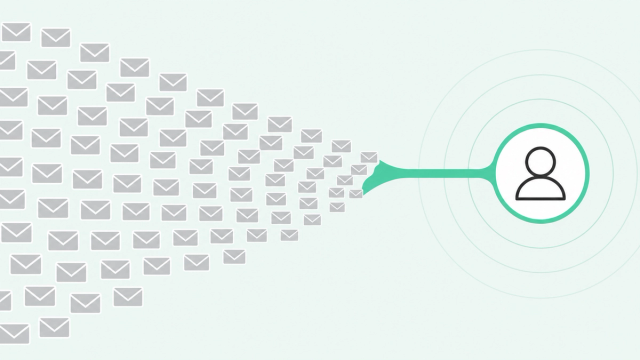

I lead the SDR org here, so I know exactly what Monday morning looks like. SDRs pull up the dashboard. Sequences fired all weekend. Lists refreshed. Everything's green.
Then they check replies, and the good feeling evaporates.
What keeps getting harder isn't activity. It's the part that pays the bills: meaningful replies, real connects, and meetings that turn into opportunities. No leader loses sleep over their team hitting their send numbers, and they don't lose sleep over outreach volume…
The entire SDR org loses sleep over conversion.
So the market reached for a familiar answer for sales development teams: buy an AI SDR, let software take the grind. I get the appeal.
In theory, that fixes bandwidth.
In practice, "AI SDR" has become a messy label. It now covers full-autonomy outbound agents, inbound website bots, and AI assist added onto sales engagement tools. I've piloted versions of all three. Some of those systems help. Others just scale the same generic outreach my reps' prospects already delete without opening.
In Part 1 of this series, our CMO, Tasha Reasor, made the case that you can't act on a buyer you don't Know. This part is about what happens after you know: the Act layer, and why most AI SDRs I've evaluated get it backward. If you've read the "AI SDR is dead" takes, treat this as the next layer.
What an AI SDR Is
IBM frames AI SDRs as systems that handle early-stage work: finding prospects, engaging, qualifying, and handing off, and doing it agentically rather than by static rule. Salesforce describes the category as automation for qualification, outreach, engagement, scheduling, and CRM enrichment, freeing sellers to spend time where judgment matters.
The label confuses buyers because vendors mix three different products under one phrase:
- Autonomous outbound agents, which research, write, and send with light human oversight.
- Inbound or website agents, which chat, qualify, and route visitors who already raised a hand.
- AI assist inside sales engagement, which drafts messages, scores leads, or summarizes notes while a human still owns the motion.
Know which one you're evaluating before you fall for the brand name on the box. I've sat through demos where a vendor showed me option three and quoted me pricing for option one.
What an AI SDR is not: a full account executive replacement, a guaranteed reply-rate machine, or CRM with a chatbot skin. Anyone who tells you otherwise hasn't managed a pipeline review.
The Loop Every AI SDR Runs
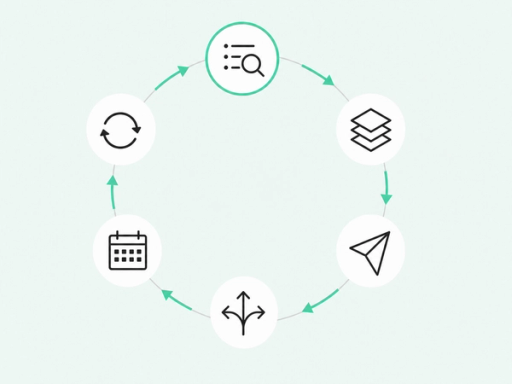
Most AI SDRs run a version of the same loop: prospect and prioritize against ICP and territory rules, research and enrich with firmographic and stack data, message across channels, qualify replies and branch the path, book meetings with context attached instead of a naked calendar hold, and write activity back to the CRM.
Rules-only automation runs a fixed cadence no matter what changed yesterday. Agentic systems adjust the next step from responses, new signals, and updated account context. That flexibility helps only when the inputs are trustworthy. A confident wrong next step is still wrong. I've watched a rep, human or agent, chase a title that changed six months ago. It's the same mistake either way. The agent just makes it faster and at higher volume.
Why Teams Are Buying Now
The math stopped working, and I don't need a study to tell me that, though the studies back it up. Salesforce researchfound reps spend just 28% of their week actually selling. The rest disappears into admin, research, deal management, and tool hopping. Salesforce's latest sales statistics put non-selling work at about 60% of rep time. When teams fully implement AI agents, sellers expect meaningful cuts in prospect research time and email drafting time, though I'd treat those as potential gains under good implementation, not a day-one promise from any tool. I've heard that promise before.
Leaders expect fewer people to cover more accounts. Buyers self-educate long before they take a meeting. Generic outbound keeps getting easier to ignore. I hear some version of "we build lists manually," "we react to everything," or "we cannot keep up" in almost every one-on-one with my managers.
AI raised the amount of data, activity, and tooling in the stack. It did not automatically raise clarity, prioritization, or conversion. That's the same gap we named in Part 1. It doesn't close because you bought an agent. It closes because the agent finally has something real to act on. I've bought the agent first before. I don't recommend it.
The Hybrid Model That Wins Deals
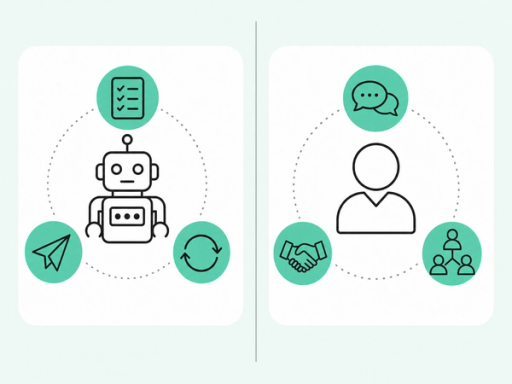
The useful question isn't "will AI replace SDRs." It's which work should never require a human hour, and which work fails without one. I ask my team this every quarter when we plan headcount.
| Work type | AI SDR strength | Human SDR strength |
|---|---|---|
Volume and consistency | High | Limited by hours and fatigue |
Always-on follow-up | High | Hard to sustain |
First-pass research drafts | High | Deep judgment on edge cases |
Multi-threading and politics | Low | High |
Trust and complex tone | Low to medium | High |
Brand-risk moments | Needs guardrails | Owns the call |
Gartner predicts that by 2030, 75% of B2B buyers will prefer sales experiences that prioritize human interaction over AI. That's a weak foundation for a pure replacement story, especially in complex B2B deals, and it matches what I see on my own team. My best reps aren't threatened by agents. They're relieved by them. Nobody joined SDR to build lists by hand.
Give AI the mechanical layer: list hygiene, research drafts, first-pass personalization, routing, logging, tireless follow-up on clear signals. Keep humans on the judgment layer: exceptions, multi-persona deals, tone, escalations, relationship building, the conversation after "sure, let's talk." That's the split I run my org on.
That's AI as leverage, not a headcount trick. I'm not trying to run fewer people. I'm trying to stop wasting the people I have on work a machine should own.
Where Volume-First AI SDRs Break
Volume-first AI SDRs optimize for sends, and the market already punished that habit. I've seen it firsthand: a domain that took two years to build trust with, damaged in a single bad quarter of "personalized at scale" outreach that fooled no one. Belkins's 2026 analysis of 7.5 million cold emails shows how tight B2B reply rates stay even with strong timing and list choices.
The deeper issue is upstream. LeanData's 2026 State of AI Go-to-Market Readiness report surveyed 157 B2B revenue leaders and found 55% cite data quality as their top AI challenge. Seventy percent report poor data undermining execution. Ninety-four percent say their GTM infrastructure isn't AI-ready. Wrong person, stale title, duplicate CRM records, account-only "intent" with no person attached: all of it produces confident wrong outreach and trains buyers to ignore you faster.
Adoption is high.
Trust in the foundation is not, and I won't scale an agent on top of data I wouldn't trust a new hire with. That's the entire argument for building Know before you scale Act.
"Act" Only Works on Top of "Know"
Most serious products can draft a competent email. Every vendor I've evaluated can do that part. The differentiator is whether the agent sees a complete person and account picture before it acts, and that's where almost all of them fall apart.
Signal-informed agents decide whether to engage before they decide what to say. That means stacking multiple buying signals at the person level: job changes and champion moves, website and pricing-page visits, product usage and free-user activity, community and social engagement, review-site behavior, hiring patterns and other dark-funnel clues. Account-only intent tells you a company is warm. It can't tell my rep which buyer to call, what changed for that person, or why this week is different from last month. I don't want my team calling a company. I want them calling a person who just did something worth reacting to.
Identity resolution and enrichment are the unsexy prerequisites nobody wants to talk about in a demo. If the system can't stitch anonymous and known activity into one trustworthy profile, the agent invents confidence on top of fragments, and my reps inherit the fallout when a prospect gets called by the wrong name.
This is where Common Room's buyer intelligence and Zoom's engagement layer come together, and it's the actual stack my team runs on. RoomieAI and Common Room's automated plays run on the same trusted, person-level context we covered in Part 1, not commoditized public scraps. Engage prioritizes who's actually in-market, runs the sequence, and calls for you. Dialworks multiple lines at once with live transcription and in-call scheduling, and logs every outcome back to the CRM. Ads turns that same intelligence into live matched audiences on LinkedIn, no CSV exports or webhook duct tape. Same identity layer, same signals, three different places the work gets done. My reps aren't jumping between five tabs to figure out who to call. That alone changed my pipeline reviews.
Warm context is what turns AI personalization into a reason to talk. The prospect changed roles, hit a usage threshold, hired for the problem you solve, or spent real time on pricing. An agent that knows that isn't guessing at relevance. It's acting on it, and that's the difference I actually get graded on at the end of the quarter.
What's Next
An AI SDR is only as good as the intelligence behind it. Volume without clarity is how teams burn domains and rep trust at the same time, and I've cleaned up that mess before so my team doesn't have to again. The agents that actually move pipeline are the ones acting on a Know layer built for exactly this.
If you want to see what signal-informed engagement looks like on your own buyer context, request a demo. Part 3 of this series covers Learn: what happens after the meeting, and how every outcome makes the next one smarter.