Compare Pocus to Common Room
Real magic, no tricks. Capture every buying signal, not just product usage. See the people behind signals with top-tier identity resolution and waterfall enrichment, no extra vendors needed. And take action fast with AI automation in a sales-friendly UI reps love.
What's wrong with the status quo?
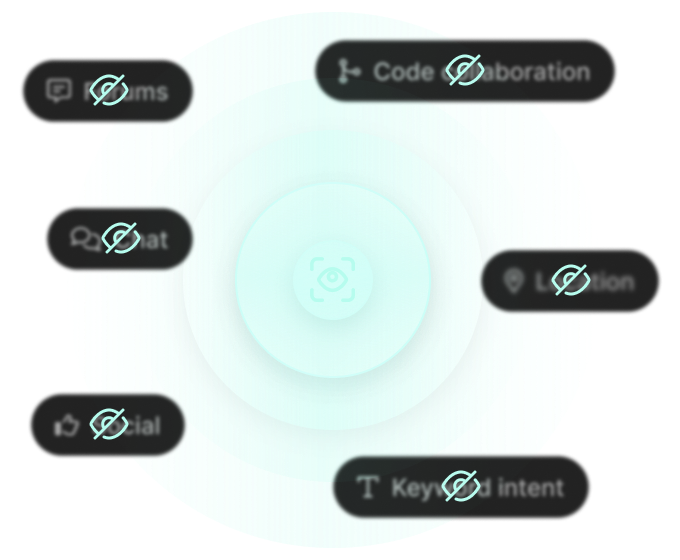
Scarce signal visibility
Pocus was built to track product usage, not the full spectrum of buying behaviors. Key intent signals remain out of reach.
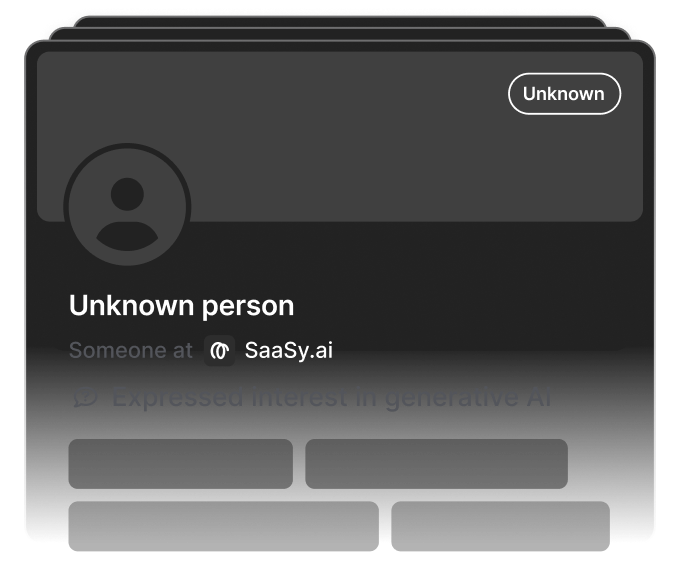
Account-only identification
Identity resolution stops at accounts, not the people behind them. And freemail deanonymization is nonexistent.
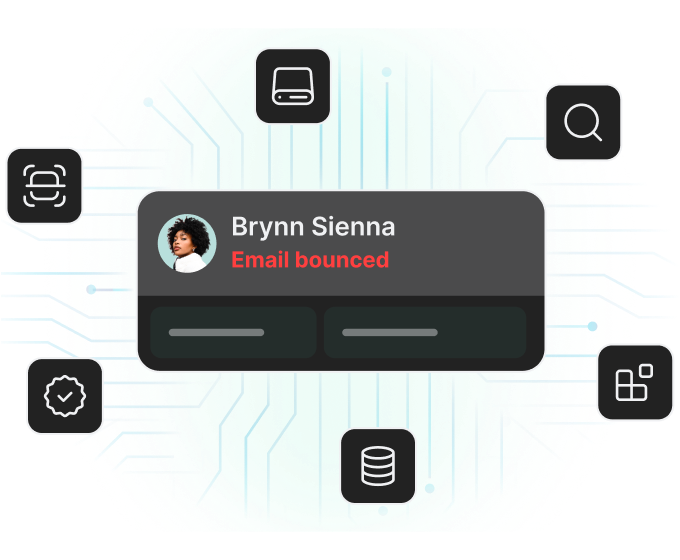
Rudimentary enrichment
Lack of AI waterfall enrichment means paying extra for enrichment vendors and manually stitching data together.
Compare platformsTL;DR overview | Common Room→ Comprehensive signals → Person-level identity → Out-of-the-box AI waterfall enrichment | Pocus→ Limited signals → Account-only identification → No AI waterfall enrichment | |
| SIGNALS | |||
| Product signals | Included via native signal capture | Included, but no freemail deanonymization | |
| Website visitor identification | Included via Common Room waterfall identification (up to 50% person-level match rate) | ❌ Not available, requires 3rd-party vendor | |
| Social signals | Included via native signal capture | ❌ Not available | |
| Open-source signals (e.g., GitHub activity) | Included via native signal capture | ❌ Not available, requires 3rd-party vendor | |
| Community signals | Included via native signal capture | ❌ Not available | |
| Job tracking, new hires | Included via out-of-the-box signal capture | Included | |
| Hiring trends (e.g., open roles) | Included via native signal capture from dataset of 150M job listings or via RoomieAI Capture agent | Included | |
| News scraping (e.g., earnings call, product launch, strategic hire) | Included via native signal capture from 8M news listings (refreshed daily) or via RoomieAI Capture agent | Included | |
| CRM and Marketing signals | Included via native platform integration (real-time, bidirectional sync) | Included | |
| AI research agent | Included via RoomieAI™ Capture agent | Included | |
| ENRICHMENT/IDENTITY RESOLUTION | |||
| Identity resolution | Included at the person and account level via Person360™ | Limited—account-level only (not person-level) | |
| Freemail deanonymization | Included via Person360 | ❌ Not available | |
| Waterfall enrichment | Included out of the box (dozens of providers) | Limited—single source of enrichment (not waterfall) | |
| Automated prospecting | Included—dataset of 200M B2B contacts plus prospect from signals like follower count, hiring trends, etc. | Included | |
| Lead and account scoring | Included with configurable, transparent scoring from any signal at both the person and account level | Included | |
| Unify custom objects (e.g., product data, payments, opportunities) | Flexible data model unifies custom objects to contacts and organizations to run plays like closed-lost from an opportunity object | Included | |
| ACTIONS & AUTOMATION | |||
| Automated outbound | Included—automate workflows for alerts, prospecting, sequencing, scoring, etc. | Included | |
| UI for GTM users | Included—reps can run plays from a single command center | Included | |
| AI-generated outbound | Included via RoomieAI Activate agent—use any signal or attribute as a prompt input | Included, but limited to smaller number of data points and signals | |
| Real-time alerts | Included—send Slack or email alerts the moment a buying signal is tracked | Included | |
| Sales engagement integrations | Native integrations for widely used SEPs | Limited—iFrame integration (no in-product sequencing) | |
| ROI play reporting | Included | Included, but limited to 30-day lookback | |
| PRICING | |||
| Pricing model | Fixed annual pricing—no hidden fees or surprises | Non-transparent pricing that's hidden behind a demo form | |
Hear it from our customers

30% more meetings per rep
“The results speak for themselves. Common Room helps us reach the right people with the right message at the right time—faster and easier."

Erica Anderson
CRO

74% more pipeline in 1 quarter
“Once our reps got their hands on Common Room, the response was unanimous: ‘Buy it, please.’ We sourced pipeline right away running plays from product usage, web visits, GitHub activity—you name it.”

Jason Klumpp
Director of Sales Development

40% more meetings in 1 month
“Common Room isn’t another tool in our BDRs’ toolbox—it is the toolbox.”

Joe Broome
Global ABM Manager
FAQs
What are the key differences between Pocus and Common Room?
There are two key differences between Pocus and Common Room:
First, while Pocus is focused primarily on product usage data, Common Room provides users with comprehensive, always-on signal capture across first-, second-, and third-party data sources. That includes product usage, website visits, CRMs, call recordings, social engagements, open-source activity, community interactions, job changes, job listings, news events, and more.
Secondly, while Pocus only deanonymizes signals at the account level, Common Room provides users with complete person- and account-level visibility via industry-leading identity resolution and AI waterfall enrichment.
Common Room automatically creates unified profiles for every contact and company, including email addresses, phone numbers, and social handles. This enrichment is fully automated and continuous, meaning you always have the most up-to-date information.
Can Common Room replace Pocus?
Yes. Many Common Room customers are former Pocus users who made the switch because of our superior signal capture and industry-leading enrichment.
Common Room can replace product usage-based sales plays run in Pocus, as well as offer a much wider variety of pipeline-generating plays that incorporate different types of buying signals.
Additionally, customers who move to Common Room can count on more robust reporting, expanded data ingestion options, and purpose-built AI agents to assist with end-to-end pipeline generation.
Is Pocus better than Common Room for product-led sales motions?
Our customers don’t think so. In fact, many of our customers with product-led sales motions made the move to Common Room from Pocus.
While they found Pocus good at surfacing product usage data, they struggled with deanonymizing non-work-related email domains, were unsatisfied with enrichment quality that necessitated additional vendors, and wanted to expand the scope of their pipegen motion beyond just product signals.
Many product-led companies—including Grammarly, Notion, and Zapier—find Common Room the better choice.