
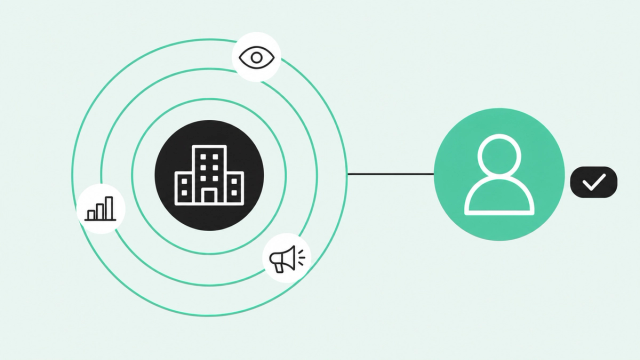
Your account-based marketing (ABM) dashboard says a target account is hot. The score is glowing, the ads are running, and someone at the company has visited your pricing page three times this week. Then a rep asks the obvious question: "Great, so who do I call?"
Nobody has an answer. That moment is where many ABM programs quietly stall, even though they're everywhere. Demand Gen Report's 2025 ABM Benchmark Survey found that 71% of practitioners now utilize an ABM strategy.
The issue is simple. Accounts don't buy. People do.
This guide helps you find the best ABM platform for your team, even if you're new to the category. We'll cover what ABM platforms do, the main types, how to evaluate them, how leading options compare, and where person-level ABM fits.
What Is the Best ABM Platform?
There's no single best ABM platform; the best one matches your go-to-market (GTM) motion. Demandbase and 6sense lead for enterprise intent and ads, RollWorks and Terminus for ad-led mid-market programs, and HubSpot and Marketo for MAP-native ABM. Signal-based platforms like Common Room fit when you need to know which people inside an account are ready to buy.
Here's a quick rule of thumb: If your reps keep asking who to call, an account-level view isn't enough on its own.
What Is an ABM Platform?
Account-based marketing treats each high-value company as its own market. An ABM platform is software that helps you choose those companies, spot when they're shopping, reach them across channels, and measure results.
Gartner's ABM platform research defines ABM platforms as software that enables B2B marketing and sales teams to run ABM programs at scale. Gartner also tracks the category in a Magic Quadrant, which it published on November 6, 2025.
Most ABM software shares five core capabilities:
- Account identification: The platform matches anonymous activity, like website visits, to the companies behind it.
- Intent data: The platform tracks research behavior that suggests a company is shopping for a solution like yours.
- Orchestration and advertising: You run coordinated ads, emails, and web experiences for a chosen list of accounts.
- CRM integration: Account data and scores flow into Salesforce or HubSpot so sales can see them.
- Measurement: Reports show engagement, pipeline, and revenue by account instead of by single lead.
Think of an ABM platform as the layer between your CRM and your marketing automation platform (MAP). Your CRM holds records, your MAP sends campaigns, and the ABM platform decides which accounts deserve attention right now.
One more distinction matters early: account intent vs. person intent. Account intent shows a company is researching, while person intent shows which employee is doing it. Reps can act on the second one.
Types of ABM Platforms
ABM tools fall into five broad types. Many teams combine two or more, so use this table as a map of the landscape.
| Type | What it does | Examples | Best for |
|---|---|---|---|
All-in-one ABM suite | Combines account identification, intent data, advertising, and analytics | Demandbase, 6sense, ZoomInfo | Enterprise teams running large, multichannel programs |
Account-based advertising | Runs display and social ads aimed at a list of target accounts | RollWorks, Terminus, Madison Logic | Mid-market teams where ABM advertising drives awareness |
Intent data provider | Supplies topic-level research signals about which companies are active | Bombora | Teams adding third-party intent to an existing stack |
MAP with ABM features | Adds target account lists, account scoring, and reporting to marketing automation | HubSpot, Marketo | Smaller programs already running on the MAP |
Signal-based buyer intelligence | Unifies buying signals and ties each one to a specific person and account | Common Room | Teams whose account intent isn't turning into rep action |
The last row is the newest category, and most comparison guides skip it. These platforms rely on always-on buying signal capture across job changes, website visits, product usage, and community activity.
The difference is the unit of work. The first four types mostly answer "which account?" Signal-based buyer intelligence answers "which person, and what did they just do?"
How to Choose the Best ABM Platform
Most ABM marketing tools look alike by the second demo. So the best ABM platform for you comes down to one test: How will your sales team act on what the platform surfaces?
Use the four criteria below to pressure-test every account-based marketing platform on your shortlist.
Signal Depth: Account-Level or Person-Level
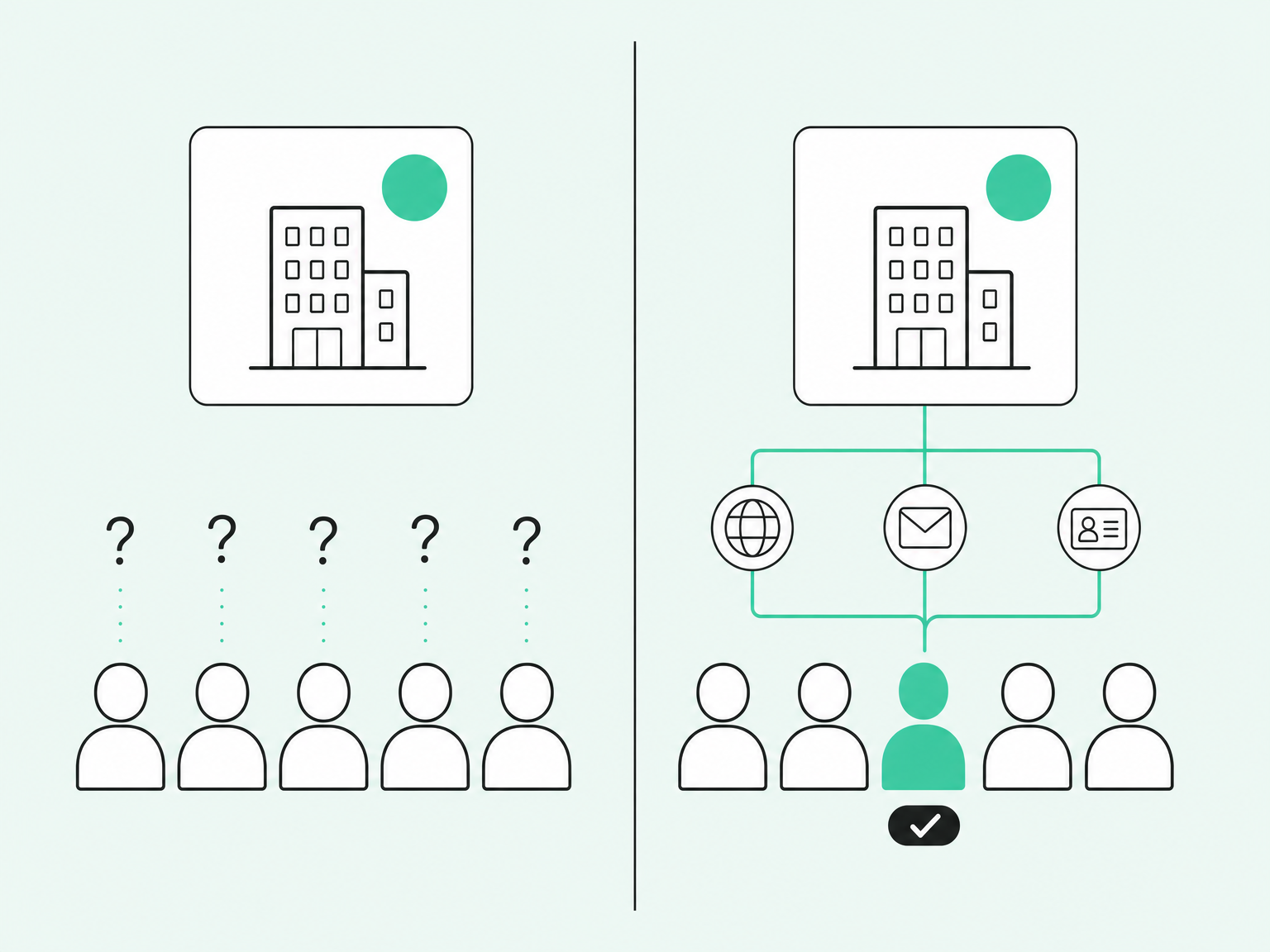
Most ABM platforms start with account-level intent. Some of it comes from bidstream data, which is information collected from the ad auctions that run each time someone loads a web page.
Other platforms use IP-to-account matching. That method links a website visit to a company based on its internet address. Both methods tell you where interest lives, but neither tells you who.
That gap matters because buying groups are big. Forrester's 2026 buyer insights found that the typical buying decision now includes 13 internal stakeholders and nine external influencers.
That group is your buying committee: everyone who shapes the purchase decision. When "the account is warm" is all you know, a rep has to guess which of those people to contact.
Person-level signals depend on identity resolution. Identity resolution matches activity from different places, like a web visit, a work email, and a LinkedIn profile, to one real person.
In every demo, ask one direct question: Do website visits resolve to companies or to people? Tools with person-level website visitor identification name the individual, so reps can reach the person doing the research.
Transparent Scoring Reps Will Trust
Every ABM platform scores something. Account scoring ranks companies by how likely they are to buy, while lead scoring ranks individual people.
The harder question is whether anyone can explain the score. Black-box scores, where a number shows up with no reasoning, get ignored fast.
Reps won't spend their week on a score they can't explain to their manager. So ask a rep-level question in the demo: Can I see which signals and weights drove this score?
If the answer requires a support ticket, your sales team probably won't use it. Trust is what turns a score into a phone call.
Channel Coverage and Orchestration
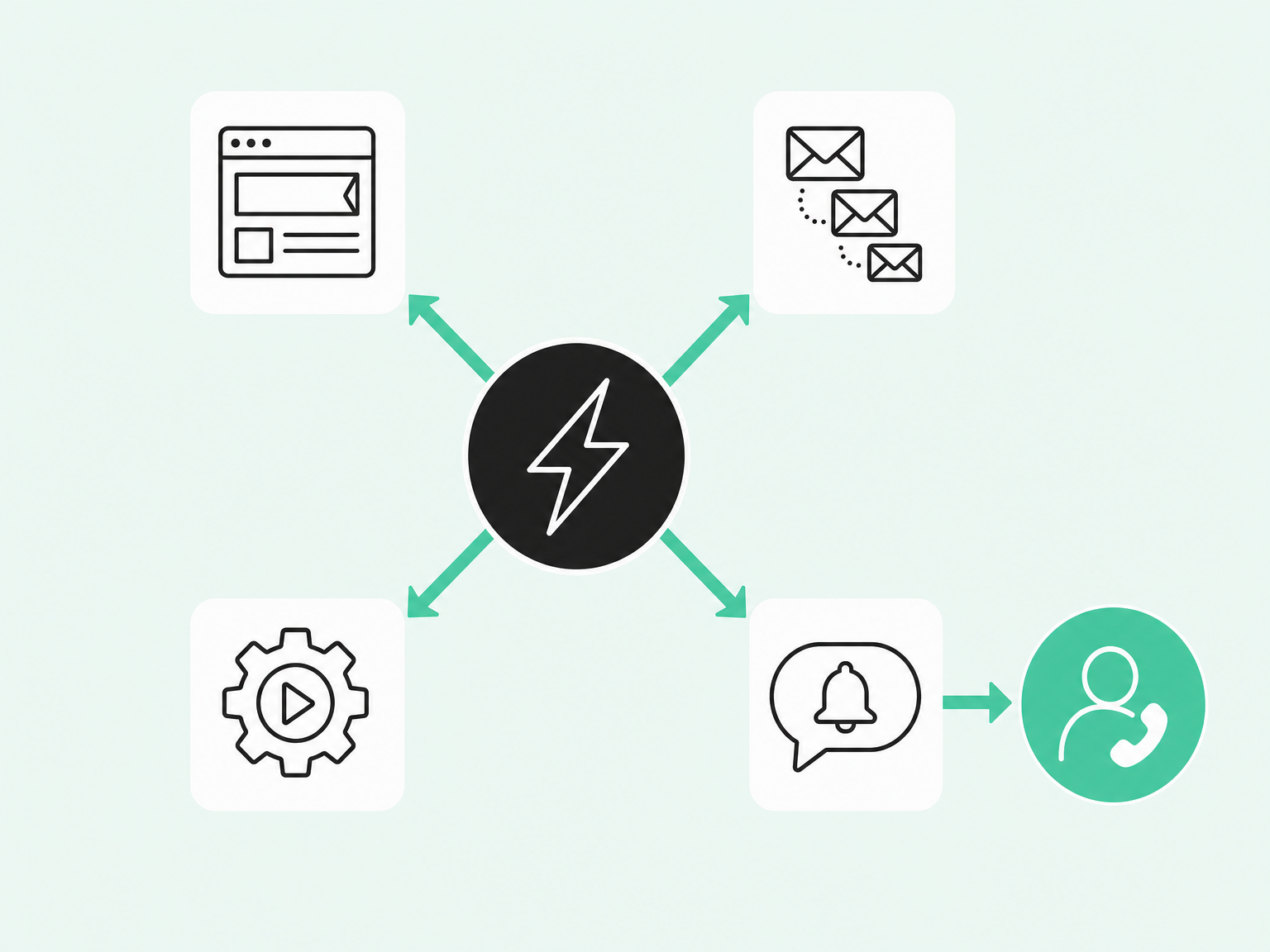
Orchestration means coordinating one message across ads, email, your website, and sales sequences. Done well, every person at an account hears a consistent story, whether they see an ad or get a note from a rep.
Ask each vendor these questions:
- Ad platforms: Can you sync account and contact audiences to LinkedIn and other ad networks automatically?
- Sequencing tools: Do engaged contacts flow into your sales sequences without a manual export?
- Automated plays: Do plays trigger when a new signal appears, or does someone have to check a dashboard?
- Rep alerts: Do reps get notified in Slack or email, where they already work?
ABM advertising builds awareness, but it can't book a meeting on its own. The best setups connect ad engagement to the next human step.
CRM Fit, Implementation, and Total Cost
Check how deeply each platform connects to your CRM. Some vendors design for Salesforce first, and others fit HubSpot shops better, so ask for a demo that mirrors your own setup.
Be honest about admin burden, too. Some enterprise suites need a dedicated marketing ops owner to set up and maintain them, and that person's time is a real cost.
Pricing is rarely public. Most ABM platforms use custom pricing, usually on annual or multi-year contracts, and ad-led tools may require a minimum ad spend.
Before you sign, model the full cost. Include implementation, data, seats, ad budget, and the internal hours it takes to keep the platform useful.
One honest tip: Run a short pilot on a small account list before you commit to a multi-year deal. Track whether reps actually open the insights and book meetings from them.
Best ABM Platforms Compared
Here's how leading ABM platforms compare on type, strengths, and signal level. These summaries reflect each platform's core positioning, so confirm details in your own demos.
| Platform | Type | Strongest for | Signal level | Watch-outs |
|---|---|---|---|---|
Demandbase | All-in-one suite | Enterprise ABM with a built-in B2B ad platform | Account-level, IP-to-account web identification | Learning curve, custom pricing |
6sense | All-in-one suite | Predictive intent and in-market account discovery | Account-level | Configuration effort, enterprise pricing |
ZoomInfo | Data platform with ABM features | Contact data plus intent and web visitor identification | Account-level intent, contact-level data | Intent mainly from its own data, add-on packaging |
RollWorks and Terminus | Account-based advertising | Ad-led mid-market programs | Account-level | Lighter on person-level sales context |
HubSpot and Marketo | MAP with ABM features | Starting ABM inside existing marketing automation | Contact and account records | Limited third-party intent and ad orchestration |
Common Room | Signal-based buyer intelligence | Turning buying signals into rep action on specific people | Person-level and account-level | Works best with clear plays and owners for each signal |
Demandbase
Demandbase is an all-in-one ABM suite with a mature B2B advertising demand-side platform (DSP). A DSP is software that buys ad placements automatically across many websites.
The suite covers account identification, intent data, and buying group tracking in one place. That makes it a common pick for enterprise teams running large ad programs.
Plan for a learning curve and custom pricing. Its website identification works at the account level through IP matching, so you'll still need a way to find the people.
6sense
6sense focuses on account-level predictive intent and orchestration. Its strength is surfacing which accounts look likely to be in-market so your team can prioritize them.
The trade-offs are enterprise pricing and configuration effort. Web identification also works at the account level, so many teams pair 6sense with a contact database to find names.
ZoomInfo
ZoomInfo combines a large contact and company database with intent data, web visitor identification through WebSights, and marketing orchestration. For teams that already rely on ZoomInfo for contacts, the ABM features can feel like a natural extension.
Its intent signals come mainly from ZoomInfo's own data. Some capabilities come as add-ons, so map exactly which packages you need before you compare quotes.
RollWorks and Terminus
RollWorks and Terminus lead with ABM advertising for mid-market teams. Both run account-based display and LinkedIn campaigns, and both connect with HubSpot and Salesforce.
They're advertising-centric by design. That works well for awareness, but reps get less person-level context about who to contact next.
HubSpot and Marketo
HubSpot and Marketo add ABM features, like target account tools and account scoring, to marketing automation. If your programs already run on one of them, it's a practical place to start.
The limits show up as programs grow. Both offer limited third-party intent data and ad orchestration compared with dedicated ABM suites.
Common Room
Common Room takes a signal-based approach to ABM. It connects account interest to the specific people behind it, along with what each person did and when.
Common Room's person-level ABM approach pulls in 50+ native signal types and has shown 30-50% higher match rates in enrichment bakeoffs. Signals include job changes, pricing page visits, Slack questions, GitHub activity, LinkedIn signals, and hiring patterns. Person360, Common Room's identity resolution engine, stitches that activity into one profile per person.
That identity resolution extends to your website. Common Room's person-level website visitor identification names up to 50% of US web traffic.
Scoring is transparent: Reps can hover over a score to see the contributing signals and their weights. Common Room also syncs audiences to your ad platforms and MAP, and automated plays route new signals to reps through Slack, email, and sequences.
You don't have to rip out your current ABM platform. Common Room works alongside it and turns the account intent you already have into next steps for a specific person.
Workvivo is a good example. The company traded legacy ABM for person-level insights and saw a 40% increase in meetings booked in one month. Read how Workvivo replaced legacy ABM.
In July 2026, Zoom completed its acquisition of Common Room. Common Room is now part of Revenue OS, which pairs its buyer intelligence with Zoom's native calling, sequencing, coaching, and forecasting.
Every closed deal, coached call, and buyer signal writes back to one shared context layer. Over time, that loop makes targeting, coaching, and forecasting sharper. Common Room is the best fit for teams whose account intent isn't turning into rep action.
Which ABM Platform Fits Your Stage?
Use this table as guidance, not a rule. Your sales motion and CRM matter as much as company size.
| Stage | Where to start | Why it fits |
|---|---|---|
Early-stage or small program | CRM and MAP ABM features, plus a clear ideal customer profile (ICP) | You need focus and a defined account list before you need more data |
Mid-market HubSpot shop running ads | Ad-led platform like RollWorks or Terminus | Account-based ads build awareness at a manageable scale |
Enterprise Salesforce team with large ad programs | All-in-one suite like Demandbase or 6sense | Big programs need intent, advertising, and analytics in one place |
Any stage where intent isn't reaching reps | Person-level signals like Common Room | Reps get names, context, and next steps alongside account scores |
An ICP describes the companies most likely to buy from you and succeed. Every platform in this guide works better when that definition is sharp.
Your stage will change, and so will the best ABM platform for your team. Revisit the fit each year as your account list, sales team, and ad budget grow.
Common ABM Platform Pitfalls
Most ABM programs stall in the weeks after purchase, when signals pile up and nobody acts on them. Watch for these five pitfalls.
- Undefined ICP and account list: A platform can't choose your target accounts for you. Agree on the ICP and account list first.
- Signals without an owner: Intent that lands in a dashboard with no assigned rep or play goes stale fast.
- Account scores with no names: A hot account with no contacts leaves reps guessing. Make sure you can find the real buying committee.
- Generic outreach: A Gartner survey of B2B buyers found that 73% of B2B buyers actively avoid suppliers who send irrelevant outreach.
- Separate lists for sales and marketing: In Demand Gen Report's 2025 survey, 43% of practitioners cited aligning sales and marketing as a top challenge.
The fix is to layer person-level signals into the tools reps already use, like the CRM, Slack, and sales sequences. When each signal arrives with a name, a reason, and a next step, reps act on it.
Frequently Asked Questions About ABM Platforms
What Is the Difference Between an ABM Platform and Marketing Automation?
An ABM platform organizes work around target accounts and the buying groups inside them, while marketing automation organizes work around individual leads and email nurture.
How Much Do ABM Platforms Cost?
Most enterprise ABM platforms use custom, annual pricing that depends on seats, data volume, and ad spend. Request quotes from each vendor and model total cost, including implementation.
Is ABM Worth the Investment?
In Forrester's ABM ROI research, based on 2024 data, ABM decision-makers reported that their ABM programs yield 21-50% higher ROI than non-ABM efforts.
Which ABM Platform Is Best for Small or Mid-Market Companies?
Start with the ABM features in your CRM or MAP, or an ad-led tool like RollWorks or Terminus. Add person-level signals when you need reps to act on intent.
Do I Need an ABM Platform If I Already Have a CRM?
A CRM stores records, but it doesn't detect in-market buyers or run coordinated campaigns. That's why many teams add signals and orchestration on top of their CRM.
What Is the Main Difference Between 6sense and Demandbase?
Both are all-in-one, account-level ABM suites. Demandbase stands out for its B2B advertising DSP, while 6sense stands out for predictive intent and in-market account identification.
Choose the ABM Platform Your Reps Will Act On
The best ABM platform is the one your sales team actually acts on. Glowing account scores and big ad budgets don't add pipeline if reps still don't know who to call.
If your account intent keeps stalling before it reaches a rep, add person-level signals to the stack you already have. See how Common Room connects each buying signal to a real person and a clear next step.