
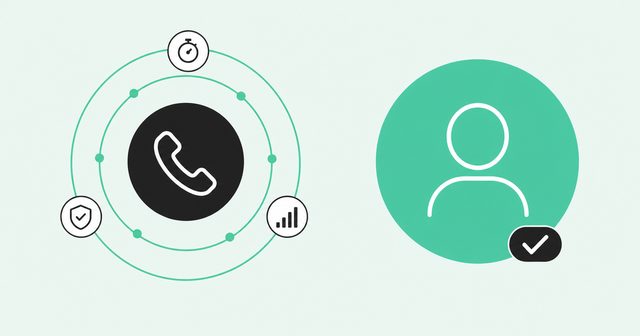

When you build a dialer, the first instinct is speed. How many calls can we place per minute? How quickly can we move through a list? That's the metric everyone optimizes for, and it makes intuitive sense. More dials should mean more conversations, which should mean more pipeline.
But when we started designing Zoom Auto Dialer, we kept running into a question the speed-first approach couldn't answer: why are connect rates declining industry-wide, even as dialing technology gets faster?
The answer took us somewhere unexpected. It took us into the telephony layer, the infrastructure underneath the dialer that most sales teams never think about. And what we found changed how we built the product.
The phone number problem nobody talks about
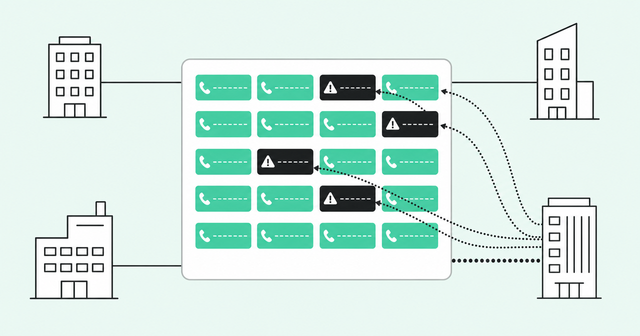
Here's something that surprised us early in development. Most sales dialers don't run on the customer's phone system. They run on third-party telephony infrastructure and provision numbers from shared pools. Your company and dozens of others might be calling prospects from overlapping sets of phone numbers.
That matters more than it sounds like it should.
Carriers don't just check whether a call is technically authenticated anymore. They monitor behavioral patterns: how frequently a number places calls, how many of those calls go unanswered, how many result in very short durations (a signal of hang-ups or abandoned calls), and how many consumer complaints get filed against that number. When a number crosses certain thresholds, it gets flagged. Once flagged, it earns a "Spam Likely" label that follows it across carrier networks.
When your dialer shares a number pool with other companies, you inherit their calling patterns. One aggressive user on the same pool can get numbers flagged that your team was using responsibly. And when the dialer rotates to a fresh number to work around the flag, that new number may already carry its own history from someone else's campaigns.
This is why connect rates are falling even though dialing technology is technically improving. The infrastructure is working against itself.
This problem hits hardest for teams that dial at high volume, all day, every day. Think insurance agencies working through renewal lists. Auto dealerships following up on leads. High-volume B2B sales and SaaS teams running dozens of dials a day. B2B2C businesses where the sales motion is fundamentally about outbound volume and the phone is the primary channel, not a supplementary one. For these teams, number reputation isn't an abstract concern. It's the difference between a functioning business and one where half their calls never get answered.
Why Zoom Phone changes the equation
Zoom Auto Dialer is built directly on Zoom Phone. That's an architecture decision that shapes everything else.
When the dialer runs on your Zoom Phone system, the numbers are yours. They're provisioned through your Zoom Phone account, managed in your admin console, and their calling history reflects only your team's behavior. No shared pools. No inherited reputation from other companies. No surprise spam labels from someone else's calling cadence.
This also means the dialer has visibility into the telephony layer in a way that bolt-on solutions can't replicate. Call completion rates, carrier responses, number health signals — all of this data lives in the same system as the dialer. We can use it to make better decisions about how and when calls are placed.
For high-volume outbound teams, that visibility is operationally significant. When you're placing hundreds or thousands of calls a day, you need to know which numbers are healthy, which are approaching carrier thresholds, and how to distribute call volume across your pool in a way that keeps everything clean. That's not something you can manage manually, and it's not something a dialer built on top of someone else's phone infrastructure can do well.
Local presence dialing is a good example of how this plays out in practice. Most dialers offer some version of local presence dialing, matching the prospect's area code to increase the likelihood they answer. But when local presence runs through a shared number pool, you're not really presenting "your" local number. You're borrowing one that might have been used by several other companies in the same area code already.
With Zoom Auto Dialer, local presence dialing draws from your own Zoom Phone number pool. When a prospect sees a local area code, that number belongs to your organization. If they call back, the call routes to the rep who placed it. The number has a clean history because it's been used only by your team, at volumes your team controls. That's a fundamentally different prospect experience than getting a callback number that rings to a generic routing system... or worse, that's already been disconnected.
The case for slowing down (a little)
This brings us to cascading dialing, which is the part where people sometimes think we're being contrarian just for the sake of it. We're not.
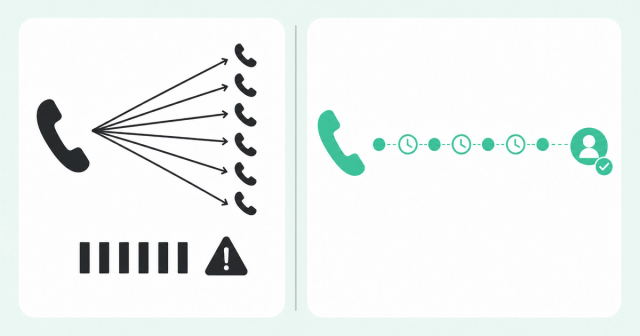
Cascading dialing places calls sequentially with a deliberate, slight delay between each one. If you're used to hearing about parallel dialers that fire five or ten calls simultaneously, this sounds slower. It is slower, measured in raw dials per minute. But that's the wrong unit of measurement.
Here's what the delay actually does at the telephony layer.
Carriers and analytics engines evaluate calling behavior in patterns, not individual calls. When a number places calls in rapid-fire bursts, it looks like automated robocalling to the carrier's detection systems. Especially when many of those calls result in very short durations (which happens constantly with parallel dialing, because the calls that aren't answered first get dropped). The pattern, not any single call, is what triggers flagging.
The slight delay in cascading dialing keeps the calling cadence within the range that carrier systems interpret as normal human-initiated calling behavior. It's the difference between a phone pattern that says "business outreach" and one that says "robocall."
This isn't theoretical. STIR/SHAKEN authentication (the industry standard for caller ID verification) confirms that your call is technically legitimate. But the FCC's 2025 enforcement actions made clear that authentication alone doesn't prevent spam labeling. Behavioral analytics sit on top of authentication, and they're getting more sophisticated every year.
So the delay in cascading isn't a limitation we're explaining away. It's a design choice that protects the one asset your dialing infrastructure depends on most: the reputation of your phone numbers. For teams that depend on the phone as their primary revenue channel, that protection compounds over time. Numbers that stay healthy stay answered. Numbers that stay answered keep the business moving.
What happens when someone actually picks up
There's another dimension to this that matters a lot when you experience it from the prospect's side.
When a parallel dialer connects a call, the prospect picks up and hears... nothing. Maybe a half-second of silence. Maybe a full second. Then the system routes the call to the rep. That silence is the tell. Experienced prospects know exactly what it means, and they hang up before the rep ever gets a word out.
With cascading, when someone picks up, the rep is already there. There's no routing delay, no dead air, no moment where the prospect's instinct shifts from "let me hear who this is" to "this is a robocall." The conversation starts the way it should, with a person on both ends.
That might sound small. But when your connect rate is in the single digits and you're competing for a prospect's attention against a wall of spam-labeled calls, the first two seconds of a conversation matter more than any other variable in the dialing process. For businesses where every answered call is a potential policy renewal, a booked test drive, or a closed deal, those two seconds are the whole game.
Where this fits
Zoom Auto Dialer is designed for high-volume outbound teams operating within the Zoom Revenue Accelerator ecosystem, and today, that's mostly high-volume B2B sales and SaaS prospecting: reps running dozens to hundreds of dials a day and getting a real productivity lift over manual dialing. It's also built for businesses where the phone is the primary sales channel and number reputation is a genuine operational concern: insurance agencies, dealerships, and B2B2C businesses with large customer bases to work through. Different motion, same architecture, same payoff.
We're also actively building for the use cases just outside that core, including more compliance-heavy, non-revenue calling like patient outreach and collections, where number health matters just as much. That work is informed by the same philosophy that shaped the dialer's foundation: don't optimize for the metric that sounds good in a demo. Optimize for what actually gets calls answered and conversations started.
The telephony layer isn't glamorous. Most sales teams never think about it until something goes wrong: when connect rates drop and nobody can explain why, when a number that was working fine last month is now labeled spam, when a rep's entire afternoon of dials produces nothing because the infrastructure underneath them was quietly degrading. We built Zoom Auto Dialer to make that layer visible, manageable, and working in your favor instead of against you.
The question I'd encourage you to ask
If you're evaluating dialers, the speed question is easy. Every vendor will give you a number. Here's the question that's harder to answer: what happens to your phone numbers after six months on this platform?
If the answer involves rotation strategies, shared pools, or "we monitor for spam," that's a workaround for a problem the architecture is creating. If the answer is that your numbers are yours, your calling patterns are visible and manageable, and the dialing methodology is designed to keep them healthy, that's a different kind of product.
We built Zoom Auto Dialer for the second answer. Speed matters, but not more than being answered.
Miguel Moreno is the Product Lead for Zoom Revenue Accelerator, where he focuses on building tools that help sales teams sell more by working smarter. Before Zoom, he spent nearly a decade in product roles at sales technology companies.
Ready to see how Zoom Auto Dialer works? Request a demo