
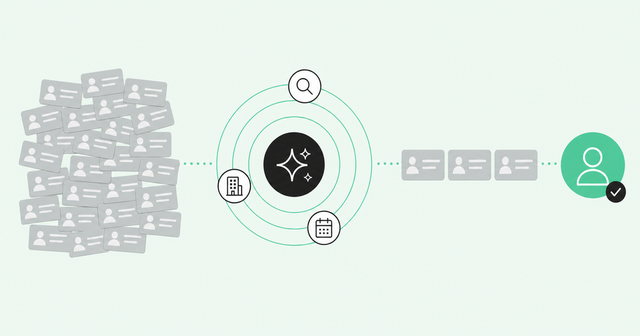
A new rep's first day usually looks the same. They get a laptop, a territory, and a 300-account list with no idea which 15 accounts matter this week. So they read the wiki, shadow a few calls, and start emailing whoever sits at the top of the spreadsheet.
Ramp stalls on context as much as skill. New reps don't know who's in-market, why they're in-market, or what happened the last time someone from your team reached out.
This guide shows how to reduce new rep ramp time with AI, one time block at a time. You'll get a week one plan, a starter set of plays, a practice routine, and the metrics that show progress.
What Ramp Time Measures and Why It Stalls
To reduce new rep ramp time with AI, give reps account context in week one and a signal-ranked queue in weeks two to four. Add on-demand practice with AI feedback, then track leading indicators like time to first meeting. AI handles the research and ranking, so reps spend their time learning accounts and talking to buyers.
Ramp time is the time between a rep's start date and sustained productivity. Most teams define productivity as consistently hitting a set share of quota, but the exact bar varies by company.
Account executives (AEs) run deals and close them, and they ramp the slowest. The Bridge Group AE ramp benchmark reports an average AE ramp of 6.2 months to full productivity, the highest in the study's history. The 2026 study surveyed 158 B2B companies and links the increase to deal complexity and bigger buying committees.
Sales development reps (SDRs) book meetings for AEs, and their numbers tell a different story. The Bridge Group SDR benchmarks show an average SDR ramp of 3.0 months across 351 companies in 2025. Average SDR tenure is just 1.9 years, so ramp takes up a real share of the time an SDR stays in the seat.
When ramping sales reps stall, it's usually for three reasons:
- Big books with no priority: A new rep inherits hundreds of accounts and can't tell which ones are active right now.
- Manual research: Reps rebuild context from scratch for every account, pulling from the CRM, LinkedIn, and old call notes.
- Coaching that can't scale: Managers can't sit in on every call, so feedback arrives late or never arrives.
Most onboarding plans already work on the third problem. If you're new to that side, start with our guide to AI sales coaching. The first two problems get far less attention, so the next two sections start there.
Week 1: Account and Territory Context with AI Research
Most sales onboarding plans spend week one on product decks and the wiki. That's useful, but it doesn't tell a rep anything about the accounts they'll call on Monday.
Selling time is already scarce. According to the Salesforce 2026 State of Sales, the average seller spends 40% of their time selling, and Gen Z reps spend just 35%. In the same global survey of 4,050 sales professionals, sellers said they expect AI agents to cut prospect research time by 34% once fully implemented.
Here's the shift: Replace "read the wiki" with an AI-built brief on every account in the rep's book. Each brief covers what the company does, recent news and hiring, buying-committee contacts, and past CRM and call history. The rep reviews each brief instead of building it from scratch.
That's the job of AI agents for account research. In RoomieAI, the Capture agent runs account research and intent capture, so reps don't rebuild prep for every name on the list. Ask CR Anything sits inside account and contact views and answers plain-language questions, like "Who's on the buying committee here?"
At Incident.io, business development reps (BDRs) handle early-funnel work much like SDRs. "Before RoomieAI, BDRs would go do a lot of research themselves. We're saving them probably 10-20 minutes per contact, which is a lot," said Tom Wentworth, CMO at Incident.io.
Research speed matters to most teams we talk to. One of the most common questions we hear from customers is direct: "Can AI help us research accounts and prep for calls faster?"
- Redirect the saved hours: Spend the time AI saves on account learning, like studying the top 15 accounts and their buying committees.
Deliver Research Where New Reps Already Work
A new rep is already learning a product, a territory, and a team. Don't add a new tool to that list in week one.
Push briefs into Slack and into the account views reps already check. Follow this playbook to auto-deliver prospect intel to reps with an AI agent in both Common Room and Slack. Use the checklist below to ramp up sales reps on their book before their first real call.
| Week One Output | What It Includes | Done When |
|---|---|---|
Account briefs | Company overview, recent news, and hiring trends | Every account in the book has a brief |
Buying-committee map | Known contacts, roles, and past engagement | The rep can name two or three people per top account |
CRM and call history summary | Open deals, lost deals, and recent conversations | The rep knows the last touch on each top account |
Top account shortlist | The 15 accounts to study first | The manager and rep agree on the list |
Research delivery | Briefs in Slack and account views | The rep gets new research without asking for it |
Weeks 2-4: Prioritizing Accounts with Buying Signals

New reps waste the most time on accounts that fit your ideal customer profile (ICP) but aren't doing anything. These accounts look perfect on paper, so reps keep emailing them, and nothing happens.
The fix is simple: Use fit as a filter and signals for timing. A buying signal is an action that suggests interest, like a pricing page visit or a new executive hire.
Our guide to signal-based account prioritization covers the full model. In RoomieAI, the Orchestrate and Spark Brief agents run overnight prioritization across a rep's full book. They rank the accounts and people showing meaningful intent and attach context, so reps start each day with a short, explained queue.
Make the scores transparent. When a rep can see why an account ranks first, they learn your ICP faster than any slide deck can teach it. Share these examples of buying signals during onboarding so reps recognize them in the queue.
- Explainable scores: Reps see which signals moved an account up the list and start to spot the pattern on their own.
- Short queues: A ranked list of a few active accounts gives a new rep a clear first move every morning.
Notion generated 30% more meetings per rep per month after improving account prioritization and visibility with Common Room. The lesson for ramping reps is focus. More activity does not equal more pipeline, especially from someone who's still learning the book.
Start with a Small Set of Plays
A play is a set response to a specific signal. New reps shouldn't invent their own, so give them three to five plays where the same signal always gets the same first action.
Pick signals that show up often and convert well. Our guide to choosing the right buying signals explains how to pick a starting set by volume and conversion.
| Signal | Why It Matters | First Action |
|---|---|---|
A past champion changes jobs | They already know your product and may bring it to the new company | Send a personal note that references your past work together |
Repeat pricing page visits | Someone is weighing cost, which often comes late in an evaluation | Contact the known buying-committee member with a relevant use case |
A hiring spike on a relevant team | New headcount often brings new problems and new budget | Message the hiring manager about how similar teams handle growth |
When every rep runs the same plays, managers can coach to one standard. Sales training ramp up gets easier too, since roleplays can mirror the plays reps run each day.
Call and Email Practice with AI Feedback
New reps rarely get enough practice or feedback before live calls. The Salesforce 2026 State of Sales found that 46% of Gen Z sellers rarely get feedback on their sales conversations. And 47% of Gen Z sellers don't get enough roleplay opportunities before customer calls.
AI coaching uses conversation data to give reps feedback and practice without waiting on a manager. With AI coaching with live guidance, Coach supports three moments in a new rep's week:
- Before calls: Short roleplay sessions focus on the exact gaps that scorecards find.
- During calls: Sales Assist surfaces next-best actions, objection handling, and playbook cues in real time.
- After calls: Automatic scorecards flag key moments, like pricing talk and objections, so managers can skip full recordings.
Managers can also point new reps to a best-call library to hear what top reps already do. That turns your best calls into ramp up sales training material without extra prep.
Build roleplays from real accounts in the rep's book, using the week one briefs. Practicing against a buyer they'll call on Thursday gives reps context a generic persona can't.
Email works the same way. RoomieAI writes personalized 1:1 outbound from person-level intent and account context, and the rep reviews and edits every draft. In the Salesforce survey, sellers expect agents to cut email drafting time by 36% once fully implemented.
- Learning loop: Every coached call and closed deal writes back to the shared context layer, so prioritization and coaching get sharper over time.
Measuring Ramp Progress with Leading Indicators

Quota attainment is the final word on ramp, but it shows up months late. Track leading indicators so you can spot a stalled rep in week three instead of month five.
Lagging indicators measure outcomes after the fact. Leading indicators show early progress that predicts those outcomes. A signal-to-meeting rate is the share of signal-driven plays that turn into a booked meeting.
| Metric | Type | What It Tells You |
|---|---|---|
Time to first meeting | Leading | Whether the rep can turn context into a conversation |
Time to first qualified opportunity | Leading | Whether meetings involve the right buyers |
Signal-to-meeting rate | Leading | How well the rep acts on the ranked queue |
Practice scores | Leading | Whether roleplays are closing skill gaps |
Scorecard trends | Leading | Whether live calls improve week over week |
Time to first closed-won deal | Lagging | When the rep starts producing revenue |
Quota attainment | Lagging | When the rep reaches full productivity |
Compare each hiring cohort to your own baseline. Use the median instead of the average, so one standout hire doesn't skew the results. Outside benchmarks add context, but your sales rep ramp time depends on your deal size and motion.
Saved time only matters if you reinvest it. In the Gartner AI time-savings survey, 210 sales leaders reported that AI saves sellers an average of 4.8 hours per week. Yet 72% of those sales organizations report low reinvestment of that time into high-value selling work.
So write the reinvestment into the ramp plan. Assign account study in week one, plays in weeks two to four, and practice throughout.
Bridge Group's 2026 AE study also found an observational link between AI use and results. Organizations in the top third for AI engagement reported 57% of reps at quota, compared with 39% in the bottom third. The data shows correlation only, and the report itself notes that companies self-select into AI adoption.
FAQs on How to Reduce New Rep Ramp Time with AI
How Can I Reduce New Rep Ramp Time with AI?
Give new reps AI-built account briefs in week one, a signal-ranked queue in weeks two to four, and AI roleplay with feedback throughout. Then track leading indicators, like time to first meeting, to confirm progress.
How Long Should Sales Onboarding Take?
Bridge Group reports an average ramp of 6.2 months for AEs in its 2026 study and 3.0 months for SDRs in its 2025 study. Set onboarding goals by role against your own team's baseline.
How Do You Calculate Ramp Time?
Measure the time from a rep's start date to the point they consistently hit your productivity bar, like a set share of quota. Track it by hiring cohort and use the median to limit skew from outliers.
Does AI Replace Manager Coaching?
No, AI handles research, scoring, and practice sessions so managers can spend their limited time on the moments scorecards flag. Managers still own judgment, deal strategy, and career growth.
What's the First AI Tool to Add?
Start with AI account research, since new reps can't sell to accounts they don't understand. Add signal-based prioritization next, then AI coaching once reps start live calls.
Help New Reps Ramp with Context from Day 1
Fast ramp comes down to three answers. New reps need to know which accounts matter, why they matter now, and what to say first.
Common Room by Zoom turns the buyer intelligence you already have into ranked, explained next steps for each rep and account. Request a demo to see how your next hiring class can start with context on day one.