
Key Takeaways
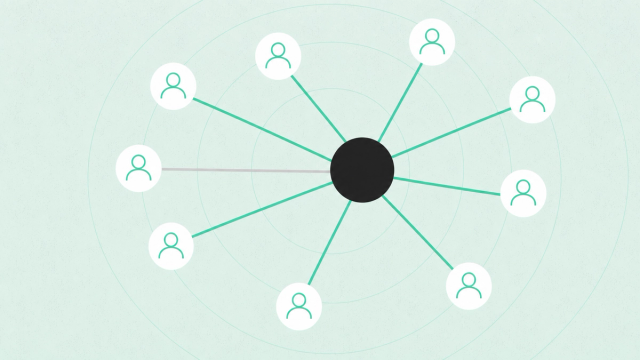
- Multi-threading in sales means building relationships across the whole buying committee, now about 13 people on average, instead of relying on one champion.
- Single-threaded deals stall silently, and Forrester finds that 86% of B2B purchases stall before a decision.
- Coverage is a measurable discipline, so you map every role and then track who's actually engaged.
- Tailor your message to each role, but keep the group aligned, because hyper-personalizing to one person can hurt consensus.
- Buyer signals like job changes and product usage turn a static contact list into a live coverage view you can act on.
Your strongest deal can look perfectly healthy right up until it goes quiet. One champion returns your calls, forwards your deck, and nods along on every call. Then they go dark, and the deal you forecast with confidence quietly stalls.
That's the risk of single-threading, and multi-threading in sales prevents exactly this. Multi-threading in sales means building direct relationships with multiple stakeholders across the buying committee instead of leaning on a single point of contact. In this guide, we'll cover what multi-threading in sales is and why single-threading fails now. We'll also show how to run it as a repeatable process that buyer signals keep scalable.
What Is Multi-Threading in Sales?
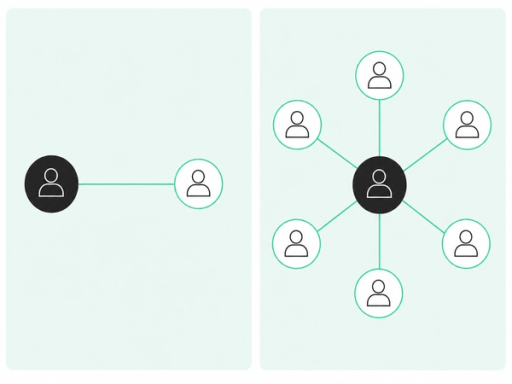
Multi-threading in sales is the practice of building and maintaining relationships with several members of a buying committee at once. It replaces the habit of routing an entire deal through one person. Single-threaded selling relies on a lone contact to carry your case internally. Multithreaded selling spreads that work across the people who actually shape the decision.
The distinction that trips teams up is channels versus people. Multi-threading isn't about sending the same account a message over email, LinkedIn, and ads, which is multichannel outreach. Multi-threading in sales is about who you know inside the account and how many of the real decision influencers you've reached directly.
This matters because B2B buying stopped being an individual sport. Forrester frames modern purchases around the buying group: deals get won by helping a committee reach a decision, not by persuading one person.
Understanding the group's size and composition is the whole game. If you only know one member, you only know a fraction of the deal, and you're guessing at the rest.
It helps to picture the two shapes of a deal. A single-threaded deal is a straight line: from you, to one contact, to the rest of the account. A multithreaded deal is a web of several direct relationships you can read and act on independently.
When one line in a web goes quiet, the deal keeps moving. When the only line goes quiet, everything stops.
Why Single-Threaded Deals Stall (The Real Cost)
Single-threading feels efficient: one relationship, one thread, one person to keep warm. The problem is that it hides risk behind a champion who looks healthy right up until the deal freezes.
The numbers are sobering. Forrester's State of Business Buying 2024 found that 86% of B2B purchases stall during the buying process. Worse, 81% of buyers end up dissatisfied with the provider they finally choose.
A stalled deal rarely announces itself. It just goes quiet.
Part of the reason is simple math. Forrester reports that the average B2B buying decision now involves 13 people, and 89% of purchases span two or more departments. One champion can't carry a vote that large, no matter how enthusiastic they are.
Consensus is where deals live or die. Gartner's 2025 sales survey found that buying groups reaching consensus are 2.5 times more likely to report a high-quality deal. Yet 74% of buyer teams show unhealthy conflict during the decision. If you're only talking to one person, you can't see that conflict, let alone help resolve it.
There's an upside worth naming, too. Forrester research reported by Madison Logic found that engaging just three buying-group members can lift conversion rates by more than 50%. Coverage isn't only insurance against stalls; it's a growth lever.
The silent failure mode is the one that stings most. Your champion goes quiet, loses internal political capital, or changes jobs. When a single-threaded deal loses its one thread, it doesn't downgrade, it disappears.
Who's on the Buying Committee? The Roles to Cover
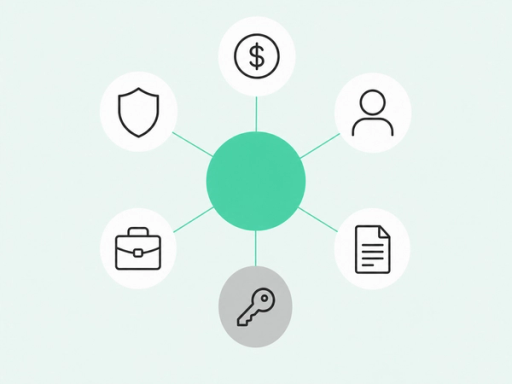
Before you can cover a committee, you need to know who sits on it. Roles matter more than names, because the same title can play different parts in different deals.
Here are the roles that tend to shape a B2B decision, using Forrester buying-group personas that Madison Logic reported:
- Economic buyer: owns the budget and cares most about ROI and risk
- Champion: advocates for you internally and cares about the outcome and their own credibility
- Technical evaluator: pressure-tests fit, security, and integration details
- End user: lives in the product daily and cares most about usability
- Blocker: has reason to resist, whether it's cost, change, or a competing priority
- Procurement and legal: manage terms, pricing, and compliance
- Gatekeeper: controls access to senior stakeholders
- Budget controller: signs off on spend and timing
There's no magic headcount. Gartner puts complex buying groups at five to 16 people across as many as four functions, with more for enterprise deals.
The goal isn't to hit a number. It's to cover every role that can influence, delay, or approve the decision. Miss a role, and you've left a gap where a stall can grow.
How to Multi-Thread a Deal: A Step-by-Step Framework
Multi-threading in sales gets easier when you treat it as a process with steps, not a scramble at the end of the quarter. Here's a framework you can run on every complex deal.
Map the Committee Before You Engage
Start with evidence, not a guessed org chart. Pull the real reporting structure. Then layer on who's already shown up: who visited your site, who opened the last thread, and who joined the trial.
A map built from activity beats a map built from assumptions. This is also where coverage gaps become visible before they cost you. If four roles matter and you've reached one, you know your next moves before you send a single message.
Write the map down where the whole account team can see it, and give each role a name and a status. The point isn't a tidy diagram; it's a shared view of who still needs to hear from you and why they'd care.
Start Early, Not at the Finish Line
Threading works best when you start in discovery or even prospecting, not when the deal is already in legal. Gartner found that 75% of B2B buyers prefer a rep-free sales experience, doing much of their research before they ever engage a seller. By the time one contact raises a hand, the committee has been forming for weeks.
Meeting more of them early means you help shape the criteria instead of reacting to them.
Late threading also reads as desperation. Reaching out to a new stakeholder for the first time during procurement looks like you're working around your contact. Reaching out in discovery looks like diligence. Same move, very different signal, and timing is what separates the two.
Enlist Your Champion (Without Going Around Them)
Multi-threading isn't a workaround for your champion. It's a favor to them. Position broader access as help building internal consensus, which is the thing they actually need to get a yes.
Try a simple ask: "To make this easy to approve, who else should I bring up to speed?" You get coverage, and they get a deal that's easier to move forward.
Tailor to Each Role, but Align the Group
Each role needs relevance. The economic buyer wants ROI and risk, and the end user wants a tool that doesn't make their day harder.
But relevance to one person isn't the goal, because consensus is. The same Gartner survey found that content built purely for individual-level relevance can have a 59% negative impact on buying-group consensus. Tailor the framing, keep the story consistent, and help members understand each other's priorities so they can agree.
Track Engagement, Not Just Contacts
Adding contacts isn't the same as covering a committee. Ten names in the CRM mean nothing if eight have gone cold.
Track engagement status per person: who's active, who's warming, and who's gone quiet. That's the difference between a contact list and a coverage view, and the difference between a forecast you trust and one you hope for.
Set a simple rhythm for keeping status current. After every meaningful touch, update whether that role moved forward, held steady, or slipped. A committee map is only useful if it reflects this week, not the week you first built it.
Turn Multi-Threading Into a Repeatable Process (For Sales Leaders)
A tactic that lives in one rep's head isn't a strategy. If you lead a team, multi-threading in sales has to be something you can inspect and coach, deal after deal.
Start by changing the question in pipeline reviews. "How many contacts do we have?" rewards activity, while "Which roles are still uncovered?" rewards coverage. The second question surfaces risk while you can still do something about it.
Bake a coverage bar into your deal-review rhythm. By the time a deal reaches proposal, you'd expect the economic buyer, the technical evaluator, and at least one end user in active conversations. When a rep can't name who's covering a role, that's your coaching moment, not a forecast you quietly accept.
Make stakeholder context visible to the whole team and to RevOps, not buried in one seller's notes. When anyone can see which roles are engaged on an account, handoffs get cleaner and forecasts get honest.
There's a scale problem, too. Salesforce found that reps spend about 70% of their time on non-selling work like research, admin, and data entry. Asking them to maintain a live committee map across every account by hand isn't realistic. So your workflow has to include the discipline, not treat it as an extra layer.
Use Buyer Signals to Multi-Thread at Scale
Here's the hard truth about any committee map: it starts decaying the moment you build it. People change roles, new evaluators join the deal, and your champion takes a job somewhere else. A static contact list can't keep up with a committee that keeps moving.
That's where buyer signals change the math. Instead of a snapshot, you get a live coverage view that updates as people act. The signals worth watching are the ones that reveal new or at-risk threads:
- Job changes flag a former champion who moves companies and becomes warm pipeline.
- Product usage shows a new user adopting inside an account.
- Website visits reveal a role you haven't reached starting to research.
- Community and social activity surface someone engaging with you in public.
- G2 reviews show a buyer comparing you against alternatives.
The catch is identity. Signals only help if you can tie anonymous and known activity to a real person. Common Room's Person360 resolves identity across sources, so the committee map you act on is trustworthy, not a pile of duplicate records.
From there, coverage becomes a workflow. In Common Room, Buying Committee tags each person Engaged, Warm, or Not engaged, with recent touchpoints visible at a glance. Gaps are obvious before you engage.
Prospector then helps you prioritize the right stakeholder to add next, backed by person-level context rather than a guess. It multi-threads stakeholders from a single organization profile, which turns "who should I add next?" into one step instead of three tools.
One signal earns special attention. Tracking job changers, especially former champions who move companies, is one of the most requested use cases we hear from customers. A champion who loved your product at their last company is the warmest thread you'll find, if you catch the move.
Multi-Threading Sales Deals: Common Mistakes to Avoid
Even teams that believe in multi-threading in sales tend to slip in the same ways. Watch for these:
- Threading late, only after a deal already shows signs of stalling
- Confusing contact count with real role coverage
- Going around the champion instead of working alongside them
- Sending every stakeholder the same generic message
- Letting the committee map go stale after the first call
Frequently Asked Questions
What Is the 3-3-3 Rule in Sales?
It's a rep-productivity cadence: reps use three prospecting tasks, three follow-ups, and three touches in a set window to structure daily activity. It's about one rep's time management, not deal coverage, so treat committee coverage above as the deal-level equivalent.
What Is the 2-2-2 Rule in Sales?
It's a follow-up cadence, commonly a follow-up in two hours, two days, and two weeks, meant to keep a conversation from going cold.
What Are the Four Types of Sales Approaches?
Teams commonly frame them as transactional, solution or consultative, value or insight, and relationship selling. Consultative selling pairs naturally with multi-threading, since it's built on understanding each stakeholder's priorities.
What Exactly Is Multithreading?
Multithreading, or multi-threading in sales, is building direct relationships with several members of a buying committee at once. It replaces routing a deal through one contact, as we explain in the opening section.
How Many Stakeholders Should a Deal Have?
There's no fixed number; cover the roles that will influence the decision, which often means 6-13 people on a complex B2B deal.
Ready to Cover the Whole Committee?
Multi-threading in sales isn't luck, and it isn't charisma. It's coverage you can map, measure, and maintain, deal after deal.
Single-threaded deals stall quietly. Multithreaded deals give you more people to help, more consensus to build, and more warning when something shifts.
If you want to see what live committee coverage looks like across your pipeline, backed by real buyer signals and resolved identities, request a demo. Bring your toughest stalled deal, and we'll walk through where the coverage gaps are hiding.