
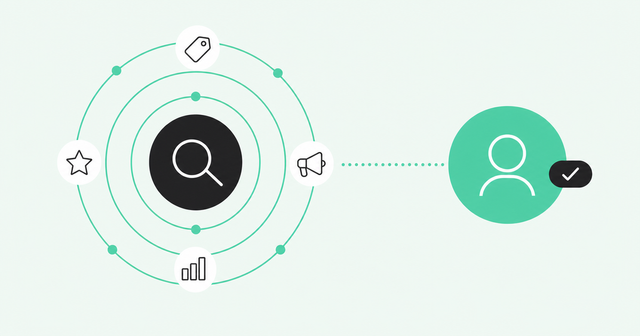
Five minutes into a discovery call, the buyer mentions they've already seen a demo from your biggest competitor. They've read the reviews, compared pricing pages, and built a shortlist without you.
That's the problem competitive intelligence should solve. Your team needs the right context before the call starts, and it needs to reach the person running the deal.
Looking for the best competitive intelligence platform? This guide explains what these tools do, how to evaluate them, and how the main categories compare. It also covers a category most lists skip: buyer-level competitive signals that show who's evaluating your competitors right now.
What Is a Competitive Intelligence Platform?
A competitive intelligence (CI) platform is software that collects, organizes, and delivers information about competitors, such as pricing, messaging, launches, reviews, and win-loss results. It helps go-to-market (GTM) teams make better decisions and win more deals.
The best competitive intelligence platform is the one that fits the job you need done. A product marketing team tracking launches needs something different than a RevOps team routing signals to reps.
Competitive Intelligence vs. Market Research
Market research studies a whole market, including its size, trends, and customer needs. Competitive intelligence zooms in on the specific companies you meet in deals.
Within CI, there's another split most guides miss. Market monitoring tells you what competitors are doing. Competitive buyer signals tell you which buyers are using or evaluating those competitors right now.
Both matter more as deals get crowded. Crayon's 2026 State of CI found that "57.5% report that more of their deals are competitive than a year ago; only 16% say it eased." Of course, Crayon sells CI software, so take this with a grain of salt. But still, it's pretty telling to see a 40% jum.
Is Competitive Intelligence Legal?
CI teams typically work from public information. Think competitor websites, press releases, public filings, review sites, and conversations with your own customers.
Don't misrepresent who you are, like posing as a buyer to get a competitor's demo. And don't use confidential information you shouldn't have.
This section is practical guidance, not legal advice. Check with your legal team about your specific situation.
One practical note for job-change outreach: Ask new contacts about their experience as a buyer. Don't ask them to share a former employer's confidential details.
Why Teams Are Investing in Competitive Intelligence Software
Three pressures are pushing teams toward competitive intelligence software. Deals are more crowded, buyers research on their own, and reps have limited selling time (more on that below).
Dedicated tools are also becoming the norm. The share of teams with a dedicated CI platform has roughly doubled, according to the same Crayon survey. It found that two-thirds of teams now run one, up from roughly a third in 2022.
Crayon also found that teams with a dedicated platform were more likely to report revenue impact, at 75% versus 40%. The report itself calls these associations, not proof of cause, so don't read it as a return-on-investment promise.
Buyers are doing more homework alone, too. According to Gartner's 2026 buyer survey of 646 B2B buyers, "67% of B2B buyers state that they prefer a rep-free experience."
That's a stated preference, and buyers still talk to reps. But it means a lot of comparison likely happens before your rep is involved. That's why buyer-level signals matter: They show a competitive evaluation while it's happening.
How to Evaluate a Competitive Intelligence Platform
Start with one question: Does the insight show up where the rep already works? A platform can track every competitor move and still fall short if reps never see the output.
Selling time is scarce. Salesforce's State of Sales report found that "the average seller spends 40% of their time selling," and Gen Z reps spend just 35%.
7 Criteria to Compare Competitive Intelligence Platforms
Use these criteria to compare vendors side by side. If you're also evaluating a buying signals tool, add one more test: Does it stop at the signal or help someone act on it?
- Sources and coverage: Check which sources the tool watches, such as websites, pricing pages, news, and reviews. Ask how quickly it adds new ones.
- Alerting and noise control: Look for filters that cut low-value alerts. Reps who get pinged about every footer change learn to ignore alerts.
- Competitive cards and enablement: Battlecards, which we'll call competitive cards, are short summaries reps use in deals. Check how easily you can update them.
- CRM and Slack delivery: Confirm insights land in Salesforce, HubSpot, or Slack. If reps need a new login, expect adoption to suffer.
- AI accuracy: Ask how AI summaries cite their sources and who reviews them. Test the AI on a competitor you know well.
- Pricing transparency: Ask for a written quote that lists every add-on. You don't want surprises at renewal.
- Team fit: Match the tool to its owner. Product marketing, sales enablement, and RevOps each need different workflows and permissions.
Delivery Cadence Beats Data Volume
More competitive data doesn't help if it arrives too late. What matters is how often fresh insight reaches the people working deals.
Crayon's survey found that teams sharing CI weekly or faster report revenue impact at 79%, versus 41% for teams sharing monthly or slower. That's a correlation from self-reported data, so it doesn't prove weekly sharing causes revenue.
In our view, more data is creating less clarity, and it's a pattern RevOps teams know well. During a two-week trial with real reps and live deals, track how many insights reach reps and how many they use.
Types of Competitive Intelligence Tools Compared
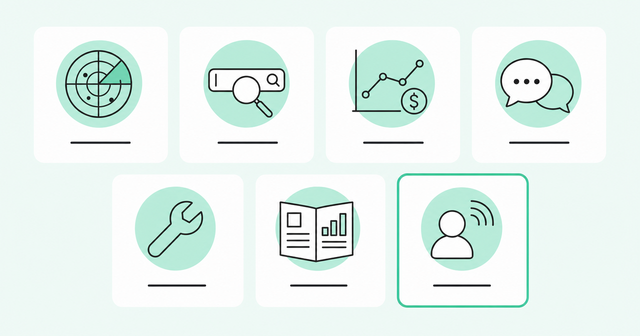
Competitive intelligence tools fall into a few categories, and each one answers a different question. You may need two or three, depending on who owns CI at your company.
The table below shows how we group the market. It describes categories, not rankings. Vendor names are examples, so check each vendor's current features directly.
| Category | Examples | Best for | Watch out for |
|---|---|---|---|
Dedicated CI platforms | Klue, Crayon, Kompyte | Product marketing teams running a formal CI program | Output can stay in a separate app if it doesn't reach reps |
SEO and digital intelligence | Semrush, Similarweb, Ahrefs | Marketing teams tracking search, traffic, and ads | Shows channel performance more than deal context |
Market and financial intelligence | AlphaSense, Valona Intelligence | Strategy and finance teams researching markets | Built more for analysts than for sales workflows |
Social listening | Brandwatch, Meltwater, Sprout Social | Brand and communications teams measuring share of voice | Mentions may not connect to accounts in your pipeline |
Niche tools | Owler, Wappalyzer, SpyFu | Quick lookups on companies, tech stacks, or ads | Each point tool adds another login and more manual work |
Research services | CI agencies and consultancies | One-time deep dives or market entry studies | Reports can age quickly between projects |
Buyer signal platforms | Common Room | RevOps and sales teams finding people who use or evaluate competitors | Doesn't replace competitor monitoring or competitive cards |
Dedicated CI Platforms
In how we group the market, dedicated CI platforms are the classic comp intel tool, with Klue, Crayon, and Kompyte as examples. Tools in this category typically monitor public competitor activity, such as website, pricing, and news changes.
These platforms typically package findings into competitive cards for sales and support win-loss programs. Win-loss analysis means talking to buyers after a decision to learn why you won or lost.
They're a strong fit for CI programs led by product marketing. If you're comparing Klue competitive intelligence with Crayon competitive intelligence, ask each vendor the same delivery question: Where will reps see this?
Digital, Market, and Social Intelligence Tools
These tools give useful context, but their makers didn't design them to deliver insights to sales. Think of them as inputs for marketing and strategy teams.
SEO and traffic tools show how competitors perform in search, ads, and web traffic. Market intelligence platforms help strategy and finance teams research industries, earnings, and analyst views.
Social listening tools track brand mentions and share of voice, which means how much of the online conversation each brand owns. They're helpful for brand teams but rarely tell a rep which account to call.
Where Competitive Buyer Signals Fit
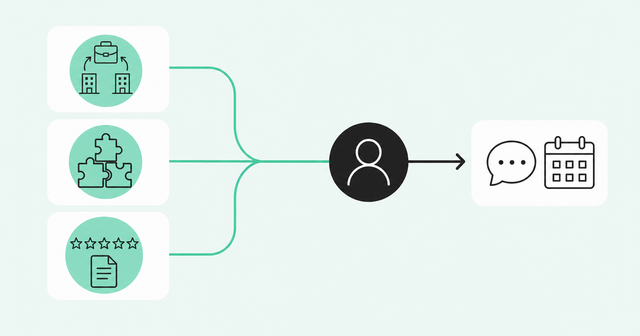
Competitive intelligence tells you what a competitor did. Competitive buyer signals tell you which people are using or evaluating that competitor right now.
A buyer signal is an action that suggests someone may be ready to buy. With always-on buying signal capture, Common Room by Zoom ties the signals you already have to real people, so reps know who to contact.
- Competitor-user job changes: Someone who used a competitor at a past company joins an account that fits your ideal customer profile (ICP).
- Tech stack adjacency: A prospect's current tools compete with or complement yours, which hints at timing and talking points.
- Review-site research: People at an account compare tools in your category on G2, which suggests an active evaluation.
Job Changers Who Used a Competitor
People who used a competitor at a past company already understand the problem you solve. When they join a company that fits your ICP, they bring opinions about what worked and what didn't.
We run this play ourselves. Our team automatically segments job changers who used competitors once they join ICP accounts.
Our job-change plays, including the competitor-user version, drove "2x higher reply rates" and "2x higher booked meeting rates" compared to traditional cold outbound. That result covers job-change plays as a whole, so treat it as directional for the competitor segment.
Competing Tech Stacks and Review Research
Tech stack adjacency means looking at the tools a prospect already uses. A tech stack adjacency signal shows when a prospect's stack competes with or complements yours, which helps reps time outreach.
Review sites shape shortlists, too. G2's 2026 Buyer Behavior Report found that "The top sources influencing buyer shortlist decisions are review sites (38%) and AI chatbots (37%)." That survey covers software buyers in general, not CI buyers specifically.
Review research gets useful when you know who's doing it. Common Room pairs account-level G2 activity with Person360, its identity resolution engine that connects activity to real people.
Those G2 buying signals with Person360 point reps to the buyers most likely to respond. The rep gets a name and a reason to reach out, instead of another account-level alert.
Can AI Replace a Competitive Intelligence Platform?
Not on its own. Generative AI (GenAI) tools like ChatGPT can speed up research and summarize competitor pages in minutes.
The gaps show up in accuracy and governance. GenAI can miss context, repeat outdated details, or state a guess as a fact. Buyers are wary of this, as the Gartner data below shows.
For RevOps, the governance question is simple: Who checked the answer before a rep repeated it to a buyer? If your team has ever said, "We've layered AI on top of a messy process," you know how quickly unchecked output spreads.
Buyers want a human check, too. Gartner's AI trust finding shows that "Sixty-nine percent of B2B buyers prefer to validate AI-generated insights with sales reps."
The same Gartner survey found 51% of buyers say they're more likely to encounter misleading information from GenAI. For sales reps, it's 49%, so buyers see risk on both sides.
AI works best on trusted context. With person-level buyer intelligence, AI and reps start from a continuously updated view of who the buyer is and what they've done. Without that context, AI just produces faster noise.
DIY Stack vs. Dedicated Platform: What It Costs
The right setup depends on your stage. Here's a simple way to match your CI investment to your team.
- Startup: Alerts, a shared spreadsheet, and free tools often cover the basics. One person owns keeping it current.
- Growing team: A dedicated CI platform makes sense once several reps face the same competitors every week.
- Mid-market or enterprise: Pair a CI platform with buyer signals in your CRM. Reps then see who's evaluating competitors, along with what competitors did.
A DIY stack looks free until you count the hours someone spends updating it. Ask each vendor for a written quote so you can compare like for like. When you request quotes, ask how seats, competitors tracked, data sources, and integrations affect the price.
For RevOps, the biggest hidden cost is an orphaned login, meaning a tool someone bought that nobody opens. Before you buy, ask who'll own the tool, where its output will live, and how you'll measure use.
How to Choose the Best Competitive Intelligence Platform for Your Team
Start with the job, then pick the category. Use this checklist to map each job to the right type of tool.
| Your job | Tool category to consider | Question to ask in the trial |
|---|---|---|
Track competitor launches, pricing, and messaging | Dedicated CI platform | How fast do changes reach reps? |
Help reps handle competitive deals | Dedicated CI platform with competitive cards | Can reps find the right card inside the CRM? |
Watch competitor search and ad strategy | SEO and digital intelligence | Which competitor pages and keywords changed this month? |
Research markets, earnings, and analyst views | Market and financial intelligence | Does it cover our industry and region? |
Measure share of voice | Social listening | Can we filter out irrelevant mentions? |
Find who's evaluating or using competitors | Buyer signal platform | Does each signal link to a real person and a next step? |
Run a one-time deep dive | Research service | What can we maintain after the report? |
If that sixth job matters most, it helps to understand buyer intelligence vs. intent data. Intent data often shows account-level interest, while buyer intelligence ties signals to specific people.
Watch for these red flags in demos:
- Volume as the headline: If the demo leads with how many sources it tracks, ask how it decides what deserves a rep's attention.
- No path to the CRM: If insights only live in the vendor's app, expect reps to stop checking.
- AI without citations: If summaries don't show their sources, you can't verify them before reps share them.
- Vague pricing: If the sales rep can't explain what drives cost, expect surprises at renewal.
For many mid-market and enterprise teams, the answer is both: a CI platform for market monitoring and a signal layer for buyer context. To see how Common Room turns competitive buying signals into prioritized next steps for each rep, Request a demo.
Frequently Asked Questions About Competitive Intelligence Tools
Here are short answers to common questions about choosing competitive intelligence software.
What Is the Best Software for Competitor Analysis?
It depends on the job. Dedicated CI platforms suit formal CI programs, SEO tools suit marketing teams, and buyer signal platforms show who's evaluating competitors.
What Features Should a Competitive Intelligence Platform Have?
Look for broad source coverage, noise controls, competitive cards, CRM and Slack delivery, and AI summaries that cite sources. A clear owner and transparent pricing matter just as much.
Can ChatGPT Do Market Research?
ChatGPT can speed up desk research and summarize public information, but it can miss context or repeat outdated facts. In Gartner's May 2026 survey of B2B buyers, 51% say they're more likely to encounter misleading information from GenAI, versus 49% for sales reps. Check its output against original sources before reps share it.
Do I Need a Dedicated CI Platform or Can I Build a DIY Stack?
A DIY stack works while one person can keep it current. Move to a dedicated platform once updates fall behind and reps stop trusting the information.
How Much Does Competitive Intelligence Software Cost?
Ask each vendor for a written quote so you can compare like for like. When you request quotes, ask how seats, competitors tracked, data sources, and integrations affect the price.
What Is the Best Competitive Intelligence Tool for a Startup?
Most startups can begin with alerts, a shared spreadsheet, and free tools owned by one person. Upgrade when maintaining that system takes more time than it saves.
What Is the Difference Between Competitive Intelligence and Market Intelligence Tools?
Competitive intelligence tools focus on specific competitors, such as their pricing, messaging, and launches. Market intelligence platforms cover the wider market, including its size, trends, and financial data.