
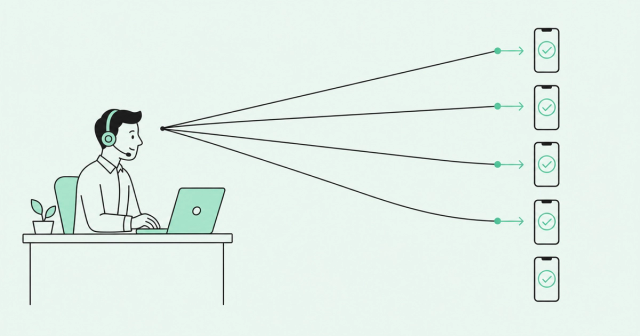
Your reps dial all day. A few weeks in, prospects start seeing "Spam Likely" on their screens, and connect rates slide.
Someone suggests a faster dialer. Before you buy one, look at how your team dials. The choice of parallel dialing versus cascading dialing shapes how carriers read your numbers and what prospects hear when they pick up.
Dialing mode is part of the problem. The list you're calling is the rest.
What's the Difference Between Parallel Dialing and Cascading Dialing?
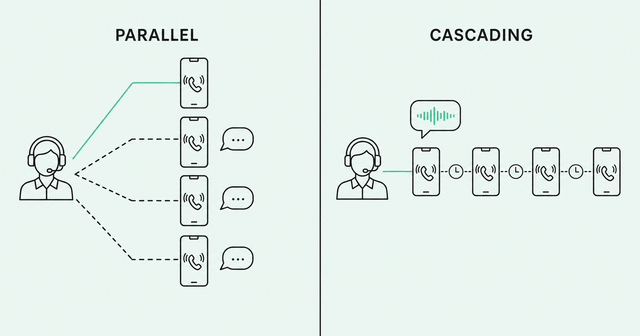
Parallel dialing rings several numbers at once for one rep and connects whoever answers first, then drops the rest. Cascading dialing places calls one after another with a slight, deliberate delay, so whoever picks up reaches a live rep. Cascading trades a bit of raw speed for fewer abandoned calls and calling patterns that look more like a person.
Both modes run inside an auto dialer, software that places calls for reps so they don't punch in numbers by hand. If you're still sorting out the categories, start with these types of sales dialers.
What Is Parallel Dialing?
Parallel dialing puts speed first. A parallel dialer typically rings three, four, or five prospects at a time for a single rep. The first person who answers gets the rep, and the dialer hangs up on everyone else.
Now picture it from the prospect's side. Their phone rings, they answer, and they hear dead air (silence on the line) or a click. Nobody's there because the rep is already talking to someone else.
Teams like parallel dialing for one reason: volume. Reps spend less time listening to rings and voicemail greetings, so they get through more dials per hour.
What Is Cascading Dialing?
A cascading dialer calls prospects in sequence with staggered timing. Our Zoom Auto Dialer playbook puts it plainly: "Cascading dialing calls prospects sequentially with a deliberate, slight delay between each dial."
That delay is a design choice. It gives the dialer room to connect each answered call to a rep, so the person who picks up hears a voice instead of silence.
Cascading also differs from power dialing. A power dialer calls one number at a time with no delay between dials. Cascading also works the list in sequence but spaces out the dials so answered calls reach a live rep.
Parallel Dialing vs. Cascading Dialing: Side-by-Side Comparison
SDR leaders manage three things when they pick a dialing mode: throughput, risk, and how prospects feel about the call. Here's how the two modes compare.
| Factor | Parallel dialing | Cascading dialing |
|---|---|---|
Calls per rep hour | Higher | Moderate |
Dropped or abandoned call risk | Higher, since the dialer drops every answer after the first | Lower, since staggered timing aims to connect each answer to a rep |
Spam labeling risk | More exposure to patterns carriers score, like abandoned and unanswered calls | Less exposure, with pacing closer to a person dialing (no guarantee) |
Prospect experience | Some people answer to dead air | Designed so people who answer reach a rep |
Compliance considerations | Extra pickups can add abandoned calls fast; review rules with counsel | Designed to reduce abandoned calls; still review rules with counsel |
Best fit | Short-lived, high-volume lists | Named-account outbound and long-term number health |
Abandoned calls also carry regulatory weight. Under the FCC abandoned-call rule, sellers can't abandon more than 3% of telemarketing calls answered live by a person. The rule measures that rate over 30 days for a single calling campaign.
The rule counts a call as abandoned when the person isn't connected to a live sales rep within two seconds of finishing their greeting. It applies to telemarketing calls, so check with your counsel about whether your team's outreach is covered.
Parallel dialing creates a potential abandoned call every time two people pick up at once. Cascading dialing is designed to reduce how often that happens.
Why Phone Numbers Get Flagged as Spam
Spam labels attach to individual phone numbers, and carriers and analytics engines apply them. Each number builds its own number reputation, the standing it earns with carriers based on how it behaves.
The Bandwidth number reputation overview explains that certain US mobile carriers score and potentially label calls using algorithms and analytics engines that keep changing.
Our Zoom Auto Dialer playbook notes that carriers and analytics providers can weigh several signals. They can look at how often calls go unanswered, how many people report them as spam, and whether calling patterns look suspicious. That gives your team three signals to watch:
- Unanswered calls
- Spam reports from the people you call
- Suspicious calling patterns
STIR/SHAKEN is a caller ID authentication standard. According to FCC caller ID authentication guidance, it lets the receiving phone company verify that a call comes from the person making it. Verification confirms who's calling, but it doesn't guarantee anyone picks up.
Carriers screen hard for a reason. US consumers received 52.5 billion robocalls in 2025, according to YouMail 2025 robocall data. Your legitimate sales calls compete for trust in that same stream.
How Cascading Dialing Reduces Spam-Flag Risk
No dialing mode makes a number immune to spam labels. Cascading dialing is designed to reduce the behaviors that feed them, and it does that in three ways.
First, it cuts abandoned calls and silence on connect. When someone answers and hears a rep right away, they have less reason to hang up fast or report the number.
Second, staggered dials keep your calling pattern closer to legitimate outreach. The pacing looks more like a person working a call list than a machine ringing five phones at once.
Third, fewer bad experiences mean fewer complaints. Over months, that protects number health, which is the long-term reputation your team needs to keep connecting.
Dedicated vs. Pooled Phone Numbers
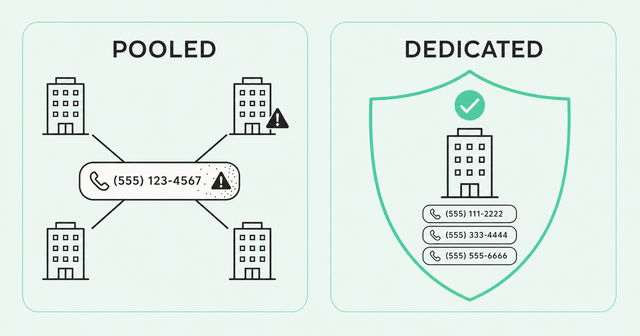
Dialing mode is only half of number health. The other half is who else uses your numbers.
Some dialing platforms pool phone numbers across their customers. On a pooled number, one tenant's calling behavior (another company on the same platform) can affect the number for everyone. Rotating to a new pooled number may not fix it.
Dedicated numbers belong to your organization alone, so your team owns its reputation. Because Zoom Auto Dialer runs on Zoom Phone, its numbers are dedicated to your organization, not pooled across a platform's customer base. Our dialer buyer's framework covers what to ask any vendor about number ownership.
Local presence dialing matches your caller ID to the prospect's area code. When you run it from your own number pool, those local numbers carry only your team's history.
This matters because people rarely answer unknown numbers. In the Hiya State of the Call six-country consumer survey, only 14% of people immediately answer calls from unknown numbers. You can't afford a spam label you didn't earn.
Logging Calls, Transcripts, and Summaries to the CRM
Dialing mode matters less here than one question: do call outcomes write back to your CRM? As far as your forecast knows, a call nobody logged never happened.
Every call should log these five things:
- Disposition, the outcome of the call
- Rep notes
- Full transcript
- AI summary
- Next step
Unlogged calls leave gaps in forecasts and territory plans. Managers can't coach what they can't see, and reps end up calling people who already said no.
Zoom Auto Dialer can write disposition, call notes, and AI summaries back to the CRM based on your team's settings. It integrates with Salesforce, HubSpot, Outreach, and Salesloft, and it can transcribe calls live when transcription is enabled. Feature and integration availability varies by plan.
Zoom Auto Dialer also pulls call tasks straight from Engage sequences. Reps work the call steps from signal-triggered sequences in bulk instead of dialing each one by hand.
Those logged outcomes then shape the next list. Who answered, who asked for a callback, and who said no all inform who your team calls tomorrow.
When to Use Each Method
Dialing mode is a throughput setting. Your pipeline strategy lives somewhere else. Pick the mode that fits the list and the stakes, then spend your energy on who's on the list.
Parallel dialing can make sense in these situations:
- Short-lived lists: The list is high volume, and your team will work through it once.
- Low stakes per call: One awkward hang-up won't cost you a key account.
- Tolerance for drops: Your team accepts that some people who answer will hear dead air.
- Confirmed compliance: You've checked with counsel on how abandoned-call rules apply to your outreach.
Cascading dialing fits better in these situations:
- Named-account outbound: Every contact belongs to an account your team chose on purpose.
- Long-term number reputation: You'll call from the same numbers for months and need them healthy.
- Buyer experience: A bad first call could close the door on a deal.
- Calls to mobile phones: Your contacts see carrier spam labels right on their screens, so a flagged number costs you the answer.
Either way, rank the list by buyer signals before anyone dials. Speed lives in the dialer, and pipeline lives in the data.
A rep working a ranked queue through intent-based cold calling spends their best hours on accounts that show real buying signals. If your list still comes from a static export, start by rethinking your outbound prospecting stack.
Frequently Asked Questions
How Does Cascading Dialing Avoid the Spam-Flag Issues of Parallel Dialing?
Cascading dialing staggers calls with a slight delay, which is designed to reduce abandoned calls and silence on connect. That keeps calling patterns closer to legitimate outreach, though no dialing mode guarantees you'll avoid spam labels.
Does a Sales Dialer Use Dedicated Phone Numbers or Numbers Pooled Across Customers?
It depends on the platform, since some pool numbers across customers and one company's behavior can affect everyone on a shared number. Zoom Auto Dialer runs on Zoom Phone, so your numbers are dedicated to your organization.
What Is the Best Parallel Dialer for Sales Teams?
The best parallel dialer for your team uses dedicated numbers, logs every outcome to your CRM, and lets you switch to cascading when number health matters. It should also work from a list ranked by buyer signals instead of a static export.
What Happens if Two People Answer at Once in Parallel Dialing?
The dialer connects the first person to the rep and drops the second, who hears dead air or a hang-up. That dropped call may count as abandoned under the FCC rule if it's a telemarketing call.
Is Cascading Dialing the Same as Power Dialing?
No, power dialing calls one number at a time with no delay between dials. Cascading dialing staggers calls in sequence with a deliberate, slight delay between each dial.
Does STIR/SHAKEN Stop My Calls From Being Labeled Spam?
No, STIR/SHAKEN verifies that a call comes from the person making it, but it doesn't guarantee anyone picks up. Carriers and analytics engines can still score and label a number based on how it behaves.
Conclusion: Dial Smarter, Not Just Faster
The parallel dialing versus cascading dialing decision comes down to how much risk you'll accept for speed. If your numbers are a long-term asset, pick the mode that protects them.
Then fix the part no dialer can fix: who's on the list. Pair your dialing mode with a list ranked by buyer signals, so every connected call goes to someone worth the conversation.
Want to see signal-ranked lists and Zoom Auto Dialer working together? Request a demo.