
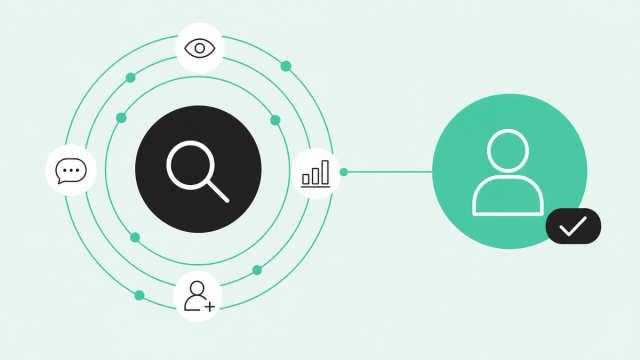
Your reps have more buyer data than ever. They still start most mornings with the same question: Who should I call today, and why? More data is creating less clarity, and a longer contact list won't fix that.
Buyers aren't waiting for your call, either. Gartner's 2026 buyer survey found that "67% of B2B buyers state that they prefer a rep‑free experience." So most of the buying journey happens where your team can't see it, unless you know which signals to watch.
A sales intelligence platform is supposed to close that gap. The catch is that most sales intelligence tools look alike on a website, and "biggest database" has become the default way to compare them.
This guide gives you a clearer way to choose. You'll get a plain-language definition, the features that matter, a side-by-side look at seven platforms, and a simple process for picking the right fit.
What Is a Sales Intelligence Platform?
A sales intelligence platform is software that gathers, enriches, and analyzes company and buyer data so sales teams know who to contact, when, and why. It turns raw information into a clear next step for each rep.
Think of it as the research layer of your sales process. The best B2B sales intelligence platform for your team is the one that saves reps from guessing.
What Data a Sales Intelligence Platform Collects
Most platforms combine four kinds of data. Each one answers a different question about a buyer.
- Contact data: Names, job titles, emails, and phone numbers tell you who works at a company and how to reach them.
- Firmographic data: Industry, size, and location show whether an account matches your ideal customer profile (ICP), your picture of a best-fit customer.
- Technographic data: The software a company already uses hints at its needs, its budget, and its fit with your product.
- Intent and behavioral data: Actions like website visits, content reads, and product sign-ups show who might be in-market, meaning actively looking to buy.
Contact and firmographic data tell you who exists. Intent and behavioral data tell you who's paying attention, and that's the part your reps need most.
How Sales Intelligence Evolved Into Buyer Intelligence
The first sales intelligence tools were contact databases. You searched by title and company size, exported a list, and hoped the emails still worked.
That approach answers "Who exists?" It doesn't answer "Who's in-market, and why now?" Answering the second question takes signals, the actions and changes that show someone may be ready to buy.
That's the shift toward buyer intelligence. It connects first-party signals with outside data about people and accounts. First-party signals come from channels you own, such as your website, product, and community.
If you're new to the term, start with what buyer intelligence is and how it builds on classic sales intelligence. The short version: A database tells you who exists, while buyer intelligence tells you who's in-market and why.
Sales Intelligence vs. CRM vs. Sales Engagement Platforms
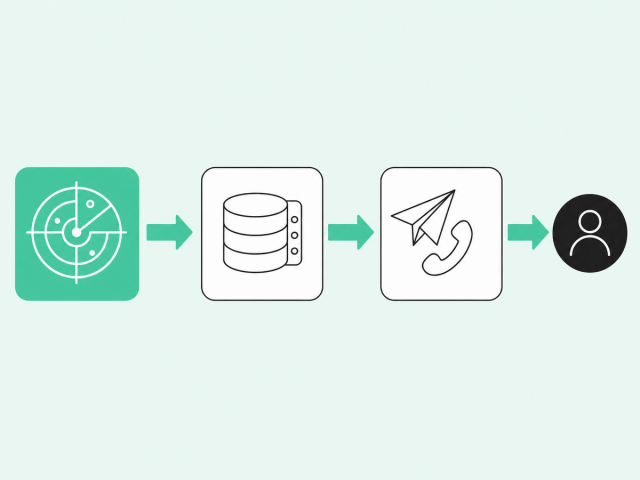
People often lump three tools together. A customer relationship management (CRM) system is your system of record, storing the accounts, contacts, and deals you already have.
A sales engagement platform runs outreach, including email sequences, calls, and tasks. Sales intelligence sits upstream of both, telling your team who to engage and when.
Here's how they compare. SDRs are sales development reps who book first meetings, AEs are account executives who close deals, and RevOps is revenue operations.
| CRM | Sales engagement platform | Sales intelligence platform | |
|---|---|---|---|
Main job | Stores relationships and deal history | Runs sequences, calls, and tasks | Finds and prioritizes who to engage next |
Question it answers | What's happened with this account? | What's the next touch? | Who should we engage, and why now? |
Main data | Records your team enters or syncs | Email and call activity | Contact, firmographic, technographic, and signal data |
Main users | The whole revenue team | SDRs and AEs | SDRs, AEs, sales leaders, and RevOps |
Example tools | Salesforce, HubSpot | Outreach, Salesloft | ZoomInfo, Apollo.io, Common Room |
Why does the difference matter? Salesforce's State of Sales report puts it bluntly: "They spend more than half of their time on nonselling work like data entry and prospecting."
When intelligence and action live in separate places, reps become the glue between them. The strongest sales intelligence and engagement platform setups connect buyer context to a native action layer. That way, a signal becomes a call, message, or task without manual copy and paste.
Key Features to Evaluate in a Sales Intelligence Platform
Database size is the most-marketed feature in this category and the least useful on its own. A huge directory doesn't help if your reps still can't tell which five accounts deserve attention today.
Use these five criteria to compare sales intelligence platforms on what moves pipeline. They apply whether you're looking at full platforms or narrower lead intelligence tools.
Data Accuracy and Freshness
Contact data goes stale all the time. People change jobs, companies reorganize, and phone numbers stop working, so a record that was right last quarter may be wrong today.
Ask every vendor how often records refresh and how it checks accuracy. Also ask whether updates flow into your CRM automatically or need a manual reimport.
Here's a deeper look at why CRM data decays and what ongoing cleanup looks like. Good sales intelligence software handles data hygiene continuously, so reps aren't waiting on a quarterly cleanup.
Signal Depth: Account-Level vs. Person-Level Intent
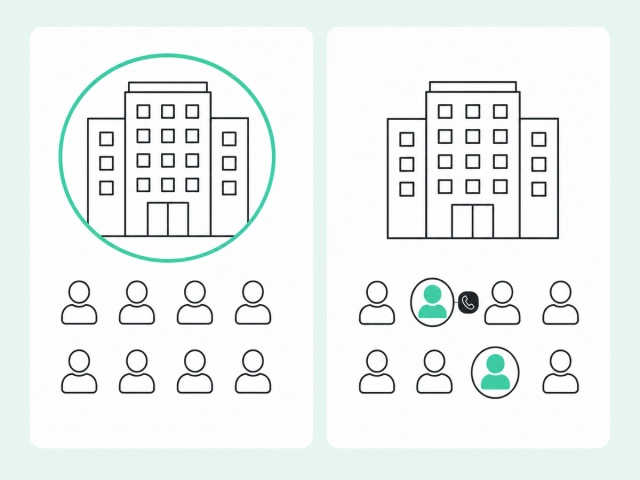
Intent data shows that someone is researching a problem you solve. The big question is whether a platform tells you which company is researching, or which person.
Account-level intent tells you where to look. Person-level intent tells you who to call, which matters when a buying group has a dozen people and only two are active.
For a full breakdown, read this guide to account intent vs. person intent. Strong B2B sales intelligence tools cover five signal types:
- Firmographic signals: Changes like new funding, hiring, or expansion show that a company's situation is shifting.
- Technographic signals: Adding or dropping a tool in your category can mean a buying window just opened.
- Behavioral signals: Website visits, pricing-page views, and product usage show direct interest in what you sell.
- Social and community signals: Comments, questions, and posts on LinkedIn, Slack groups, GitHub, or forums show who's engaged with your space.
- Relationship signals: Job changes by past champions, the people who backed your product before, give your team a warm path into an account.
Also ask whether the platform includes first-party signals from your own website, product, and community. They're often the strongest signals you have, and they're easy to miss if a tool only looks at outside data.
Not sure where to start? This list of buying signals you're probably missing makes a good checklist for your evaluation.
Identity Resolution and Enrichment
Identity resolution means matching scattered activity to a real person and account. For example, it can connect an anonymous website visit, a personal-email product sign-up, and a LinkedIn comment to the same buyer.
Enrichment fills in missing details on those records, like job title, company size, or tech stack. Waterfall enrichment checks several data providers in order until it finds a match, which improves coverage compared with a single source.
Get the basics on how B2B data enrichment works before your first vendor call. Then ask about match rate: how much of your real activity the platform can tie to a known person and account.
Match rate tells you more than total profile count. A sales intelligence platform with a smaller directory and a higher match rate often gives reps more to work with.
Buying-Committee Mapping
Complex deals rarely depend on one person. Per Gartner buying group research: "Buying groups are more diverse than ever, ranging from five to 16 people across as many as four functions."
That's a lot of people to find, and many of them never fill out a form. A good platform shows who else at an account is engaging and maps their roles. It also helps reps multi-thread, meaning build relationships with several stakeholders at once.
Ask vendors how they surface new stakeholders as a deal moves forward. Deals often stall when a key decision-maker shows up late and nobody on your team knew that person existed.
Integrations and Time-to-Action
A signal only helps if it reaches the right rep while it still matters. Time-to-action is how long it takes a signal to become a task, alert, or message in the tools your team already uses.
This is harder than it sounds. In MuleSoft's 2026 Connectivity Benchmark, two findings stand out: "The average organization now manages 957 applications," and "only 27% of these applications are currently connected."
That figure covers enterprise IT as a whole. Still, sales teams feel the same gaps every time a signal sits in one tool while the rep works in another.
During evaluation, trace one signal end to end. Does it show up in your CRM, Slack, or sequencing tool? Who has to copy, paste, or approve it before a rep can act?
Finally, treat compliance as a baseline check. Confirm the vendor supports the General Data Protection Regulation (GDPR) and the California Consumer Privacy Act (CCPA), and ask how it handles opt-out requests.
Best Sales Intelligence Platforms Compared
Here's how seven well-known sales intelligence companies compare. We added a signal type column, because account-level and person-level signals change how your reps work.
We're Common Room, so we've listed ourselves first. We've kept competitor descriptions general, with no pricing or accuracy claims, so confirm details with each vendor.
| Platform | Best for | Core data approach | Signal type | Notable strength | Consideration |
|---|---|---|---|---|---|
Common Room by Zoom | Teams that want person-level buyer intelligence tied to action | Unifies first-party data and real-world signals with identity resolution and waterfall enrichment | Person and account | Connects anonymous and known activity to real buyers, then routes next steps | Most valuable when you have signals across several channels to unify |
ZoomInfo | Teams that need broad contact and company coverage | Large B2B contact and company database | Mostly account, with intent add-ons | Org charts and deep company data | Typically sold as enterprise contracts |
Apollo.io | Small and midsize business (SMB) teams and high-volume SDRs | Contact database with built-in sequencing and dialer | Mostly account | Prospecting and outreach in one tool, with a free tier | Lighter intent depth than specialist tools |
6sense | Enterprise account-based marketing (ABM) | Predictive models built on account-level intent | Account | Buying-stage predictions and ad orchestration | Usually needs dedicated RevOps resources |
LinkedIn Sales Navigator | Social selling on LinkedIn | LinkedIn's member network and activity | Person, within LinkedIn | Native access to LinkedIn profiles and messaging | Data stays mostly inside LinkedIn |
Cognism | Teams prospecting in Europe | Contact data with a compliance-first approach | Mostly account | European coverage and privacy focus | Check coverage for your specific regions |
Demandbase | ABM advertising and account-based programs | Account identification, intent, and advertising | Account | Account-based ads tied to intent | Built more for marketing programs than rep prospecting |
Common Room by Zoom: Best for Signal-Based, Person-Level Buyer Intelligence
Most sales teams don't have a data shortage. They have signals scattered across their website, product, community, CRM, and social channels, with no clear picture of which person is ready to talk.
Common Room by Zoom is a customer intelligence platform that turns those scattered signals into prioritized, person-level next steps. Common Room's buyer intelligence layer unifies your first-party data with real-world buyer signals and keeps every profile continuously updated.
Here's how the pieces fit together:
- Person360 and Context360: These engines resolve identities, connecting anonymous and known activity to real people and accounts in one shared view.
- AI waterfall enrichment: Common Room fills in missing firmographic, technographic, and contact details, while DataAgent keeps records accurate and deduplicated.
- Prospector: Reps search a constantly refreshed database of 400M+ B2B profiles with ICP and persona filters to find the best-fit people to work next.
- RoomieAI: The AI layer surfaces the highest-priority signals, suggests next-best actions, and automates outreach so reps spend time on likely conversations.
Prospector supports two ways of working. Fit-first prospecting starts with your ICP and persona criteria, then layers on buying context. Intent-first prospecting starts with in-market accounts and uncovers buyers before they're in your CRM.
Reps can map several stakeholders from one account profile, then route prospects to the CRM, segments, or sequences. See how signal-based prospecting with Prospector works in practice.
Since July 2026, Common Room has been part of Zoom. Together, they form Revenue OS, a revenue operating system where Common Room's buyer intelligence feeds Zoom's Auto Dialer, Engage, Sales Assist, and Forecast.
That pairing connects knowing, deciding, and acting in one system. Every closed deal, coached call, and buyer signal writes back to the shared context layer, so prioritization, coaching, and forecasting get sharper over time.
Consideration: Common Room is most valuable when you have signals to unify, such as website traffic, product usage, community activity, or CRM history. If you only need a one-time contact list, a database-first tool may be simpler.
ZoomInfo: Best for Broad Contact and Company Data
ZoomInfo is one of the best-known B2B sales intelligence platforms, built around a large database of contacts and companies. Teams use it for org charts, company details, and intent add-ons that flag accounts researching relevant topics.
It's known for strong coverage of North American companies. Despite the name, ZoomInfo isn't affiliated with Zoom or Common Room by Zoom.
Consideration: ZoomInfo typically sells enterprise contracts, and its intent data works mostly at the account level. Plan how your reps will turn account signals into specific people to contact.
Apollo.io: Best All-in-One Option for SMBs and High-Volume SDRs
Apollo.io combines a contact database with built-in email sequencing and a dialer, so reps can find contacts and reach out in one place. That makes it a popular sales intelligence and engagement platform for startups and small teams.
It also offers a free tier. That makes it easy to test before you commit budget.
Consideration: Apollo's intent depth is lighter than what specialist intent tools provide. High-volume outreach can also turn into more activity without more pipeline, so pair it with clear prioritization rules.
6sense: Best for Enterprise ABM and Predictive Account Intent
6sense focuses on ABM, where marketing and sales coordinate around a defined list of high-priority accounts. Its predictive models use account-level intent data to estimate which companies are in-market and what buying stage they're in.
It also orchestrates advertising to those accounts, which makes it popular with enterprise marketing teams. Compared with lighter lead intelligence tools, it's a bigger program to run.
Consideration: 6sense usually needs dedicated RevOps resources to set up and tune its models. Its signals are account-level, so reps still need a way to find the right people inside each account.
LinkedIn Sales Navigator, Cognism, and Demandbase: Specialized Picks
These three sales intelligence tools shine in narrower use cases. Each can work on its own or alongside a broader platform.
- LinkedIn Sales Navigator: It's built for social selling, meaning building relationships on LinkedIn, with lead recommendations, saved searches, and InMail. Its data stays mostly inside LinkedIn.
- Cognism: It's popular with teams prospecting in Europe and emphasizes compliance with regional privacy rules. Check coverage for your specific countries and segments.
- Demandbase: It's built for ABM advertising and account-based programs, combining account identification and intent. It suits marketing-led programs more than individual rep prospecting.
How to Choose the Right Sales Intelligence Platform for Your Team
The right choice depends less on feature lists and more on how your team sells. Use these five steps to narrow the field before you sit through a single vendor demo.
- Define your ICP and personas: Write down the companies and roles you sell to, so you can test every vendor against the same criteria.
- Audit your data and signal gaps: List what you already know about buyers and what's missing, such as person-level intent or product usage.
- Match the platform to your go-to-market (GTM) motion: Enterprise outbound, SMB outbound, and product-led growth (PLG) teams need different things.
- Run a pilot on accuracy and time-to-action: Test each tool on your real accounts, then time how long signals take to reach reps.
- Confirm CRM and workflow fit: Check sync direction, field mapping, and whether reps can act inside the tools they already use.
Priorities also shift by team type. Here's where to focus:
- Enterprise outbound teams: Prioritize buying-committee visibility and deal progression. Finding a key stakeholder late can stall months of work.
- SMB and commercial outbound teams: Prioritize speed-to-signal and rep output. More activity doesn't equal more pipeline, so focus reps on accounts showing real interest.
- PLG teams adding sales: Prioritize first-party product signals and persona matching. More users inside an account can hide the person who actually buys.
- High-inbound teams: Prioritize scoring and routing so reps work the best-fit leads first. More inbound doesn't mean better pipeline.
If you're looking for the best sales intelligence software for small business teams, start with the SMB guidance above. Then run a short pilot on a narrow set of accounts before you sign anything.
How to Measure ROI From a Sales Intelligence Platform
Return on investment (ROI) is where many sales intelligence rollouts get fuzzy. Teams report emails sent and contacts exported, then wonder why pipeline didn't move.
More activity doesn't equal more pipeline. Measure the quality of what reps create with these four metrics, and watch for the activity trap in each one.
| Metric | What it tells you | Activity trap to avoid |
|---|---|---|
Meetings per rep | Whether signals help reps start real conversations | Counting emails sent instead of meetings held |
Pipeline sourced | How much qualified pipeline started from a signal | Counting every exported contact as a lead |
Conversion rate | Whether prioritized accounts turn into deals more often | Celebrating volume while win rates stay flat |
Time-to-first-touch | How fast a rep acts after a signal appears | Letting alerts sit in a dashboard for days |
Set a baseline for each metric before your pilot starts. Then compare the same numbers after the pilot, using the same accounts and reps where you can.
Here's what that looks like in practice. Notion saw 30% more meetings per rep per month with Common Room.
Common Room also contributed 16% of Notion's total pipeline and 18% of its total revenue (December 2023-April 2024). You can read the full story of how Notion booked more meetings on our site.
Homebot moved quickly, too. The company generated $1.5 million in new pipeline within a month of its AEs using Common Room, and here's how Homebot generated new pipeline.
Where Sales Intelligence Is Heading: AI Agents Need Better Context
AI agents now draft emails, research accounts, and suggest next steps. They only perform as well as the buyer context behind them, and AI without context is just noise.
Buyers use AI to research, too, but they still want a human check. Gartner's latest research shows buyers still validate AI insights: 69% of B2B buyers turn to sales reps to validate AI-generated insights.
That shifts the rep's job toward validation and confidence. When a buyer asks, "Is this right for us?" your rep needs accurate, current context about that person and account.
So sales intelligence is moving away from static databases and toward real-time, person-level signals connected to action. The next sales intelligence platform you buy should give your reps and your AI agents the same trusted context.
That's the bar to hold every vendor to. Ask how its data feeds AI, how it keeps that data current, and how a signal turns into action without extra manual steps.
Sales Intelligence Platform FAQ
Here are short answers to common questions about choosing a sales intelligence platform. Each one points back to the criteria above.
What Is the Best Sales Intelligence Platform?
The best sales intelligence platform depends on your GTM motion and the signals you need. Common Room by Zoom fits signal-based, person-level intelligence, ZoomInfo fits broad database coverage, Apollo.io fits SMB all-in-one outreach, and 6sense fits enterprise ABM.
What Is the Difference Between Sales Intelligence and a CRM?
A CRM stores the relationships and deal history you already have. Sales intelligence finds and prioritizes the people and accounts your team should engage next.
What Is the Difference Between Sales Intelligence and Intent Data?
Intent data is one input that shows a company or person researching a topic. Sales intelligence combines intent with contact, firmographic, and first-party data so reps know who to contact and why.
Which Sales Intelligence Platform Has the Best Data Accuracy?
Accuracy varies by region, industry, and company size, so no single vendor leads everywhere. Test each platform on a sample of your own ICP accounts during a pilot.
Can Sales Intelligence Platforms Integrate With My Existing CRM?
Most platforms integrate with Salesforce and HubSpot. Check whether data syncs in both directions and how quickly a new signal becomes a task or alert for a rep.
How Much Should a Small Sales Team Budget for Sales Intelligence?
Pricing varies widely by vendor, seat count, and data needs, so compare quotes from a short list. Start with a narrow set of high-confidence signals, prove results, and expand from there.
How Important Is GDPR Compliance When Choosing a Sales Intelligence Tool?
GDPR compliance is essential if you prospect people in the European Union. Ask each vendor how it sources data and handles opt-out and deletion requests.
See Person-Level Buyer Intelligence in Action
The right sales intelligence platform gives your team a clear view of who's in-market, why, and what to do next. Common Room by Zoom connects that buyer intelligence to Zoom's action layer, so every signal leads to a specific next step.
Want to see how it works with your own buyer signals? Request a demo.