
Your team sells with MEDDICC, and your CRM says every open deal has an economic buyer. Then a deal stalls in legal, and you learn nobody ever spoke to the person who signs.
Call reviews should catch that early. But many managers only get to a few recordings and grade them from memory.
This guide shows how to score sales calls against MEDDICC or BANT with AI coaching. You'll review fewer moments and coach the ones that matter.
Why Methodology Scoring Beats Generic Call Scores
Yes, AI coaching can score every sales call against MEDDICC, BANT, or your own custom methodology. You turn each element into a yes/no criterion, the AI marks the transcript moment that proves it, and it flags missing elements for manager review.
AI call scoring means software reads a call transcript and grades it against a scorecard. A scorecard is a short list of things a good call should include. If you want the bigger picture first, here's what AI sales coaching is.
Many call scores grade style: talk ratio, question count, or a vague "good discovery" rating. Those numbers describe how a rep talked. They don't tell you whether the rep qualified the deal.
Listening to more calls won't fix it, because nobody has spare hours. Salesforce surveyed 4,050 sales professionals for its latest report. Salesforce State of Sales 2026 found, "While the average seller spends 40% of their time selling, Gen Z reps are trapped at just 35%."
Coaching still matters when it's consistent. Korn Ferry, an advisory firm, published its latest summary on May 27, 2026. Korn Ferry coaching research shows "organizations with strong coaching processes achieve 14% higher quota attainment, 15% higher win rates, and nearly 20% lower voluntary turnover."
That's an association from survey research, so it doesn't prove coaching caused the gains. It does make the case for coaching on purpose. Aim for fewer, better review moments, each tied to a specific gap in a specific deal.
Step 1: Turn Each Methodology Element into Observable Call Criteria
Start with the methodology your team already uses. If you're still deciding, our guide to choosing a sales methodology walks through the options.
MEDDICC stands for Metrics, Economic Buyer, Decision Criteria, Decision Process, Identify Pain, Champion, and Competition. Reps use it to qualify complex deals that run across many calls.
BANT stands for Budget, Authority, Need, and Timeline. It fits early discovery and the handoff from a sales development rep (SDR) to an account executive (AE).
Every criterion has to pass one test: would two reviewers mark it the same way? If the answer depends on opinion, rewrite it until it points to a moment in the transcript.
- Make criteria yes/no: "Did the rep ask who signs?" gets the same answer from every reviewer.
- Keep the list short: Use six to 10 criteria per call type so reps can remember them.
- Weight what moves the deal: Give the most points to elements that stall deals when they're missing.
- Score by stage: Mark an element "not applicable" when it doesn't fit the call yet.
Buyer roles deserve extra weight. Gartner surveyed 632 B2B buyers in 2024. The Gartner buying group survey found, "Buying groups are more diverse than ever, ranging from five to 16 people across as many as four functions."
Gartner doesn't mention MEDDICC, so here's our own read. With that many people involved, the person a rep calls the economic buyer may not control the budget at all.
Example MEDDICC Scorecard
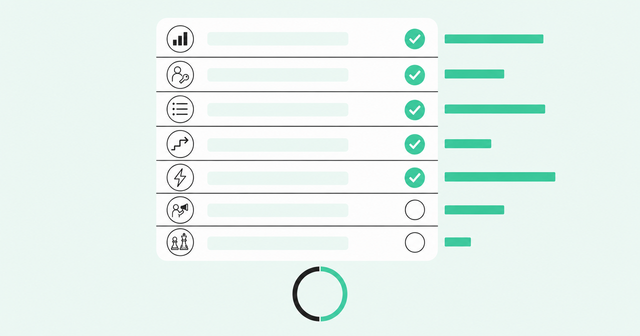
Here's a starting MEDDICC scorecard you can copy. An economic buyer is the person who approves the spend. A champion is someone inside the buyer's company who pushes for your deal when you're not in the room.
| Element | Observable criterion (yes/no) | Evidence to look for | Weight |
|---|---|---|---|
Metrics | Rep asked how the buyer measures success and got a number | Buyer states a figure, like hours saved or a revenue goal | 15 |
Economic Buyer | Rep confirmed who approves the spend, by name and title | Buyer names a person and their role in sign-off | 20 |
Decision Criteria | Rep asked how the buyer will compare options | Buyer lists must-haves or evaluation criteria | 10 |
Decision Process | Rep mapped the steps between now and a signed contract | Buyer describes approvals, legal review, security review, or dates | 15 |
Identify Pain | Rep tied the problem to a cost or business impact | Buyer explains what happens if nothing changes | 15 |
Champion | Rep tested whether the contact will sell internally | Contact offers an intro, a meeting, or internal plans | 15 |
Competition | Rep asked what other options the buyer is weighing | Buyer names alternatives, including doing nothing or building in-house | 10 |
Total | 100 |
Stage scoring keeps the math fair. On a first discovery call, you might mark Decision Criteria, Decision Process, and Competition as not applicable. That leaves 65 points in play.
Say the rep covers Identify Pain and Metrics but misses Economic Buyer and Champion. The call scores 30 of 65, or 46%. That number tells you exactly what to coach next.
A transcript only shows what the buyer said, though. Before you trust an Economic Buyer "yes," check that the named person's actual role fits and that they appear on your buying committee map.
Common Room's Person360 can help you verify who the buyer really is. Its buying committee mapping helps you see who else is involved in the deal. If one contact is your only thread, read our guide on what to do when your champion goes dark.
Example BANT Scorecard
BANT scorecards stay short. Four rows cover most early calls and SDR handoffs.
| Element | Observable criterion (yes/no) | Evidence to look for |
|---|---|---|
Budget | Rep asked whether money is set aside or how spending gets approved | Buyer names a budget range or a funding process |
Authority | Rep asked who else weighs in and who signs | Buyer names the decision maker or approval chain |
Need | Rep confirmed a specific problem the product solves | Buyer describes the problem in their own words |
Timeline | Rep asked when the buyer needs a fix and why | Buyer gives a date or a deadline-driven event |
Watch Authority closely. Asking "Who signs?" can feel pushy on a first call, so it's an easy question for reps to skip.
Step 2: Decide What Gets Flagged for Manager Review
Yes, AI coaching can flag only the moments that need your attention instead of handing you full recordings. You set the flag rules, and the AI sends you to the exact spot in the call.
Common Room's AI coaching with automatic scorecards scores calls against the behaviors and playbook criteria your team defines. Its AI playbooks can embed BANT, MEDDICC, or a custom methodology, analyze how closely reps follow it, and support CRM updates.
Coach also flags high-impact moments, like objections, pricing talk, competitor mentions, and missed playbook steps. Here are flag rules worth starting with:
- Missed high-weight criteria: Flag any deal with no confirmed Economic Buyer after the second call.
- Pricing talk: Flag discount requests and pricing pushback to check how the rep framed value.
- Competitor mentions: Flag calls where the buyer names another option, then check whether the rep asked why.
- Objections: Flag moments when the buyer pushed back, and review the rep's next two answers.
- Missed playbook steps: Flag calls that skipped a required step for their stage.
Calibrate before you trust the scores. Calibration means checking that the AI grades calls the way your best reviewer would.
Score five recent calls by hand, then compare your marks to the AI's. When you disagree on a criterion, rewrite it until it points to a clearer transcript moment. Repeat with five new calls whenever you change the scorecard.
Step 3: Live Guidance vs. Post-Call Feedback
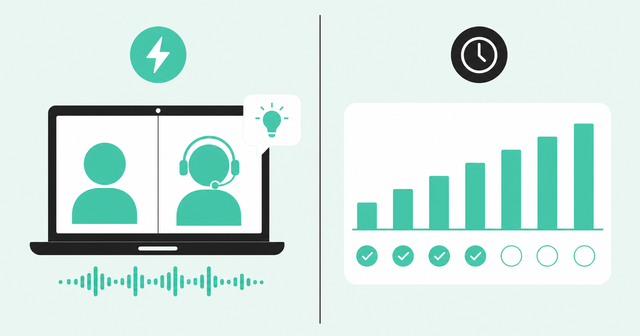
Yes, AI sales coaching can give reps live guidance during a call. Live guidance means prompts that appear while the buyer is still talking, like a reminder to ask about the decision process.
Post-call scorecards do a different job. They show patterns across many calls, so you can see that a rep skips Economic Buyer questions every week. You'll want both, because each covers a gap the other leaves.
| Question | Live guidance | Post-call scorecard |
|---|---|---|
When it lands | During the call | After the call ends |
What it's good for | Prompting a missed question or an objection response | Spotting trends by rep, stage, or criterion |
Who uses it most | Reps | Managers and enablement leads |
Limits | Can't show patterns, and too many prompts distract | Arrives after the moment has passed |
Sales Assist is part of Zoom Revenue Accelerator. Per Sales Assist live coaching, "It surfaces next-best actions, objection handling, and playbook insights in real time, right inside Zoom Meetings and Zoom Phone." Coach works on its own or alongside Zoom Revenue Accelerator.
Live prompts work better when the rep knows who's on the other end. Buyer context tells a rep whether they're talking to the budget holder or a day-to-day user.
Keep live prompts few. A rep reading five pop-ups isn't listening to the buyer.
Step 4: Turn Gaps into Roleplay Practice
Yes, reps can practice objection handling with AI roleplay built from their own call gaps. AI roleplay is a practice conversation with an AI buyer that pushes back like a real one.
Coach sets up short, voice-based roleplay sessions based on real gaps from scorecards and live calls. Keep each session focused:
- Pick one gap: Choose the rep's lowest-scoring criterion, like Authority or Champion.
- Rehearse the missed moment: Have the AI buyer raise the objection the rep fumbled last week.
- Score practice the same way: Use one scorecard for roleplay and real calls, so progress means the same thing in both.
Why practice out loud instead of rereading talk tracks? In research on retrieval practice, "students in the repeated-testing condition recalled much more after a week than did students in the repeated-study condition (61% vs. 40%)."
That 2006 lab study tested college students reading prose, so it says nothing direct about sales results. It's still a good reason to have reps answer out loud instead of rereading notes.
Practice matters most for new hires. The Bridge Group, a consulting firm, surveyed 158 B2B companies. Its Bridge Group 2026 AE report lists "Ramp time to full productivity: 6.2 mo, highest in study history."
The report links that number to growing deal complexity and buying committee size. For more on onboarding, see our guide to reducing new rep ramp time.
Step 5: Review Scores in Weekly Coaching
Scores only help if they change your next one-on-one. A short weekly routine keeps coaching tied to real calls instead of gut feel. Use this checklist each week:
- Review each rep's criterion trends from the past week.
- Open two or three flagged moments per rep.
- Pick one focus criterion for each rep.
- Assign one roleplay session on that criterion.
- Check the same criterion on the rep's next calls.
Coach includes a coaching activity tracker, so you can see where your coaching time goes. Use its best-call library to share calls where a rep handled a criterion well.
Once a quarter, backtest the scorecard. Backtesting means checking your scorecard against deals that already closed. Compare criterion scores for recent won and lost deals, and lower the weight on any criterion that looks the same in both.
Give the routine a few weeks before you judge it. Here's how to tell it's working:
- Rising criterion scores: The focus criterion climbs for reps you coached on it.
- Fewer skipped elements: Fewer calls miss high-weight items like Economic Buyer.
- Fewer stalled deals: Fewer deals stall late because nobody met the person who signs.
We designed Revenue OS to learn from outcomes. As our post on how Revenue OS learns puts it, "Every outcome becomes context for the next decision." Each review adds to what the next one starts with.
FAQ: How to Score Sales Calls Against MEDDICC or BANT with AI Coaching
These short answers cover the questions sales leaders raise when they start scoring calls with AI. Each answer stands on its own, so jump to the one you need.
Can an AI Coaching Tool Score Calls Against a Custom Methodology Like MEDDICC or BANT?
Yes, an AI coaching tool can score calls against MEDDICC, BANT, or your own methodology once you write each element as a yes/no criterion. The AI then marks the transcript evidence for each criterion and flags what's missing.
Can AI Sales Coaching Give Reps Live Guidance During a Call Instead of Feedback After It Ends?
Yes, live guidance shows prompts like next-best actions and objection handling while the buyer is still on the call. Post-call scorecards still matter, because they reveal patterns that a single call can't show.
Does AI Call Coaching Flag Only the Moments That Need Manager Attention Instead of Full Recordings?
Yes, AI call coaching can flag specific moments, such as objections, pricing talk, competitor mentions, and missed playbook steps. Managers can jump straight to those moments instead of replaying the full call.
Can Reps Practice Objection Handling with AI Roleplay Based on Their Own Call Gaps?
Yes, reps can practice against an AI buyer set up around their lowest-scoring criteria from real calls. Score each practice session on the same scorecard so you can compare it to live calls.
How Many Criteria Should a Sales Call Scorecard Have?
We suggest six to 10 yes/no criteria per call type. Fewer criteria keep scores consistent and make it easier for reps to remember what good looks like.
Should You Score Sales Calls Manually or with AI?
Use both at first: score five calls by hand to calibrate, then let AI score the rest. Keep spot-checking a few calls whenever you change the scorecard.
Put Your MEDDICC Scorecard to Work This Week
Start small with one methodology, six to 10 criteria, five calibration calls, and one focus per rep. You'll spend less time replaying recordings and more time coaching the gaps that stall deals.
Want to see it with your own playbook? Request a demo to see how Coach scores calls against your methodology.