
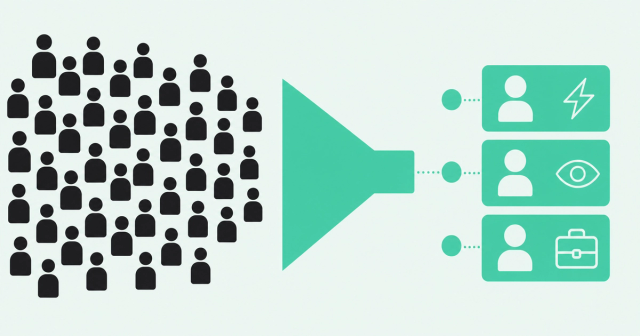
Your reps have more AI than ever. Their buyers' inboxes are louder than ever, too. Somehow, pipeline got harder to build anyway.
That's the quiet truth behind most AI rollouts: More activity does not equal more pipeline. When every rep can draft 200 emails before lunch, writing stops being the hard part. Knowing who deserves an email is.
This guide compares the best AI prospecting tools for B2B sales teams on the two questions that decide pipeline: who to contact, and why now. You'll get plain definitions, five evaluation criteria, a comparison table, and advice by team size and sales motion.
What Is the Best AI Prospecting Tool for B2B Sales Teams?
The best AI prospecting tool for B2B sales teams finds the right buyers, explains why they're worth contacting now, and hands reps CRM-synced next steps. For signal-based prioritization, that's Common Room by Zoom. Other tools fit narrower jobs, like contact lookup, custom enrichment, or account-level intent.
Here's the short list, organized by the job each tool is built for:
- Signal-based prioritization: Common Room by Zoom ranks accounts and people by buying signals tied to real buyers.
- Contact data plus outreach: Apollo combines a B2B contact database with sequencing and email outreach.
- Business contact and company data: ZoomInfo provides a database of business contacts and company information.
- European B2B data: Cognism provides B2B data and sales intelligence focused on Europe.
- Custom enrichment workflows: Clay aggregates 100+ data providers in a spreadsheet for enrichment workflows.
- LinkedIn account discovery: LinkedIn Sales Navigator searches accounts and leads inside LinkedIn's B2B network.
- Predictive account intent: 6sense uses buyer intent and predictive analytics for account-based selling and marketing.
Look at what separates that list. Most tools answer "Who exists?" while far fewer answer "Who's in-market, and why?"
That's why this guide judges "best" on signal quality and data freshness. A contact count matters less than whether the contact still holds the role and is showing real interest.
What AI Prospecting Tools Do (and What They Don't)
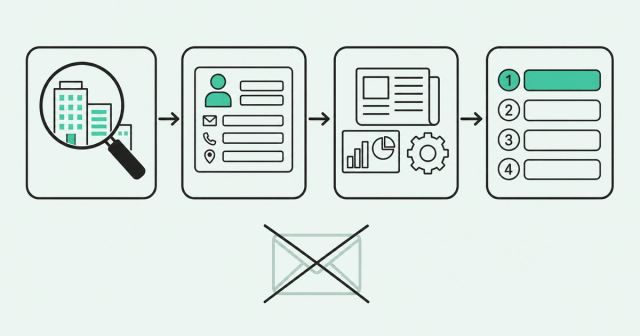
In this guide, AI prospecting tools are software that finds, enriches, researches, and prioritizes accounts and contacts before outreach. That's our working definition. McKinsey's B2B agentic AI research says agents scan "directories, news, filings, hiring trends, procurement activity, product launches, and regulatory signals" to identify leads.
Most AI sales prospecting tools split that work into four jobs:
- Discovery: The tool finds accounts and people that match your ideal customer profile (ICP), meaning the companies most likely to buy.
- Enrichment: The tool fills in missing details, like job title, company size, email, and phone number.
- Research: The tool gathers context on an account, like news, hiring, and tech stack, so reps know what to say.
- Prioritization: The tool ranks who to contact first based on fit and buying signals.
Two more terms come up constantly. A buying signal is any action that hints someone may be ready to buy, like a job change or a pricing page visit. Intent data is a type of signal that shows research activity, usually measured at the company level.
Notice what's missing from those four jobs: writing the email. A report on HubSpot's 2026 sales trends, based on HubSpot's own self-reported survey, found "Only 8% of salespeople don't use AI." When nearly every rep has an AI writer, the draft stops being an advantage.
McKinsey makes a related point in the same research: AI adoption is widespread, but the value companies get from it is limited. The gap usually isn't the model. It's the data and signals the model works from.
So this guide separates prospect discovery and research from email drafting. If you're shopping for writing and sequencing tools, read our AI email tools roundup. Here, we focus on the layer that decides who gets an email in the first place.
How to Evaluate AI Prospecting Tools
Gartner's 2025 survey, as cited in Salesforce State of Sales statistics, found "73% of B2B buyers actively avoid sellers who send irrelevant outreach." Relevance beats volume.
Use these five criteria to judge whether a tool makes outreach more relevant. Speed matters, but it comes second.
Signal Sources
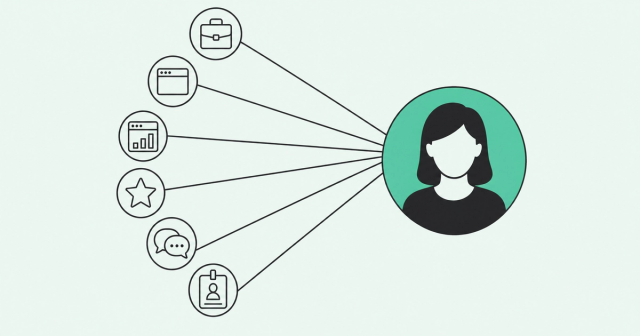
Start with one question: What makes a contact show up in a rep's queue today? If the answer is "they match our filters," you have a list. If the answer is "they changed jobs, visited pricing, and their team's product usage jumped," you have a reason to reach out.
Check which signals the tool actually sees. Common sources include job changes, website visits, product usage, hiring, social activity, reviews, and community conversations. For examples worth tracking, see these buying signals reps often miss.
Then check whether the tool ties each signal to a real person or stops at the company. Per its Common Room signal integrations page, Common Room aggregates signals from 50+ channels and connects them to real people. That's the difference between "someone at Acme is researching" and "Acme's new head of RevOps visited your pricing page twice."
Account Research Depth
Once a rep knows who to contact, they need to know why now. Good AI research pulls news, filings, hiring, and tech stack into a short summary, right where reps already work. Weak AI research is a tab of company facts the rep could've found on the About page.
Research time adds up. Salesforce's 2026 State of Sales self-reported survey of 4,000+ sales professionals says reps spend about 60% of their time on non-selling tasks.
RoomieAI's Capture agent runs custom account research, so prep doesn't start from scratch for every name on the list. Ask CR Anything sits inside account and contact views and answers plain-language questions grounded in buyer intelligence. This matters most in enterprise deals, where buying groups are large and research is heavy.
Contact Data Quality and Freshness
Database size is the number every vendor leads with, and it's the least useful one. A huge database doesn't help if the person left the role months ago.
Per BLS employee tenure data, 20.6% of wage and salary workers had a year or less of tenure with their current employer in January 2026. That group includes new hires, not only job changers, but the takeaway holds: Contact records can go stale over time.
Ask vendors two things. First, how often do they refresh records? Second, do they use identity resolution, meaning they match activity across email, web, product, and social to one real person?
Some tools use waterfall enrichment, which checks several data providers in order until one returns a match. It fills gaps in contact details, but it doesn't tell you whether that person is in-market. Common Room's approach is identity resolution with Person360, which stitches anonymous and known activity into one enriched profile per buyer.
CRM Write Back
A prospecting tool that doesn't sync with your CRM creates a second source of truth, and nobody wants two. In the same self-reported Salesforce survey, 51% of sales leaders with AI say tech silos delay or limit AI initiatives.
Look for two-way sync with Salesforce or HubSpot, so updates flow in both directions. Check whether reps can see CRM presence before adding a contact, so they don't create duplicates or work another rep's account. Confirm the tool respects your ownership rules and permissions.
Prospector shows whether a contact or account already exists in your CRM. It then enriches prospects and routes them to the CRM, segments, or sequences. Common Room's integrations page also lists Salesforce and HubSpot, with data visible in both systems.
Rep Control Over Messaging
AI-written email is still your email, legally and reputationally. The FTC's CAN-SPAM compliance guide puts it plainly: "The law makes no exception for business-to-business email."
So check where human review happens. Can a rep edit and approve each draft before it sends? Can managers set shared templates and guardrails that the whole team uses?
RoomieAI writes 1:1 outbound from person-level intent and account context, and human-led review stays in the loop. AI should free up rep time for better conversations. Judgment stays with the rep.
Best AI Prospecting Tools for B2B Sales Teams Compared
Here's how seven tools line up on the criteria above. The columns favor signals and research depth over contact counts, because that's where pipeline gets decided.
| Tool | Best for | Signal coverage | Research depth | Outreach support | CRM integrations |
|---|---|---|---|---|---|
Common Room by Zoom | Signal-based prioritization of accounts and people | Signals from 50+ channels, including job changes, website visits, product usage, reviews, and community, resolved to people with Person360 | RoomieAI account research through the Capture agent and Ask CR Anything | RoomieAI 1:1 drafts with human-led review, Zoom Engage sequencing, and routing to existing sequencers | Salesforce and HubSpot; Slack for alerts |
Apollo | Teams that want contact data and outreach in one tool | Buyer intent data (per G2 category listing) | Company and contact profiles | Sequences and email outreach | Major CRMs (check vendor docs) |
ZoomInfo | Teams that want broad business contact and company coverage | Intent data (reviewer-reported) | Enriched company and contact profiles | Tools to identify, connect, and engage prospects | Major CRMs (check vendor docs) |
Cognism | Teams selling into Europe | Contact data and sales intelligence signals (check vendor docs) | Company and contact profiles | Exports to CRM and outreach tools | Major CRMs (check vendor docs) |
Clay | Teams building custom enrichment workflows | Enrichment and signals you configure in workflows (100+ data providers per G2) | AI-assisted research inside workflows | AI message writing and data sent to other tools | Major CRMs (check vendor docs) |
LinkedIn Sales Navigator | Account and lead discovery on LinkedIn | Lead and account alerts, like job or role changes | LinkedIn profiles, account pages, and 50+ search filters | InMail credits for direct outreach | Major CRMs (Advanced Plus plan) |
6sense | Account-based marketing (ABM) and revenue teams | Account and buying-group intent with predictive scoring | Account and buying-group insights | Audience activation across advertising, email, web, and sales tools | Major CRMs (check vendor docs) |
Based on our review of publicly available vendor materials, November 2026. Features and pricing change often, so check each vendor's site.
AI Prospecting Tool Profiles
Each profile covers what the tool does and who it's built for. Each one also shows how Common Room by Zoom approaches the same job.
Common Room by Zoom
Common Room by Zoom is a buyer intelligence platform that turns the signals your team already has into prioritized next steps. It aggregates signals from 50+ channels and uses Person360 to resolve them to real people.
AI-powered prospecting with Prospector searches a 400M+ B2B contact directory using ICP and persona filters. Reps can work fit-first, starting from ICP criteria, or intent-first, starting from in-market accounts before buyers reach the CRM. From one account profile, reps can multi-thread, meaning they find and reach several stakeholders in the same buying group.
RoomieAI research and outreach agents run overnight prioritization, so reps start the day with ranked accounts and context attached. The agents also handle account research and write 1:1 outbound, with human-led review kept in the loop. Zoom Engage sequencing runs on top of your CRM, or Common Room works upstream of the sequencer you already use.
The proof shows up in meetings. Zapier increased meetings booked by 31% in three months by simplifying account and contact prioritization, as covered in how SaaS teams build prospecting lists.
The honest limitation: If your team only needs a one-time list export, Common Room is more platform than you need.
Apollo
Apollo is an all-in-one sales intelligence platform with tools to prospect and engage, per Apollo's G2 vendor listing. The same listing describes customers ranging from startups to global enterprises. Common Room starts from a different place: the buying signals that show who's in-market, resolved to the person behind them.
ZoomInfo
ZoomInfo Sales gives sales teams access to a database of business contacts and company information, per ZoomInfo's Gartner Peer Insights page. Some reviewers there also mention its intent data. Common Room unifies enrichment with identity resolution and first-party signals, like product usage and website visits, so reps see which specific people are showing intent.
Cognism
Cognism is a B2B data and sales intelligence platform for teams growing across Europe and beyond, per Cognism's G2 product page. Common Room supplies the context contact data alone can't: who's showing buying signals now and why, tied to one resolved profile.
Clay
Clay aggregates 100+ data providers, real-time scraping, and AI message writing in a spreadsheet, per Clay's G2 product page. G2 reviewers note a learning curve, so it fits teams ready to build and maintain workflows. Common Room offers enrichment that stays on in the background, and signals arrive already tied to people.
LinkedIn Sales Navigator
LinkedIn Sales Navigator is a sales tool built on LinkedIn's B2B network, per the LinkedIn Sales Navigator feature overview. It's built for reps who search for leads and accounts with filters like function and seniority. Many teams stitch it together with enrichment vendors and the CRM, and Prospector replaces that multi-tool list assembly with one workflow.
6sense
6sense Revenue Marketing is an account-based go-to-market platform that uses buyer intent and predictive analytics, per 6sense's G2 product page. Typical users include ABM managers, demand generation leaders, and RevOps teams. Common Room reveals the people behind the signal, so reps know who to contact at each account.
How to Choose by Team Size and Motion
The right tool depends on how your team sells. The table below is our editorial recommendation, based on where each motion usually gets stuck.
| If your team is... | Start with... | Why |
|---|---|---|
A small team starting outbound | A contact database with built-in sequencing, such as Apollo | You need basic lists and a way to send before you need signal depth |
High-volume SMB or commercial | Common Room by Zoom, with RoomieAI overnight prioritization | Speed-to-signal and rep output matter more than deep research |
Enterprise outbound | Common Room by Zoom, for buying committee visibility and account research | Buying groups are large, and manual research slows deals down |
Product-led growth (PLG) moving to sales | Common Room by Zoom, using product usage signals and Person360 | Heavy inbound makes it hard to see which users are real buyers |
Ops-heavy and building custom workflows | Clay, or Common Room by Zoom if you'd rather not maintain workflows | Your team wants full control over enrichment logic |
Your motion matters as much as team size. If you're not sure whether you run fit-first or signal-first prospecting, settle that first, because it shapes which data you need.
When you trial a tool, run it on your own accounts instead of the vendor's demo set. Then ask these five questions:
- Why this contact today: Ask the vendor to show the exact signals behind a ranked contact.
- Freshness: Ask how often records refresh and how the tool handles job changes.
- CRM behavior: Ask what happens when a contact already exists in your CRM.
- Human review: Ask who approves AI-written messages before they send.
- Stack fit: Ask whether the tool works with your current sequencer or requires a new one.
FAQ
What Is the Best AI Prospecting Tool?
The best AI prospecting tool tells reps who to contact and why now, then syncs that context to the CRM. For signal-based prioritization, that's Common Room by Zoom.
What's the Best AI for Sales Prospecting?
The best AI for sales prospecting runs on real buyer signals and clean, person-level data, with a rep reviewing outreach before it sends. Without that context, AI mostly produces faster noise.
What Are the Best AI Outbound Tools for Sales Teams?
Effective outbound pairs a signal and prospecting layer, like Common Room by Zoom, with a sequencer for sending. For writing and sequencing options, see the AI email tools roundup linked earlier in this guide.
How Much Do AI Prospecting Tools Cost?
Vendors price per seat, by credits for data lookups, or as a platform with tiered packages. Pricing changes often, so check each vendor's pricing page for current numbers.
Can AI Replace SDRs?
AI can take on research, ranking, and first drafts for sales development reps (SDRs), which frees up their time. Reps still own judgment, relationships, and the conversations that turn interest into meetings.
Are AI Prospecting Tools GDPR and CCPA Compliant?
Compliance depends on how you use a tool: ICO legitimate interests guidance says it covers direct marketing only where UK e-marketing rules don't require consent. The California AG's CCPA FAQ says the B2B exemption "expired on December 31, 2022," so check with counsel because this isn't legal advice.
What Is the Difference Between a Prospecting Tool and a CRM?
A CRM stores and tracks the accounts, contacts, and deals you already work. A prospecting tool finds and prioritizes who to add next, then writes them back to the CRM.
Start With Who's In-Market
More AI won't fix a pipeline problem on its own. The teams that build reliable pipeline know who's in-market, why, and which person on the buying committee to reach first.
If that's the question your reps can't answer today, let's look at it together with your own accounts.